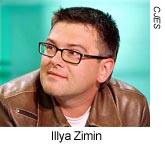
New York, February 28, 2006—A laptop computer and cell phone were stolen from the Moscow apartment of slain NTV correspondent Ilya Zimin, and a bloody fingerprint belonging to someone other than the victim was found on a light switch, local news outlets reported today.Your Excellency: The Committee to Protect Journalists views with alarm the threat to press freedom in the Philippines during the state of emergency you declared on February 24. Your administration's tactics--raiding a newspaper, stationing troops in front of television and radio stations, and threatening to issue government editorial guidelines--jeopardize the democratic advances of the last 20 years.
New York, February 27, 2006—The Committee to Protect Journalists today called for a thorough investigation into the killing of Ilya Zimin, a 33-year-old correspondent for the national television station NTV, who was found murdered in his Moscow apartment.APRIL 18, 2006
Posted: April 25, 2006
Arthur Tshimanga Kaputu, Lubilanji Expansion
IMPRISONED
Kaputu, director of the small private newspaper Lubilanji Expansion was detained for three days without charge by the public prosecutor in the capital, Kinshasa. According to the Kinshasa-based press freedom organization, Journaliste en Danger (JED), which sent a representative to meet with the journalist in prison, Kaputu was arrested following a complaint from the Protestant University of Congo.
Your Excellency: The Committee to Protect Journalists wishes to express its grave concern about the criminal prosecution of Jihad Momani, former editor-in-chief of the weekly Shihan, and Hashem al-Khalidi, editor-in-chief of the weekly Al-Mehwar. The two editors face lengthy prison terms if convicted under Jordan's penal code for publishing controversial cartoons depicting the Prophet Muhammad.
Your Excellency: The Committee to Protect Journalists urges you to fulfill the commitment you made two years ago today to initiate legislation to eliminate prison sentences for what journalists report and thus narrow the gap between Egyptian law and international press freedom standards.
Your Excellency: The Committee to Protect Journalists wishes to express its grave concern about the arrest of two Algerian editors and the closure of their weeklies for publishing controversial cartoons depicting the Prophet Muhammad on February 2. Kamel Bousaad, editor of pro-Islamist weekly Errissala, was arrested on February 8 and Berkane Bouderbala, managing editor of the weekly Essafir, was arrested on February 11, according to news reports.
Your Excellency: The Committee to Protect Journalists wishes to express its grave concern about the criminal prosecution of four Yemeni journalists facing lengthy prison terms if convicted under Yemen's press law for publishing controversial cartoons depicting the Prophet Muhammad. Their newspapers have all been ordered closed.
Gentlemen: As you resume negotiations in Geneva today to establish a just and lasting peace in Sri Lanka, we call your attention to the urgent issue of journalist security. The free flow of information, a vital ingredient in establishing the peace, is jeopardized by ongoing violence against the press.
|
CPJ Update
Committee to Protect Journalists February 17, 2006 |
CPJ's Attacks on the Press released in four cities worldwide |
AFGHANISTAN: 1
Ali Mohaqqiq Nasab, Haqooq-i-Zan (Women's Rights)
Imprisoned: October 1, 2005
The attorney general ordered editor Nasab's arrest on blasphemy charges
after the religious adviser to President Hamid Karzai, Mohaiuddin
Baluch, filed a complaint about his magazine. "I took the two magazines
and spoke to the Supreme Court chief, who wrote to the attorney general
to investigate," Baluch told The Associated Press.
New York, February 16, 2006—A bomb threat halted the trial today of two Chechens charged with killing Forbes-Russia Editor Paul Klebnikov. The hearing, which is closed to the public, will resume February 20, local media reported.
Bailiffs cleared the Moscow City Court after the threat which police are investigating. The trial of Kazbek Dukuzov and Musa Vakhayev had resumed on Wednesday with a new judge after the previous judge fell ill.
AFGHANISTAN: 1
Ali Mohaqqiq Nasab, Haqooq-i-Zan (Women's Rights)
Imprisoned: October 1, 2005
The attorney general ordered editor Nasab's arrest on blasphemy charges after the religious adviser to President Hamid Karzai, Mohaiuddin Baluch, filed a complaint about his magazine. "I took the two magazines and spoke to the Supreme Court chief, who wrote to the attorney general to investigate," Baluch told The Associated Press.
Attacks and developments throughout the region
ETHIOPIA The government unleashed a sudden and far-reaching crackdown on the independent press in November following clashes between police and antigovernment protesters that left more than 40 people dead. Authorities detained more than a dozen journalists, issued a wanted list of editors and publishers, and threatened to charge journalists with treason, an offense punishable by death in Ethiopia. Dozens of journalists went into hiding during the crackdown, virtually silencing the local private press.
THE GAMBIA The tightening of repressive media laws and the failure to solve
the December 2004 murder of veteran journalist Deyda Hydara added to the climate of violence and intimidation faced by private media in 2005. President Yahya Jammeh said that the Gambia allowed "too much freedom of expression," and local journalists feared that government repression could worsen in the run-up to presidential elections in 2006.
Attacks and developments throughout the region
RWANDA
The arrival of private radio stations did little to improve the climate for media in Rwanda, where repression by the government of President Paul Kagame and self-censorship by journalists all but stifled critical coverage. Local media and human rights groups often failed to speak out against intimidation and attacks on the press. Previous acts of violence against journalists remained unpunished.
SOMALIA A Transitional Federal Government (TFG) was mandated by a peace conference of warlords and political leaders to restore order to Somalia, which has been without an effective central government since 1991. But the TFG split and political rivalries sparked violence, especially in the capital, Mogadishu.
Amid ongoing lawlessness, impunity, and increased political tension, journalists faced threats, censorship, arbitrary detentions, and murder. Two journalists were killed and one narrowly escaped assassination. Attacks came from "warlords, regional administrations, independent militias, clan-built Islamic courts, armed business groups, and bands of soldiers," according to the National Union of Somali Journalists (NUSOJ).
TOGO The death of President Gnassingbé Eyadema on February 5 gave local journalists hope that a new era of press freedom would follow years of repression. Instead, Eyadéma's Rassemblement du Peuple Togolais (RPT) held on to power, resorting to censorship, harassment, and intimidation of the media as the army suspended the constitution and named the president's son, Faure Gnassingbé, head of state.
ZIMBABWE In the run-up to parliamentary elections in March, the government
of President Robert Mugabe further tightened repressive legislation that has been used to drastically reduce the independent media and its freedom to operate. Independent journalists continued to face police harassment, official intimidation, and the constant threat of arrest under the draconian laws. Several more journalists went into exile, joining a growing diaspora and underscoring Zimbabwe's reputation as one of Africa's worst abusers of press freedom and human rights. The country's economy foundered amid skyrocketing inflation, further impeding the few remaining independent news outlets.
Your Excellency: The Committee to Protect Journalists is deeply troubled by recent threats against the Congolese press freedom group Journaliste en Danger (JED) after the Kinshasa newspaper Le Soft reported findings from JED's investigations into the November murder of journalist Franck Ngycke Kangundu and his wife, Hélène Mpaka. JED President Donat M'baya Tshimanga, who is quoted in Le Soft's February 7 article, and JED Secretary-General Tshivis Tshivuadi went into hiding after receiving an anonymous threatening phone call. JED legal adviser Charles Mushizi also received a threatening phone call.
Moscow, February 10, 2006—The Belarusian government's persecution of the country's few independent newspapers undermines the integrity of the March 19 presidential election in which Aleksandr Lukashenko seeks a third term, the Committee to Protect Journalists and two regional press freedom organizations said today. The groups called on the Russian Federation, the European Union, and the United States to renounce the vote if Belarusian authorities continue to deny the public access to independent reporting.New York, February 9, 2006—The Committee to Protect Journalists condemns the closing of two Yemeni newspapers and a Malaysian paper after they published controversial cartoons depicting the Prophet Muhammad. At least four governments have now taken punitive action against newspapers or their editors for publishing some of the 12 cartoons that have sparked protests and violence in several cities, CPJ research shows.
Your Excellency: The Committee to Protect Journalists urges you to rescind four new broadcasting regulations that went into effect on Monday. As a nongovernmental organization dedicated to defending press freedom worldwide, we are concerned that these regulations will limit foreign broadcasts in a way that will hamper the free flow of information necessary for Indonesia's growing democracy. The new regulations confine broadcasts from international sources to shortwave radio and cable television networks, shutting off a large portion of Indonesia's listeners and viewers from news sources outside of the country. Your government should be working to broaden the numerous voices of information available on the country's 160 radio and television stations rather than reining them in.
New York, February 8, 2006—The Committee to Protect Journalists is very concerned that two weekend incidents in the Colombian city of Montería, capital of Córdoba province, will reinforce self-censorship in a region where journalists already work in fear. An investigative newspaper reporter fled the city on Sunday after receiving death threats, while a radio host was shot on Saturday and remained in critical condition today.
New York, February 8, 2006—The Committee to Protect Journalists applauds a Mexican official's announcement today that the government will name a special prosecutor to investigate crimes against journalists. The move comes two days after gunmen stormed a newspaper office in the U.S.-Mexico border town of Nuevo Laredo, seriously wounding one reporter.Your Excellency: I am writing to you as the highest representative of China in the United States to ask that you make known to the authorities in Beijing, including President Hu Jintao, our deep concern about the imprisonment of Internet journalist Shi Tao.
New York, February 6, 2006—Officials at the Chinese embassy in Washington, D.C., have refused to accept delivery of 443 signed appeals calling for the immediate and unconditional release of Shi Tao, a journalist unjustly imprisoned for "leaking state secrets." The Committee to Protect Journalists, which organized the appeal campaign, today posted on its Web site the text of the appeal, the names prominent petitioners, and the text of an accompanying letter to Zhou Wenzhong, the Chinese ambassador to the United States.
New York, February 3, 2006—The Committee to Protect Journalists condemns the criminal conviction of Stanislav Dmitriyevsky, director of the human rights organization Russian-Chechen Friendship Society and editor of its newspaper Pravo-Zashchita. Today's verdict is based on the newspaper's publication of comments from Chechen rebel leaders calling for peace talks.Dear Governor de la Sota: The Committee to Protect Journalists is deeply concerned about the safety of Argentine journalist Mariano Saravia, who has been threatened and harassed repeatedly since the publication of a book describing provincial police abuses.
New York, February 1, 2006—The Committee to Protect Journalists condemns the beating and arrest of journalists Wednesday in demonstrations to mark one year since King Gyanendra seized absolute power and restricted media freedoms in Nepal.