February 2010


(Elpais.com.co)

In an encouraging development, three courts in Colombia, Costa Rica, and Chile have recently followed the growing regional consensus against criminal defamation by dismissing criminal penalties against journalists accused of libel and slander.

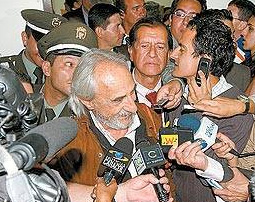
The newsweekly magazine Semana reported that a piece written by Alfredo Molano, at left, in the op-ed pages of the Bogota-based daily El Espectador in February 2007 described how the members of a family in Cartagena and Valledupar had undue influence in private businesses and public offices in the country’s Caribbean region.

Reuters

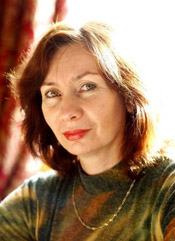
New York, February 26, 2010—The Committee to Protect Journalists calls on authorities investigating the July 2009 murder of prominent Russian journalist and human rights defender Natalya Estemirova to publicize their progress on the case seven months after the crime.

The New York Times reported on Thursday that a top investigator with the Investigative Committee of Russia’s Southern Federal District, the agency in charge of the Estemirova probe, confirmed authorities have identified a suspect in the killing. 

Radio Lumière has officially published the names of three of its journalists who died in the January 12 earthquake in Haiti: Jude Marcellus, Marlene Joseph, and Ginord Desplumes. They died under the rubble of collapsed buildings. It took a month for Radio Lumière officials to decide to publish the names of the three victims.

New York, February 26, 2010—The Committee to Protect Journalists calls on the Palestinian Authority (PA) to heed a High Court order and release journalist Tariq Abu Zaid immediately.

CMFR

On the run for more than a calendar year from court-ordered arrest warrants, Osmeña Montañer and Estrella Sabay, the alleged masterminds in the 2005 murder of Philippine investigative journalist Marlene Garcia-Esperat, at left, are now out of hiding and back at work as senior Department of Agriculture finance officials, according to recent reports in the Philippine Daily Inquirer.

New York, February 25, 2010—The Committee to Protect Journalists calls on the Tunisian authorities to immediately release journalist Taoufik Ben Brik, who is serving a six-month jail sentence, so that he can receive the medical treatment he needs.

New York, February 24, 2010—The Committee to Protect Journalists welcomes the arrest on Sunday of a man believed to have gunned down journalist Orel Sambrano in 2009 in reprisal for his reporting on drug trafficking, the local press reported.

David Drummond is one of three Google executives given a suspended prison term. (Reuters)

Italy was already the Internet freedom bad boy among western European democracies with its plans to extend broadcast TV licensing requirements to video sites. But the conviction today by a Milan judge of three Google executives is more than a one-off case of antisocial cyber behavior. It could end the protection that Web platforms now enjoy for user posted content. Potentially, that would mean that every video posted on the company’s YouTube site would have to be pre-screened for compliance with the law. That’s impossible for a site that is uploading almost a day’s worth of video every minute worldwide.

Internet freedom defenders had been expecting the worst for months, and Judge Oscar Magi didn’t disappoint. He gave six-month suspended prison sentences to David Drummond, Google's senior vice president and chief legal officer, Peter Fleischer, global privacy counsel, and George Reyes, a former chief financial officer. 

New York, February 24, 2010The Committee to Protect Journalists is concerned about politically motivated censorship in Ivory Coast after authorities banned international French broadcaster France 24 on Monday on bogus allegations of unprofessionalism over coverage of political unrest in the West African nation.

New York, February 24, 2010—One month after the disappearance of her husband Prageeth Eknelygoda, the journalist’s wife, Sandhya Eknelygoda , told CPJ that she has not been able to get police or other government officials to actively investigate the case.

AP

For those following the case of Bradley Roland Will, left, a U.S. activist-journalist killed while reporting on a protest movement in the southern Mexican state of Oaxaca in 2006, a long wait ended on February 18. After 16 months in prison, Juan Manuel Martínez, a grassroots activist from an impoverished neighborhood in Oaxaca, left his cell after a federal appeals tribunal exonerated him of murdering Will.

At a Tuesday meeting of the International Freedom to Publish Committee (a publishing industry group dedicated to free expression) in New York, Maureen Aung-Thwin handed out pages from Flower News, a Rangoon-based newspaper that had been marked up by Burmese government censors. Burma is the world’s second most censored country, according to a 2006 CPJ report. But you don’t have to read Burmese to understand what’s going on here. The red marks speak for themselves. Aung-Thwin is the director of the Burma project at the Open Society Institute and one of the world’s leading experts on that country. 

  As a writer from 1993 to 2005 at Japan’s Yomiuri Shinbun newspaper, Jake Adelstein built up a network of police, yakuza, and media contacts. (CPJ) A polite man in a suit gave investigative reporter Jake Adelstein the message from a leader of one of Japan’s organized crime groups when he was first working on the story back in 2005: “Erase it, or be erased.” Adelstein backed off, but he didn’t stop researching Tadamasa Goto, a thuggish leader of the Japanese mafia, or yakuza. The second time, there was no message. In 2008, it was Adelstein’s sources who informed him his relentless inquiries had crossed a line. Don’t go home, they told him—Adelstein is originally from Missouri—America would not be far enough.
Editor Charles Kabonero has been given a year in jail for invading the privacy of two politicians. (Phil Carpenter)New York, February 23, 2010—Three journalists were sentenced to prison on Monday in Rwanda over a story reporting on an extramarital affair between the mayor of the capital, Kigali, and a government minister, according to local journalists and news reports.
Joel Simon at CPJ's Japan launch of Attacks on the Press. (Reuters)

On February 16, CPJ held an ambitious international launch of our annual report Attacks on the Press. We coordinated events in six cities on four continents in order to expand the reach of our international headlines while also focusing on specific issues in each region. So how did we do?

Blog | USA
Penn (Reuters)

In a thinly disguised effort to distract me during a poker game on Saturday night, a friend asked if CPJ was planning to take up the case of the photographer who was attacked by Sean Penn.

Frankly, this was the first time I’d heard of the incident that took place last October in which Penn allegedly kicked a photographer and smashed his camera. Penn was indicted on February 19, and will be arraigned on March 22. The altercation was captured on videotape and can be seen on TMZ.

New York, February 22, 2010—Militants from the Al-Qaeda-allied insurgent group Al-Shabaab abducted a reporter in Somalia on Sunday, according to local journalists and news reports.

Judge Raúl Rosales Mora and his gun. (Caretas)

Caretas, the leading newsweekly magazine in Perú, has a shocking photograph on its February 18 cover: a local judge aiming a gun at one of the publication’s reporters. Photojournalist Carlos Saavedra was on a stakeout trying to photograph Judge Raúl Rosales Mora when the incident occurred on February 13, according to CPJ interviews and local news reports.  

The magazine was working on a story about a controversial decision by Rosales, who had recently favored the appointment of a polemical judge to the country’s Constitutional Tribunal, the Peruvian press reported.

Haitian refugees watch TV in a Port-au-Prince camp. (AP)

As part of three days of mourning in Haiti to remember the one-month anniversary of the January 12 earthquake, songs and prayers with melancholic voices echoing and images of a crowd mostly dressed in white were broadcast live on the state-owned National Radio and Television stations (RTNH).

New York, February 19, 2010—Authorities in Pakistan should move swiftly to investigate Wednesday’s shooting murder of journalist Ashiq Ali Mangi in the southern province of Sind, the Committee to Protect Journalists said today.
Local journalists are often caught in the crossfire of political instability and crime in Nepal. (Reuters)

The times, they’re getting a bit too interesting in Nepal. Journalists who are supposed to cover the news are becoming the news themselves.

New York, February 18, 2009—The Committee to Protect Journalists is concerned about the fate of Iraqi reporter Hussam Daoud al-Eqabi, who was seized by unidentified armed men on Wednesday. Al-Eqbi is a political reporter for Al-Ahed, a radio station in Kirkuk affiliated with radical Shiite cleric Moktada al-Sadr.

Blog | CPJ

On Tuesday, CPJ released its annual report, Attacks on the Press, with a global launch in six citiesTokyo, New York, Brussels, Bogotá, Cairo, and Nairobi. We’ve noticed that different media reports, using our data, have cited slightly different numbers in regards to two key statics, the number of journalists killed and the number imprisoned in 2009—the global benchmarks for press freedom. We want to clear up any confusion. 

Maziar Bahari (Newsweek)

The two venues for the launch of Attacks on the Press in New York couldn’t have been more different. On Tuesday morning I was joined by Newsweek’s Maziar Bahari, and CPJ Asia Program Coordinator Bob Dietz in the hushed auditorium of the Dag Hammarskjöld Library at United Nations headquarters. The event was so well attended by the U.N. press corps that we ran out of copies of the book. The press conference went for more than an hour until I was slipped a note saying the U.N. spokesman needed the podium for the U.N. daily briefing.

Uribe (AP)

Bogotá, February 17, 2010—Colombian  President Alvaro Uribe Vélez said on Tuesday that those who illegally spy on the press are “enemies of his government” during a meeting with a delegation from the Committee to Protect Journalists and the Foundation for Freedom of the Press (FLIP). 

Uribe issued the statement at the urging of the CPJ and FLIP delegation, which met with the president and top government officials including Vice President Francisco Santos; Minister of Interior Fabio Valencia Cossio; Felipe Muñoz, the director of national intelligence, or DAS; the director of the national police, General Oscar Naranjo Trujillo; and other high-ranking officials in a two-hour-long meeting at the presidential palace, known as Casa Nariño.

The three main online news agencies in Port-au-Prince, the Haitian capital, are struggling in the aftermath of the quake. Clarens Renois, the founding director of Haiti Press Network, addressed the outlet's future frankly: “In three months, I will close the agency,” he said. 

Your Excellency: The Committee to Protect Journalists is deeply disturbed by your government’s intensified pressure on independent journalists in Uzbekistan.

Left to right: Morales, Ronderos, Lauría, Gomez (Mauricio Esguerra)

Shortly after arriving in Bogotá to launch Attacks on the Press, I realized the Colombian government was well aware of our concerns about illegal espionage against the media. Top government officials, including President Alvaro Uribe Vélez, had confirmed meetings with a delegation from CPJ and the local press freedom group Foundation for Freedom of the Press (FLIP) to discuss the findings of our annual report on the government's interception of phone conversations and e-mails (including some involving CPJ) and its surveillance of Colombian journalists.

Abdulle (CPJ)

“I didn’t wear the bulletproof jacket and helmet that Reuters gave me,” explained veteran Somali journalist Sahal Abdulle to a packed crowd at Nairobi’s Serena Hotel for CPJ’s launch of Attacks on the Press. “It didn’t seem right when my colleagues, local journalists, were risking their lives trying to cover the same event.” Abdulle, like all Somali journalists, faces immense challenges in covering the story in his war-ravaged country. According to this year’s findings in Attacks, nearly all the journalists killed in the line of duty in 2009 were local journalists—and nine of them were killed in Somalia.

New York, February 16, 2010—The Committee to Protect Journalists condemns the murder on Saturday of Muhammad al-Rabou'e, a Yemeni reporter for the monthly Al-Qahira who wrote several articles about the alleged activities of a reputed criminal group. Al-Jazeera and other news outlets said five individuals burst into Al-Rabou'e home in the district of Beni Qais, in Yemen’s northern province of Hajja, and shot him multiple times.

Mr. Prime Minister: We are writing to draw your attention to conditions that undermine press freedom as guaranteed in Article 29 of the Ethiopian Constitution. We would welcome your leadership in furthering reform by working for the repeal of draconian provisions in recent antiterrorism and media legislation.

Newsweek journalist Maziar Bahari helped us launch Attacks on the Press at the United Nations in New York today. Bahari, an Iranian-Canadian citizen, was labeled an enemy of the Iranian regime and cruelly imprisoned for 118 days last year in Tehran. His very presence today, CPJ Deputy Director Robert Mahoney noted, was testament to the “tremendous efforts of press freedom groups around the world" that have advocated for the release of jailed journalists. But with at least 47 journalists in jail in Iran as of February 1, according to CPJ research, it’s still a “pretty grim picture,” Mahoney said. 

“The e-mail came in at 8.48 p.m.,” Philippine journalist Maria Ressa told a hushed audience at CPJ’s panel discussion, Press Freedom: On the Frontlines and Online, this morning at the Foreign Correspondents Club of Japan in Tokyo. She was describing how the first photo from the November massacre in Maguindanao province reached the mainstream Philippine media. Thirty-two journalists and media workers were slaughtered in the deadliest single attack that CPJ has ever recorded.

Naziha Rejiba, editor of the Tunisian online publication Kalima and a 2009 International Press Freedom Awardee, helped us launch the new edition of Attacks on the Press at a press conference today in Cairo.

CPJ’s six-city launch of Attacks on the Press began today in Tokyo, where we hosted a panel discussion with Maria Ressa of ABS-CBN TV in the Philippines, Asahi Shimbun deputy foreign editor Nobuyoshi Sakajiri, NHK Middle East correspondent Nobuhisa Degawa, CPJ China expert Madeline Earp, and me.

In Tehran, journalists faced vague antistate accusations during mass, televised judicial proceedings. (AP) By Fareed Zakaria

Toward the end of his 118-day ordeal inside Tehran’s Evin prison, Newsweek reporter Maziar Bahari had a bizarre exchange with his interrogator. Bahari had been held in solitary confinement since his arrest after Iran’s disputed presidential election in June; he had been subjected to near-daily beatings and interrogation sessions that stretched for hours. But his jailers had not been able to prove their accusation that Bahari was a spy for Western intelligence agencies. So they had an ominous-sounding new charge to levy against him: “media espionage.”

By Joel Simon

Does “name and shame” still work in the Internet age? After all, the massacre of 31 journalists and media workers in the Philippines pushed the 2009 media death toll to the highest level ever recorded by CPJ. The number of journalists in prison also rose, fueled by the fierce crackdown in Iran.
Al-Shabaab militants patrol Mogadishu's Bakara Market, home to several media outlets. (Reuters/Feisal Omar)By Tom Rhodes

High numbers of local journalists have fled several African countries in recent years after being assaulted, threatened, or imprisoned, leaving a deep void in professional reporting. The starkest examples are in the Horn of Africa nations of Somalia, Ethiopia, and Eritrea, where dozens of journalists have been forced into exile. Zimbabwe, Rwanda, and the Gambia have also lost large segments of the local press corps in the face of intimidation and violence.
Colombian President Álvaro Uribe Vélez appears at a press conference with military leaders to announce the end of unlawful spying. (AP/Fernando Vergara)By Carlos Lauría

The topic being investigated by two Colombian reporters was explosive enough that it required unusual security. Fearful that the subjects would learn prematurely of the story, the reporters took separate notes, which they did not share and which they later destroyed. They didn’t communicate by telephone or e-mail, and they met only in public locations. They relayed only the barest information to their own sources.
An Afghan police officer aims his weapon at two photographers covering pre-election violence in Kabul. (AFP/Pedro Ugarte)By Bob Dietz

As the United States redeploys forces to Afghanistan, and the Pakistani military moves into the country’s tribal areas, the media face enormous challenges in covering a multifaceted conflict straddling two volatile countries. Pakistani reporters cannot move freely in areas controlled by militants. International reporters in Afghanistan, at risk from kidnappers and suicide bombers, encounter daunting security challenges. And front-line reporters in both countries face pressure from all sides.
Chechen President Ramzan Kadyrov confers with Russian Prime Minister Vladimir Putin in Grozy. (RIA Novosti)By Nina Ognianova

The day before, Natalya Estemirova had seen off two colleagues from Moscow. Yelena Milashina, a reporter with the newspaper Novaya Gazeta, and Tanya Lokshina, an advocate with the international group Human Rights Watch, had traveled to Chechnya on separate assignments. Like many visiting journalists and human rights defenders, Milashina and Lokshina had stayed with Estemirova. Her Grozny apartment had become a headquarters for such visitors; Russian and international journalists often made it their first stop. Estemirova was their primary source, consultant, fixer, translator, protector.
Reports of Egyptian police torture spark protests in Cairo. (Reuters/Mona Sharaf)By Mohamed Abdel Dayem and Robert Mahoney

The media in the Middle East loved the Intifada. Every detail of Israel’s violations of human rights in the late 1980s in the West Bank and Gaza appeared in the Arabic and Farsi press. The governments that owned or controlled these media outlets loved it, too. When pan-Arab satellite television stations emerged in the 1990s, they looped hours of footage of Israeli soldiers and Jewish settlers repressing Palestinians.
Across the Philippines, protesters call for justice in Maguindanao massacre. (AP/Bullit Marquez)By Shawn W. Crispin

Before Henry Araneta and his colleagues set off on the morning of November 23, 2009, on what would be their last assignment, the DZRH reporter sent his wife a text message: There could be trouble.

Top Developments
• Government tries to curb reporting on Election Day violence.
• Abductions target foreign reporters, endangering local journalists, too.

Key Statistic
20: Years that Parwez Kambakhsh would have spent in jail on an unjust charge. He was freed in August.

Deepening violence, flawed elections, rampant corruption, and faltering development provided plenty of news to cover, but the deteriorating national conditions also raised dangers for local and foreign journalists working in Afghanistan. Roadside bombs claimed the life of a Canadian reporter and injured several other international journalists. A series of kidnappings mainly targeted international reporters, but one captive Afghan journalist was killed during a British military mission that succeeded in rescuing his British-Irish colleague.

Top Developments
• New broadcast law sparks contentious debate, raises concerns.
• In major victory, criminal defamation laws are repealed.

Key Statistic
200: Tax agents who raided Clarín in apparent reprisal for the newspaper’s coverage.


Press freedom advocates won two important victories as congress decriminalized defamation, and a federal court issued a ruling that, while still under appeal, could lead to the dismantling of the government’s manipulative distribution of official advertising. But those advances were obscured by a contentious debate over broadcast regulatory legislation backed by the government of President Cristina Fernández de Kirchner. The measure, signed into law in October and immediately challenged in court, apportioned broadcast frequencies among private, government, and nonprofit outlets, while creating a new regulatory body.

Top Developments
• Broadcast media controlled by government or its allies.
• Numerous assaults reported, but police do little.

Key Statistic
12: Broadcast license applications filed by independent outlet A1+. None approved.

The nation remained polarized by the fraud-marred 2008 presidential election won by Serzh Sargsyan, with large public protests and violent government reprisals continuing well into 2009. The global economic crisis caused layoffs in the mining industry and a decline in remittances from Russia, heightening public frustrations. The government sought to suppress critical debate over these issues, and journalists faced intolerance, hostility, and violence.

Top Developments
• Critical reporters jailed for defamation, “hooliganism.”
• CPJ honors imprisoned editor Eynulla Fatullayev.

Key Statistic
68: Novruzali Mamedov’s age when he died in prison after being denied medical care.

Using imprisonment as a crude form of censorship, the authoritarian government of President Ilham Aliyev remained one of the region’s worst jailers of journalists. Authorities allowed one editor to die in state custody after failing to provide adequate medical care and ignoring domestic and international pleas for treatment.
Top Developments
• Authorities block Web sites critical of the government, the king, and Islam.
• Officials pursue politicized court complaints against critical reporters.

Key Statistic
1,040: Web sites that the Ministry of Information ordered censored in September.


Bahrain has made significant strides in improving its human rights record since political reforms enacted in 2001, particularly concerning universal suffrage and the dismantlement of an abusive state security court system. But some reforms have yet to be fully realized, among them improving political representation for the marginalized Shiite majority and ensuring more equitable standing for women in family courts. The press freedom climate, which had improved with the establishment of seven independent newspapers in the wake of the 2001 reforms, has undergone a gradual deterioration over the past several years. That decline accelerated in 2009 as the government blocked domestic access to more than 1,000 Web sites and pursued politicized court complaints against critical journalists.

Top Developments
• Restrictive law requires media obtain government registration.
• Administration eases some repressive tactics to gain EU favor.

Key Statistic
13: Independent papers blacklisted by state-controlled distributors.

Authorities eased their heavy-handed tactics of repression for much of the year even as a restrictive new media law took effect. The change in tone coincided with the European Union’s suspension of a three-year-old travel ban against President Aleksandr Lukashenko and 35 top officials that was first imposed in response to the regime’s treatment of opposition activists and journalists.

Top Developments
• Judges in defamation cases issue sweeping censorship orders.
• Ex-police officers convicted in abduction, torture of O Dia journalists.

Key Statistic
44: Defamation lawsuits filed by a single congressman. Complaints target dozens of journalists for critical coverage.


In a major advance for press freedom, Brazil’s highest court struck down a repressive 1967 law that criminalized broad swaths of sensitive reporting and set harsh potential penalties. But defamation laws remained a concern as penal code provisions allowed prison penalties for libel and slander. And a flood of civil defamation cases continued unabated, in some cases leading lower courts to issue censorship orders that barred news media from covering public issues, including alleged corruption involving government officials and business people.

Top Developments
• Some political prisoners freed, but eight journalists still held.
• Government censors all print publications, controls broadcasters.

Key Statistic
1st: Ranking on CPJ's Worst Countries to Be a Blogger.

Throughout the year, Burma's ruling junta emphasized its plans to move toward multiparty democracy after decades of military rule, a long-promised transition that dissidents and others viewed as a sham to further consolidate the military's power. As the country geared up for general elections in 2010--the first since the military annulled the 1990 elections, which were won overwhelmingly by the political opposition--authorities maintained strict censorship over the local news media and held at least nine journalists behind bars.

Top Developments
• More access for foreign reporters, tighter rules for local assistants.
• As online use grows, government censors sites, jails critics.

Key Statistic
24: Journalists jailed as of December 1, 2009.

While China’s ruling communist party celebrated 60 years in power in 2009, its critics commemorated antigovernment movements in Tibet in 1949 and Tiananmen Square in 1989. Government agencies used a security apparatus strengthened for the 2008 Olympics to restrict dissenting voices during all three landmark anniversaries.

Top Developments
• Provincial journalists face threats from all sides in civil conflict.
• Convictions gained in one journalist murder; progress reported in other cases.

Key Statistic
2003: Year that national intelligence agents began spying on journalists and other critics.


The strained relationship between the government and the Bogotá-based independent press worsened after news media revealed that the national intelligence agency had been spying on leading critics, including journalists. The press continued to be caught in the middle of the ongoing civil conflict as officials made loaded accusations and far-right paramilitary and leftist guerrilla groups terrorized provincial reporters. In an important step in the fight against impunity, a court convicted the masterminds in a 2003 journalist killing. While CPJ research has shown a gradual decline in journalist murders over the last five years, one reporter was slain in reprisal for his work in 2009.

Top Developments
• Government makes progress on reforms, but press freedom lags.
• Ruling HDZ gains influence with some media outlets.

Key Statistic
8: People indicted in a car bombing that killed two media executives.

Croatia’s efforts to join the European Union by 2011 did not yield major improvements in press freedom. While the EU said the government had made “substantial progress” on several issues—including the resolution of border disputes, the institution of refugee property rights, and improved cooperation with the International Criminal Tribunal for the former Yugoslavia—some journalists feared the country was sliding back toward the lawless 1990s, when the ruling nationalist HDZ party suppressed independent news reporting. Police remained inconsistent in investigating attacks against journalists, several of whom faced threats after reporting on government corruption.

Top Developments
• Vibrant blogging culture emerges despite severe Internet restrictions.
• Jailed journalists suffer amid inhumane conditions.

Key Statistic
22: Reporters and editors in jail as of December 1.


Cuba was hit hard by the global economic crisis and endured an upheaval in its highest offices, but state-controlled news media delivered superficial and skewed coverage. Human rights conditions, including press freedom, remained at a standstill: Independent journalists faced ongoing harassment, and more than 20 reporters and editors remained in jail. But offering a flicker of hope for freedom of expression on the island, a growing community of independent bloggers maneuvered around legal, economic, and technological limitations to describe everyday experiences and express opinions that challenged the regime’s perspective.

Top Developments
• RFI removed from FM frequencies; other stations censored.
• Hundreds march in nine provinces to protest ongoing threats, violence.

Key Statistic
3: Female journalists threatened with “a bullet to the head” after focusing their work on women’s issues.


Authorities censored coverage of armed conflict and human rights violations in the mineral-rich eastern Kivu provinces. Insecurity reigned in the volatile region, despite the presence of the world’s largest U.N. peacekeeping force. Tens of thousands of people continued to die every month from conflict, disease, and famine, while human rights groups detailed pervasive rape and sexual violence. The vast Central African nation remained among the region’s riskiest for journalists three years after it transitioned to democracy in historic U.N.-backed elections. Throughout the country, officials harassed and obstructed journalists who criticized local officials.

Top Developments
• Correa assails news media, and regulators target critical outlets.
• Media legislation could restrict freedom of expression.

Key Statistic
3: Days that regulators ordered Teleamazonas off the air.


Re-elected by a landslide in April, President Rafael Correa intensified his attacks on critical news media, calling them ignorant and deceitful. As Correa used his weekly radio address to assail the press, his administration singled out critical outlets for regulatory action. Legislators were debating media legislation that would restrict freedom of expression, and two journalists were imprisoned during the year on defamation charges.

Top Developments
•  Government is among the region’s worst oppressors of online expression.
•  Several editors fined for reporting on the president and other sensitive topics.

Key Statistic
3: Online journalists imprisoned as of December 1, 2009.


Authorities followed familiar tactics to control news media, pursuing politicized court cases, imposing fines, using regulatory tools, and harassing journalists. With Egypt seeing a burgeoning community of journalistic bloggers, authorities moved aggressively to monitor and control online activity. At least three online journalists were jailed when CPJ conducted its annual census of imprisoned journalists on December 1.

Top Developments
• Terrorism law criminalizes coverage of sensitive topics.
• Broadcasting Authority serves as government censor.

Key Statistic
4: Journalists jailed as of December 1, 2009.


Ahead of national elections scheduled for May 2010, the ruling Ethiopian Peoples’ Revolutionary Democratic Front (EPRDF) further curtailed the limited freedom of the country’s small number of independent newspapers. The government enacted harsh legislation that criminalized coverage of vaguely defined “terrorist” activities, and used administrative restrictions, criminal prosecutions, and imprisonments to induce self-censorship. In all, four reporters and editors were being held when CPJ conducted its annual census of imprisoned journalists on December 1.

Top Developments
•  Hydara murder unsolved; secrecy surrounds Manneh detention.
•  Domestic, international pressure prompts Jammeh to halt crackdown.

Key Statistic
6: Journalists jailed for sedition after saying president’s remarks on Hydara case were insensitive.


Authorities jailed six journalists after their publications said President Yahya Jammeh had been insensitive in televised remarks about the unsolved 2004 murder of prominent Gambian editor Deyda Hydara. The six, convicted in August on baseless charges of sedition, were sentenced to two years in prison but were freed in September after Jammeh, facing considerable domestic and international pressure, issued pardons.

Top Developments
• TV news politicized due to government manipulation.
• Opposition-aligned broadcaster obstructed.

Key Statistic
7: Percent of Internet penetration nationwide.

While no journalists were killed or imprisoned in Georgia in 2009, press freedom in this small South Caucasus nation stagnated due to persistent state manipulation of news media, particularly television broadcasting. In a speech before the U.N. General Assembly in September, President Mikhail Saakashvili boasted of Georgia’s media pluralism, stating that the country has “27 TV stations.” He failed to mention that most stations have little reach and, notably, that his government and its allies have long sought to control television news content, most recently through aggressive efforts to obstruct the cable affiliates of a station aligned with a leading opponent.

Top Developments
• Coup damages press freedom, reveals partisan media divide.
• Supporters of both sides in the conflict wage attacks on the press.

Key Statistic
22: Days that Radio Globo and Canal 36 were off the air due to government censorship.


The June coup that ousted President Manuel Zelaya, along with the bitter stalemate that ensued, damaged press freedom in Honduras and heightened partisan divisions in the news media. An interim government cracked down on news coverage and withstood intense international pressure until a scheduled November presidential election brought Porfirio “Pepe” Lobo, a conservative businessman, to office. As Lobo pledged reconciliation, Zelaya decried the vote as tainted.

Top Developments
• Dozens of journalists are detained in massive post-election crackdown.
•  Numerous critical newspapers, Web sites censored or shut down.

Key Statistic
23: Journalists imprisoned as of December 1, 2009.


Amid the greatest national political upheaval since the 1979 Islamic Revolution, Iran launched a full-scale assault on the media and the opposition. In mid-June, mass protests erupted in response to official election results showing incumbent President Mahmoud Ahmadinejad winning by a large margin against his main opposition challenger, reformist Mir-Hossein Mousavi. The government responded with a wide-ranging and cruel campaign to suppress dissent. As protests against perceived electoral fraud spiraled into mass demonstrations, Iranian authorities threw dozens of journalists behind bars (where many were reportedly tortured), shuttered and censored news outlets, and barred foreign journalists from reporting. During the protests and crackdown, blogs and social media sites became front-line news sources. The crackdown increased the level of repression in a regime already hostile toward the press, and followed the months-long imprisonment of an Iranian-American freelance journalist, Roxana Saberi.

Top Developments
•  Fatalities and abductions plummet as security situation improves.
•  Prime minister, others file lawsuits to harass media. Kurdish courts jail six journalists.

Key Statistic
4: Journalists killed in connection to their work, the lowest tally since the war began in 2003.


Four Iraqi journalists were killed because of their work as the press continued to face great challenges and risks. Nevertheless, the death toll dropped to its lowest point since the U.S.-led invasion in 2003, and, for the first time in six years, Iraq was not the world’s deadliest nation for journalists. (It was replaced by the Philippines.) No journalists or media workers were reported abducted, reflecting another steep drop from prior years.
Top Developments
• Israel bars international press access to Gaza fighting.
• Fatah, Hamas detain, harass media perceived as biased.

Key Statistic
4: News media buildings in Gaza hit by Israeli airstrikes.


As the year began, the Israeli military waged a ground offensive into the Gaza Strip in response to a series of Hamas rocket attacks on Israeli territory. A massive Israeli air bombardment preceded the ground action. During the monthlong conflict, airstrikes by the Israel Defense Forces (IDF) destroyed the headquarters of a Hamas-controlled television station, Al-Aqsa TV, struck at least three other buildings housing news media, and injured several local journalists attempting to cover the assault. At the same time, Israeli authorities largely barred foreign journalists’ access to Gaza with restrictions imposed in early November 2008 and tightened after the start of the Israeli offensive.

Top Developments
• Repressive media law takes effect, sets limits online.
• Politicized lawsuits threaten independent newspapers.

Key Statistic
2010: Year that Kazakhstan assumes chairmanship of OSCE.

The authoritarian government of this central Asian nation brazenly defied international standards for freedom of expression even as it prepared to assume chairmanship of the Organization for Security and Co-operation in Europe, the Vienna-based human rights and security agency. As part of their bid to lead the OSCE in 2010, President Nursultan Nazarbayev and his government pledged to bring the country’s repressive media laws into compliance with global standards. Instead, Nazarbayev signed into law a measure that places expansive new restrictions on Internet expression, requires online service providers to collect client information for authorities, and further extends censorship rules for all media. Authorities jailed critics and filed politicized lawsuits that sought to shut down critical news outlets, but reported no progress in investigating assaults on independent reporters.

Top Developments
• Saipov murder case unsolved and beset by questions.
• Four journalists badly beaten; no arrests made.

Key Statistic
76: Percentage of vote won by Kurmanbek Bakiyev in flawed presidential election.

The press climate deteriorated in this mountainous central Asian nation that once offered promise for democracy and free expression. The government’s erratic investigation into the unsolved 2007 murder of editor Alisher Saipov stained the nation’s law enforcement and press freedom record. At least four critical reporters were brutally attacked, and one fled the country in the face of continuing threats. An independent Russian-language newspaper closed after its staffers received anonymous threats.

Top Developments
•  Regime pursues defamation cases in Morocco and other countries.
•  Qaddafi nationalizes the nation’s sole private television station.

Key Statistic
3: Moroccan newspaper ordered to pay damages for “injuring the dignity” of Col. Muammar Qaddafi.


Col. Muammar Qaddafi marked in September the 40th anniversary of the coup that brought him to power and led to the eradication of human rights and the assassination and enforced disappearance of hundreds of critics, including journalists. The government has used softer tactics of repression in recent years in keeping with its efforts to rehabilitate Qaddafi’s international image, but it has maintained a tight grip on the news media.

Top Developments
• Rival leaders use media empires to pursue political goals.
• Partisan attacks target journalists, news outlets.

Key Statistic
1: Journalist killed in 2009, the first Malagasy media fatality ever recorded by CPJ.


Malagasy journalists faced censorship, threats, and arrest as former president Marc Ravalomanana and new head of state Andry Rajoelina used their partisan media empires in a struggle for control of this Indian Ocean island nation. One journalist was killed in the midst of violent unrest.

Top Developments
• Amid threats and attacks, self-censorship becomes more pervasive.
• Congress stalls on reforms to combat violence against the press.

Key Statistic
9: Journalists missing since 2005. Most had covered crime and corruption.


The deepening influence of organized crime and the government’s inability to curb worsening violence left the news media wide open to attack. In the last 10 years alone, CPJ research shows, 32 editors and reporters have been killed, at least 11 in direct reprisal for their work. Nine more journalists have disappeared since 2005. Most of those targeted had covered organized crime, drug trafficking, or government corruption—topics that journalists say they increasingly avoid in fear of reprisal. Reforms that would impose special penalties for attacks on the press and give the federal government broad authority to prosecute crimes against free expression were stalled in Congress.

Top Developments
• Authorities censor, jail journalists to silence coverage of the royal family.
• Politicized courts issue heavy defamation awards.

Key Statistic
100,000: Copies of two weeklies destroyed by authorities because they carried a poll about the king.


As King Mohammed VI marked his first decade on the Alawite throne, his government moved aggressively to censor coverage of the royal family and silence other critical news reporting, fueling deep concern about the future of independent journalism in this North African nation.

Top Developments
• Ortega administration marginalizes private media.
• Authorities use legal harassment, smears against critics.

Key Statistic
0: Number of press conferences held by Ortega since taking office.


Three decades after a revolution swept the Sandinistas into power, the government of President Daniel Ortega still cast private media as enemies and moved forcefully to curtail their influence. Ortega—who led the 1979 uprising against the Somoza dictatorship and reclaimed the presidency in 2006 elections—employed a range of tactics to marginalize the press, including legal persecution, smear campaigns to discredit adversaries, and manipulation of state advertising to punish critical outlets.

Top Developments
• Government fails to investigate press freedom abuses.
• Reporter slain after covering Maoist land seizures.

Key Statistic
8th: Ranking on CPJ Impunity Index, making it one of world’s worst for press.

Nepal’s news media entered 2009 in a state of crisis. Attacks on the press had escalated in late 2008 amid a climate of impunity. The Federation of Nepali Journalists (FNJ), a local press freedom group, led weeklong, nationwide demonstrations to raise awareness about the deteriorating environment. On December 28, 2008, Maoist leaders signed a 10-point agreement to address the lawless situation. Clauses included a promise to create a governmental bureau to investigate press freedom violations, local news reports said.

Top Developments
• Tandja tightens grip on power, media through constitutional changes.
• Journalists reporting on corruption face government reprisals.

Key Statistic
3: Years beyond his elected term that Tandja can serve, according to a constitutional change.


In an audacious bid to maintain power, President Mamadou Tandja pushed through constitutional amendments repealing presidential term limits and tightening his control of the state media regulatory agency. Facing heavy criticism in the run-up to an August referendum on the constitutional changes, the Tandja administration silenced dissent by imprisoning critics, intimidating news media, and issuing an emergency decree dissolving both the National Assembly and the Constitutional Court. Official results showed that the amendments passed with 92 percent approval, but opposition politicians and their supporters had boycotted the vote, which they called a mockery of the constitution.

Top Developments
• Local operatives of the ruling PDP assault journalists with impunity.
• Editor slain at his home outside Lagos. Wife pledges to continue his work.

Key Statistic
21: National dailies, a number reflecting Nigeria’s robust media climate.


With 21 national dailies, 12 television stations, and several emerging online news sources, Nigeria continued to boast one of the most vibrant news media cultures on the continent. But a series of attacks fanned fears in the press corps and prompted self-censorship.

Top Developments
• Two U.S. journalists held for five months after crossing border.
• Citizen reporters begin to smuggle news out of the country.

Key Statistic
1st: Ranking on CPJ’s list of Most Censored Nations.

During a diplomatic standoff that lasted almost five months, two American journalists from San Francisco-based Current TV were arrested, tried, pardoned, and released. Charged with illegally crossing the border from China on March 17, they had been sentenced to 20 years of “reform through hard labor” after a closed-door trial, according to the official Korea Central News Agency.

Top Developments
• Press has very limited access during two military offensives.
• Reporters face attacks, threats from all sides. Four are killed.

Key Statistic
6: Homes of journalists destroyed by militants in retaliatory attacks.

As Pakistan’s military launched two major offensives within its borders, officials pressured news media to report favorably on the conflicts while the Taliban and other militants threatened and attacked critical reporters. Reporters for Urdu- and Pashto-language news outlets came under the greatest pressure because of their wider influence among Pakistanis. Journalists who opted to embed with the military said they were forced to comply with heavy-handed restrictions on what they were allowed to see and report.

Top Developments
• Maguindanao massacre underscores deep-seated climate of impunity.
• Local and international groups mobilize to offer aid, seek justice.

Key Statistic
29: Journalists slain in a politically motivated ambush, the single deadliest event ever recorded by CPJ.

In the deadliest event for the press ever recorded by CPJ, 29 journalists and two media support workers were ambushed and brutally slain on November 23 as they traveled in Maguindanao province with a convoy of people who intended to file gubernatorial candidacy papers for a local politician. In all, 57 people were killed in a shocking display of barbarism apparently motivated by political clan rivalries. The bodies were dumped in mass graves in a remote clearing in the town of Ampatuan.

Top Developments
• International community intensifies pressure to halt impunity.
• Authorities restart investigations into Klebnikov, Politkovskaya murders.

Key Statistic
19: Journalists murdered in retaliation for their work since 2000. Murder convictions have been won in one case.

After a deadly decade for the press, the tone set by the Kremlin appeared to have changed. President Dmitry Medvedev said in July that justice in journalist murders is important “to honor the people who died while defending our legal system, defending regular people, and to educate an entire new generation of citizens.” International attention intensified, too, as the European Parliament, top U.S. officials, and the U.N. Human Rights Committee condemned ongoing and unpunished attacks on journalists.

Top Developments
• Al-Shabaab terrorizes media through violence, threats, censorship.
• Many local journalists flee into exile, leaving a void in coverage.

Key Statistic
9: Journalists killed in direct relation to their work in 2009.


Somalia was among the world’s deadliest countries in 2009, surpassing violent hot spots such as Iraq and Pakistan. As conflict continued between the weak Transitional Federal Government and multiple insurgent groups, nine journalists were killed in direct connection to their work, seven of them in the volatile capital, Mogadishu. An exodus of local journalists continued throughout the year, and few international journalists dared travel into the country for firsthand reporting, according to CPJ research. As a result, the amount and quality of news coverage of Somalia’s political and humanitarian crisis suffered greatly, CPJ found.

Top Developments
• Editor murdered, broadcaster bombed, reporters assaulted.
• Columnist convicted of terrorism for his writing.

Key Statistic
0: Number of convictions in 10 journalist murders since 1992.

On May 19, the government formally declared a victory in its 26-year civil war with the secessionist Liberation Tigers of Tamil Eelam (LTTE), which had claimed territory for an ethnic Tamil homeland. Victory came at a high price for the press. Escalating attacks on independent journalists coincided with the government’s 2006 decision to pursue an all-out military victory, CPJ found in a February special report, “Failure to Investigate.” Ethnic Tamil journalists seen by the government as supporting independence had long been under murderous assault, but physical and verbal attacks on Sinhalese and Muslim journalists critical of the government’s military operations began accelerating in 2006 as well. These attacks—which in 2009 included a murder, a bombing, and several assaults—occurred with complete impunity.

Top Developments
•  Government continues to impose vast censorship.
•  New press law falls short of international standards.

Key Statistic
9: Men executed in editor’s murder. Observers call it a miscarriage of justice.


Sudanese journalists worked amid political uncertainty and severe restrictions. Pervasive official censorship restricted journalists from closely reporting on the tumultuous events of 2009: The International Criminal Court (ICC) issued an arrest warrant for President Omar Hassan al-Bashir, sporadic fighting continued in the devastated region of Darfur, and a spike in ethnic violence in South Sudan sparked fears of renewed warfare. Security agents prevented coverage of topics deemed to be sensitive, including Darfur, the ICC, human rights issues, official corruption, the expulsion of aid agencies, and state censorship itself. The legislature passed a stringent new press law, dashing hopes that the repressive 2004 press law would be replaced with legislation up to international standards. Though the government announced an end to prior censorship in September, editors were unconvinced this would lead to significant change. Many local journalists feared that official regulations and widespread self-censorship could stifle hopes for a free and fair campaign in the lead-up to historic national elections scheduled for 2010.

Top Developments
• Amid partisan conflict, media owner is target of failed assassination.
• Heavily used lese majeste laws criminalize criticism of royal family.

Key Statistic
2,000: Web sites blocked by government for violating lese majeste laws.

Thai media were caught in the middle of a political conflict that entered its fourth year of destabilizing antigovernment street demonstrations and tough government responses. Both sides in the conflict—supporters and opponents of exiled former Prime Minister Thaksin Shinawatra—threatened journalists, some of whom were openly aligned to factions taking part in the protest movements.

Top Developments
• Government engineers ouster of independent journalist union leaders.
• Two journalists are jailed in retaliation for critical reporting.

Key Statistic
97: Percentage of newspaper campaign coverage that was devoted to President Ben Ali.


President Zine el Abidine Ben Ali was re-elected to a fifth term with 90 percent of the vote amid severe restrictions on independent reporting. Ben Ali’s government went after the country’s journalist union, bringing down its democratically elected board, while his police bullied and harassed critical reporters. Two journalists, one of them a leading critic of the president, were in jail in late year.

Top Developments
• Reporters attacked, harassed during Kampala unrest.
• Criminal cases pile up as high court considers constitutional challenge.

Key Statistic
22: Criminal cases pending against Andrew Mwenda, a top political editor.


Violent protests broke out in Kampala in September when security forces blocked leaders of the traditional kingdom of the Baganda, Uganda’s largest ethnic group, from visiting Kayunga district for a planned rally, according to local news reports. More than 25 people were killed and 846 people arrested in two days of clashes that underscored political tensions between the government and the kingdom, according to official figures reported in the press.

Top Developments
• Broadcast media face strong political pressure.
• Ex-Interior Ministry official arrested in Gongadze murder.

Key Statistic
5: Years since the Orange Revolution. Optimism has since dimmed.

A deep recession, tensions with neighboring Russia, and a coming presidential election placed greater stress on the country’s already weak and fractured political leadership. While the media remained freer and more pluralistic than in most post-Soviet countries, journalists struggled to report on widespread government corruption and other abuses. A chaotic and sometimes dangerous environment for journalists increased the prevalence of self-censorship.

Top Developments
• Authorities hold Iraqi journalist without charge or due process.
• Obama, Congress send encouraging messages on press freedom

Key Statistic
10: Days that U.S. immigration officials detained a VOA reporter during a visa dispute.


The administration made encouraging statements in support of press freedom—including remarks by President Barack Obama on World Press Freedom Day—but the U.S. military continued to jail one overseas journalist without charge or due process. U.S. forces in Iraq were holding Ibrahim Jassam, a freelance photojournalist working for Reuters, despite a local court order that he be released. The military asserted that Jassam posed a threat, but it disclosed no evidence. In September, on the anniversary of Jassam’s 2008 detention, CPJ called on U.S. military forces to either charge or release the journalist.

Top Developments
• Nation is a persistent jailer of journalists.
• Security agents enforce rigid censorship.

Key Statistic
4: Years EU human rights sanctions were in place before being lifted in 2009.

President Islam Karimov’s authoritarian government held at least seven journalists in prison, retaining its notorious distinction as the region’s leading jailer of journalists. Authorities harassed independent journalists, blocked critical news Web sites, and retained their tight grip on traditional media. Lawyers who defended journalists found themselves the targets of state retaliation as the country’s judicial system grew more punitive. While authorities kept a stranglehold on free expression at home, Uzbek diplomats insisted that their country’s actions were consistent with democratic principles.

Top Developments
• Regulators strip licenses from critical broadcasters.
• Government wages politicized investigation into Globovisión.

Key Statistic
34: Private radio and television stations pulled from the air.


After scoring a major victory in a February referendum that granted indefinite presidential re-election, President Hugo Chávez Frías and his government intensified their years-long crackdown on the private media. The government’s regulatory body took unprecedented steps to target critical broadcasters. Arbitrary decisions stripped private radio stations of their licenses, while a series of investigations threatened to shut down Venezuela’s remaining critical television broadcaster, Globovisión. In the country’s interior, an outspoken government critic was jailed, and an investigative reporter was slain in direct reprisal for his work.

Top Developments
• Bloggers face regular harassment and detention.
• Government conducts extensive online censorship.

Key Statistic
300: Number of cybercafés outfitted with software tracking visits to banned Web sites.

While maintaining its tight grip on traditional news media, the government intensified its already significant controls over the Internet with new restrictions on content and heightened monitoring of the blogs that have emerged as an alternative source of news and commentary. Internet penetration continued to surge, with an estimated 22 million users among the country’s approximately 89 million people, according to Ministry of Information and Telecommunications statistics.

Top Developments
• Government censors newspapers, establishes new press court.
• Two journalists jailed without charge; one missing after being abducted.

Key Statistic
8: Newspapers banned for periods beginning in May due to their coverage of unrest in the south.


Continuing a steady years-long decline, Yemen became one of the most repressive countries in the region for the press. Journalists covering clashes in the country’s restive south faced severe restrictions. Government repression reached its peak in May, when at least eight newspapers that had covered violent protests were barred from distribution, several papers faced criminal charges, and one paper came under direct attack from state security agents. Government officials established a special court for perceived news media offenses.

Top Developments
• Ruling party supporters behind assaults against journalists.
• Government wages politicized prosecutions against The Post.

Key Statistic
400: Estimated turnout at a demonstration protesting anti-press attacks.


Press freedom deteriorated in the first full year of Rupiah Banda’s presidency. Tensions mounted between Banda’s government and the leading independent daily The Post. Politicized criminal charges were leveled at Post staff members concerning the circulation of photos that Banda labeled “obscene” but others saw as a shocking look at a government health-care problem. Ruling party supporters were tied to a series of attacks against The Post and other journalists.

Top Developments
• Government fails to implement reforms allowing private media to operate.
• Two international broadcasters allowed to resume operation.

Key Statistic
$32,000: Application and accreditation fees imposed on international journalists.


In a measure of the deplorable state of press freedom in Zimbabwe, a year marked by harassment and obstruction was considered a small step forward. “Journalists continue to be followed, detained, and abducted; phones and e-mail messages are intercepted; the output of news from government reminds one of Radio Moscow during the Soviet era,” Geoff Hill, exiled Zimbabwean journalist and author, told CPJ.

His collarbone severely fractured in the January 12 earthquake, Haitian journalist Yves Adler Boissonniere needed considerable medical attention—care that he could not get in his devastated country. With US$40 and a few gourdes (Haiti’s currency) in his pocket, Boissonniere decided in late January to cross the border to the Dominican Republic in hopes of getting care. Yet his situation remained exceedingly difficult: A few dollars could not pay for the X-rays, examinations, and treatment he needed. This week, Boissonniere’s prospects brightened when he received grants from international organizations, including CPJ, that will allow him to seek immediate care.

Sahara Reporters

New York, February 12, 2010—The Committee to Protect Journalists today called on police and prosecutors in northern Nigeria to withdraw the threat of arrest and prosecution of Mallam Tukur, left, the editor-in-chief and publisher of the independent weekly, Desert Herald, based in Kaduna State.

New York, February 12, 2010—The Committee to Protect Journalists today called on the Costa Rican legislature to remove criminal defamation provisions from its penal code after a recent Supreme Court decision eliminated prison terms from its 1902 Printing Press Law.

Native groups are among those protesting at the games. (AP)

New York, February 12, 2010The Committee to Protect Journalists is concerned about reported border incidents involving journalists attempting to enter Canada from the United States to cover protests and other events related to the Olympic Games, which begin tonight.

I’ve been writing a lot recently about the urgent need to protect journalists in Afghanistan and Pakistan (a string of links is at the bottom of this entry). While neither country has become as dangerous as, say, Iraq at the height of the conflict, conditions are getting more dangerous for reporters. And very often, it is local journalists who need the most protection.

New York, February 12, 2010—The Committee to Protect Journalists condemns the Vietnamese government’s apparent shutdown of two politically oriented blogs, Blogosin and Bauxite Vietnam. The sites, both of which published critical perspectives on sensitive government issues, had been the targets of ongoing hacking, The Associated Press and the Agence France-Presse reported.

Fujimoto (CPJ)

Katsuya Fujimoto and Shuichi Yutaka, the general secretary and the president of Shinbun Roren, the Japan Federation of Newspaper Workers’ Unions, sit at a table in their office in Tokyo’s Bunkyo-ku district amid a pile of papers. A software engineer with a media company and a journalist, each on two years’ leave, they are shuffling through documents showing their organization’s efforts to reform the Kisha Club system I wrote about yesterday

A scrum of reporters met Feng at the Shanghai airport. (Isaac Mao)Journalists, friends, and supporters of Feng Zhenghu, who I interviewed in Tokyo on Monday as he was about to end his involuntary exile in Japan, have been making full use of the Internet to document his arrival home in Shanghai’s Pudong Airport this afternoon.

New York, February 11, 2010—The Committee to Protect Journalists is alarmed by the disappearance of two journalists in Sri Lanka. Chandana Sirimalwatte, chief editor of the Sri Lankan weekly newspaper Lanka, was detained by police around noon on January 30, according to his wife, Hemali Abeyratne, and staffers at the paper. Lanka e News journalist Prageeth Eknelygoda has been missing since January 24.

Terasawa says his relations with police are "like warfare." (CPJ) Yu Terasawa seems philosophical as he discusses plans for his fourth lawsuit against the Japanese state, which he says he plans to initiate next week. Lawsuits are a part of daily life for Terasawa, who has been at the forefront of Japan’s investigative journalism community for almost 20 years as a freelance reporter specializing in police corruption. He has lost three cases of his own, been sued and has countersued in response, and has settled out of court. He is fighting for things many journalists take for granted: The right to attend a press conference, cover court proceedings, and above all, tell the truth.

February 2010

News from the Committee to Protect Journalists

President Mahmoud Ahmadinejad (AP)

New York, February 11, 2010—The Committee to Protect Journalists condemns the Iranian government’s attempt to slow down the Internet and block text messaging ahead of expected demonstrations during today’s 31st anniversary of the Islamic Revolution.

In the February 10 edition of the International Herald Tribune, Canadian-Iranian journalist Maziar Bahari, himself imprisoned in Iran for 118 days, urges Ayatollah Khamenei to release his jailed colleagues.

'Our Society Will Be a Free Society' campaign launched

February 11, 2010, New York—A coalition of leading international journalists’, writers’, and publishers’ organizations today launched a campaign to press the government of Iran to release their colleagues imprisoned in the wake of last year’s disputed presidential election CPJ, PEN, Reporters Sans Frontières, Index on Censorship, Canadian Journalists for Free Expression, and the International Publishers Association have joined forces for the campaign out of what the groups have called “a sense of shared, urgent concern for the welfare of journalists, writers, and bloggers and a profound alarm over the situation for free expression in Iran.”

From the Committee to Protect Journalists, PEN, Index on Censorship, Reporters Sans Frontières, Canadian Journalists for Free Expression, and the International Publishers Association: Our organizations, dedicated to freedom of expression, are writing on the 31st anniversary of the Iranian Revolution to urge you to free all writers, journalists, and editors currently in prison for carrying out their professions in Iran.

Outside their wrecked headquarters, Radio Caraibe's presenters broadcast from a makeshift studio in Port-au-Prince. (Reuters) A month after the January 12 earthquake, the death toll for journalists has risen to 26, with two others injured, according to a new provisional tally released by media groups in Haiti. Under the umbrella of International Media Support, a joint mission of press groups (including the Association of Haitian Journalists, SOS Journalistes, and the Group for Reflection and Action for Freedom of the Press) visited Leogane, Petit Goave, and Grand Goave on Friday—the areas most devastated by the disaster—to try to get a better sense of the number of journalists killed. CPJ continues to investigate the number of deaths from the quake.

New York, February 10, 2009—The Committee to Protect Journalists joins with its colleague in the Federation of Nepali Journalists (FNJ) in demanding an end to the impunity surrounding attacks on journalists in Nepal. The FNJ made the demands today in Kathmandu during a protest rally that came two days after the shooting death of Jamim Shah, the chairman of the Nepalese television station and satellite network Space Time Network.

(Reuters)New York, February 10, 2010—The Committee to Protect Journalists is relieved that the U.S military has released Iraqi photographer and cameraman Ibrahim Jassam today after holding him without charge for 17 months in Iraq, but calls on the U.S. government to ensure that this release marks the end of its policy of open-ended detentions of journalists.

Jassam, left, a freelancer who worked for Reuters, was arrested on September 2, 2008, by U.S and Iraqi forces during a raid on his home in Mahmoodiya, south of Baghdad. Jassam was never charged with a crime, and no evidence against him was ever disclosed; U.S. forces made only vague assertions that he was a “threat.”

President Chavez takes to the air, again. (Reuters)

Venezuelan President Hugo Chávez Frías has used cadenas—nationwide radio and television addresses that preempt programming on all stations—to challenge the private media’s news coverage and amplify the government’s voice. In his radio and TV call-in program, “Aló, Presidente (Hello, President), Chávez often lambastes critics in the media and the political opposition.

Over the weekend I spent several hours with two prominent journalists in Chilpancingo, Mexico, wondering who murdered their colleague Jorge Ochoa Martínez on January 29, and hearing about some of the seemingly unbearable pressures on Mexican journalists. Ochoa was shot in the face as he was leaving a birthday party for a local politician in the town of Ayutla de los Libres.

New York, February 9, 2010—In a controversial ruling, a Peruvian tribunal acquitted on Monday two alleged masterminds in the 2004 murder of radio reporter Alberto Rivera Fernández, the local press reported. The Committee to Protect Journalists today called on Peruvian judicial authorities to review the ruling and ensure that all those responsible for killing Rivera, left, are brought to justice.

New York, February 9, 2010—Security agents in Cameroon have detained two journalists since Friday in an apparent effort to learn the source of a purported memo from the chairman of the state oil company about the purchase of a luxury boat, according to local journalists and news reports

The two Haitian dailies, Le Nouvelliste and Le Matin, are still coping with the devastating effects of the January earthquake. Though these outlets continue to disseminate news via the Internet, it will take them some time to resume publishing in print.

New York, February 9, 2010—An indictment in the Philippines of nearly 200 people in the November 23 killings of 57 people, including 32 journalists and media workers, is a welcome first step toward achieving justice in this terribly slaying, the Committee to Protect Journalists said today. CPJ hopes that this signals a coming reversal in the country’s abysmal record of impunity.

New York, February 8, 2010—The Committee to Protect Journalists is outraged by a second prison sentence given to Hanevy Ould Dehah, editor of the online publication Taqadoumy, and calls on the Mauritanian judiciary to reverse the verdict on appeal. 

(Reuters)On February 5, I blogged about three vicious bomb blasts in Pakistan in the previous two days—“one in Lower Dir that wounded three reporters on Thursday, and Friday’s double attack in Karachi that we’re still investigating.” I argued that media companies in Pakistan must start taking responsibility for protecting their employees in the field. I had trouble rounding up names and numbers of those hurt in the second Karachi blast, at Jinnah Hospital, left, but the Pakistan Press Foundation (PPF), which is based in Karachi, has come up with a tally of 12 journalists and media workers injured. PPF is a go-to organization for us, a place where I always check in when I’m in Karachi. If you’re a Pakistan media watcher, it’s a fundamental, extremely reliable source to have bookmarked. 

A Chinese dissident who writes about rights abuses is ending an involuntary exile in Japan on Friday. Or so he hopes.

Feng has a reservation to leave Japan on February 12. (CPJ)

Feng Zhenghu has booked a flight departing Japan’s Narita Airport for Shanghai at 9:45 a.m. on February 12. That was the topic of an impromptu press conference held Monday afternoon in the brightly lit lobby of the Nippon Press Center Building in central Tokyo.  A small crowd of Chinese and Japanese journalists clustered round him snapping photos while an anxious security guard paced up and down, interrupting every now and then to ask the group to disperse. 

A Haitian refugee in a Port-au-Prince camp listens to the radio. (AP)

Every evening, between 9 and 10 p.m., people in areas affected by the January 12 earthquake listen to the program “Nouvel pou nou Konnen” (News to Know). Huddled in tents or sitting in the open air, men and women cling to their transistor radios to get news on the latest decisions of the Haitian government or agencies coordinating international assistance in affected areas. The program comes via the California-based media development agency Internews, which opened a press center in the Haitian capital, Port-au-Prince, in order to bridge the information gap following the destruction of most media outlets in this city.

Monitor reporter Angelo Izama, right, went through the courts to gain access to government documents and was denied. (Monitor)

In Uganda, a ruling this week in a landmark case of two journalists seeking to compel their government’s disclosure of multinationals oil deals highlighted the challenges to public transparency just before media leaders, press freedom advocates, officials, and former U.S. President Jimmy Carter gather in Ghana next week at the African Regional Conference on the Right of Access to Information.

It was good to hear Sri Lankan President Mahinda Rajapaksa point out in his Independence Day speech on Thursday that the country “cannot be developed with harassment, gross punishments or by the gun.” But the sentence that followed that—“Discipline is not revenge”—gives cause for concern. Rajapaksa’s speech marked the 62nd anniversary of the country’s independence from Britain. It was delivered in Kandy, the heartland of the president’s electoral base.

Google's Bejing office. (AP)

Google has gone quiet since its announcement last month that it was unwilling to continue censoring search results on Google.cn in China. The Washington Post reported Thursday that the company is seeking help from the U.S. government to trace hackers behind security breaches, which it said targeted its own intellectual property and individual human rights activists. A Reuters analysis said the company may also be grappling with the financial and legal implications of ceasing censorship in defiance of Chinese law.

Regardless of Google’s next step or the motivations behind it, the company’s January 12 statement has already had a positive effect: Journalists and human rights activists who have long complained about e-mail security in relation to China have a much wider audience for their concerns. 

New York, February 5, 2010—Muhammad al-Maqaleh, editor of the opposition Yemeni Socialist Party’s news Web site Aleshteraki, who was detained in September has finally appeared in government custody. He is being held without charges, local news outlets reported, and alleges that he has been tortured.

The blast in Lower Dir, seen here, was just one of many recent deadly explosions in Pakistan's North West Frontier Province. (Reuters)Three vicious bomb blasts in Pakistan in the last two days—one in Lower Dir that wounded three reporters on Thursday, and Friday’s double attack in Karachi that we’re still investigating—highlight just how dangerous it has become for journalists, particularly TV camera crews and photographers, but certainly any journalist assigned to cover a public event or military operations in the country.
Following reports today of a double-bombing in Karachi targeting Shiite worshipers in a bus riding to a religious festival and later at a hospital, we issued this statement...

Martínez (Reuters)

Argentine writer and journalist Tomás Eloy Martínez, who died on Monday after a long battle with cancer, was ranked among Latin America’s most prominent intellectuals. Best known for his novels about former President Juan Domingo Perón and his wife Eva, Martínez cared deeply about press freedom and was a passionate advocate who helped scores of Argentine reporters, and was actively involved in CPJ’s efforts to campaign on behalf on Cuban imprisoned journalists.

Martínez understood the difficulties journalists face while working on dangerous assignments or under repressive regimes. In 1975, he was forced to flee Argentina after serious threats from a right-wing paramilitary group. He lived in exile during the dictatorship era, and returned briefly to the country after democracy was restored in 1983.

New York, February 4, 2010—The Committee to Protect Journalists condemns a court order issued on Monday that banned all Kazakh media and printing houses from publishing “any information that discredits the honor and dignity” of President Nursultan Nazarbayev’s son-in-law, a high-ranking energy executive.

New York, February 4, 2009—The Committee to Protect Journalists condemns an Egyptian criminal court’s decision on Tuesday to sentence a journalist to one year in prison and a fine of 60,000 Egyptian pounds (US$10,500) on criminal charges filed by another journalist who is also a member of parliament.

New York, February 4, 2010An Iraqi government plan to impose restrictive rules on broadcast news media represents an alarming return to authoritarianism, the Committee to Protect Journalists said today. CPJ denounced the rules and called on Prime Minister Nouri al-Maliki and his government to abandon their repressive plan.

A man peruses newspapers in Dushanbe. (Reuters)

New York, February 3, 2010—The Committee to Protect Journalists today called on judges in Tajikistan’s capital, Dushanbe, to drop their defamation lawsuits against three popular independent weeklies for damage amounts that would bankrupt them.

An Al-Alam journalist reports from Saudi Arabia in 2008. (AP)

New York, February 3, 2010—The Committee to Protect Journalists called for Saudi-run satellite operator Arabsat to return to air the Iranian-owned Arabic-language satellite channel Al-Alam, which stopped broadcasting January 27 without prior notice, according to international news reports.

In a statement published on its Web site, Al-Alam said that “Arabsat, in continuation of its censorship policies and as a move to confront the news networks which reflect the realities of the world, has today once again cut broadcasting of the Al-Alam network.” Al-Alam was previously taken off the air by both Arabsat and the Cairo-based satellite service provider Nilesat in November. Both cited a contractual breach without elaborating further. 

Ugandan police take two Monitor journalists to court. (Isaac Kasamani/Monitor)
New York, February 3, 2010—An opinion column in Uganda’s leading independent newspaper suggesting parallels between President Yoweri Museveni and former Philippine leader Ferdinand Marcos led to criminal libel charges against two journalists today, according to local media reports.

Radio Metropole’s staff have lost their homes, and the station has lost 80 percent of its advertisers since the quake.

Radio Metropole’s journalists, coping in a tent set up in the garden of the radio station’s office in Port-au-Prince, have not still resumed their normal pace of work because of the trauma caused by the January 12 earthquake. The station resumed its normal programming on February 1, after broadcasting news via the Internet for two weeks. 

Jailed reporter Shiva Nazar Ahari

New York, February 3, 2010Iranian authorities are now holding at least 47 journalists in prison, more than any single country has imprisoned since 1996, according to a new survey by the Committee to Protect Journalists. While many of the detainees were arrested in the aftermath of the disputed June presidential election, CPJ’s survey found that authorities are continuing to wage an aggressive campaign to round up independent and opposition journalists. At least 26 journalists have been jailed in the last two months alone, CPJ found.

Amid Haiti’s chaos, Marcus Garcia struggles every day to fulfill his duty as journalist. He said he routinely goes up and down the streets of Port-au-Prince in search of fuel for his car. When talking on the phone, the tone of his voice indicates the difficulties he encounters as a journalist willing to keep doing his job in the aftermath of the January 12 earthquake. Garcia feels the toll as heavily as anyone right now: He lost his wife in the disaster.
ReutersAddressing the joint session of Uzbekistan’s parliament on Wednesday, President Islam Karimov urged his lawmakers to be more active in their work, saying that laws should address public needs, and blaming the local press corps for being “toothless” in its reporting, regional news Web site Ferghana reported.  

In his speech, available on the parliament’s Web site, Karimov, at left, said the legislative body should strengthen its control over the executive branch of the government, and added that the success of this process largely depends on “active participation of mass media.”

As CPJ’s Haiti consultant Jean Roland Chery wrote Wednesday on the CPJ Blog, “Community radio stations play a leading role in local news coverage in Haiti’s most remote communities, filling the void left by private radio stations in the capital.” Today we can show you two videos clearly depicting the devastation to the Haitian local radio community after the earthquake.

Jordan’s Court of Cassation, the country’s highest judicial authority, issued an opinion last week stating that Web sites can be classified as “publications” and recommending that the Press and Publications Law be extended to online news sites and other electronic media. This decision, while not yet the law of the land, sets a legal precedent that lower courts can reference in future rulings, Jordan Bar Association official Ahmad Ghannam told The Jordan Times

New York, February 1, 2010—Jorge Ochoa Martínez, a Mexican editor and publisher in Guerrero state, died late Friday after being shot in the face, according to local press reports. Mexican authorities must put an end to the cycle of impunity in attacks on the press by ensuring those responsible for Ochoa’s murder are brought to justice, the Committee to Protect Journalists said today.

New York, February 1, 2010—An Ethiopian judge sentenced a journalist to prison on Friday in connection with a January 2008 column that criticized Prime Minister Meles Zenawi’s statements about religious affairs in Ethiopia, according to local journalists.

Ben Brik in a 2008 photo. (CPJ/Joel Campagna) New York, February 1, 2010—A Tunisian appeals court on Saturday upheld a six-month prison sentence against journalist Taoufik Ben Brik, one of President Zine El-Abidine Ben Ali’s toughest critics, according to news reports. The Committee to Protect Journalists denounced the decision, the latest development in the politically motivated effort to silence Ben Brik.
Yemeni Foreign Minister Abu Bakr al-Qirbi, left, and British Foreign Secretary David Miliband at last week's conference in London. (Reuters/Ben Stansal)Ministers and officials representing some 20 Western and Arab governments and international financial institutions declared themselves “friends of Yemen” during last week’s closed-door meeting in London to address threats posed by Al-Qaeda in Yemen, according to news reports. Participants, including U.S. Secretary of State Hillary Rodham Clinton, offered assurances that the international community, in addition to providing military cooperation, would work with the Yemeni government to promote human rights and build democratic institutions. But skeptics fear this publicized “friendship” will also provide an opportunity for President Ali Abdullah Saleh to intensify his attacks on political dissent and independent journalism.

New York, February 1, 2010The Burmese government should cease its campaign of intimidation and harassment against the Norway-based Democratic Voice of Burma (DVB), an exile-run television news provider, the Committee to Protect Journalists said today.

We issued the following statement today in response to sustained distributed denial-of-service (DDoS) attacks on the server hosting the Web version of the independent Moscow-based newspaper Novaya Gazeta; the Web site has been disabled since January 26 according to newspaper staff who spoke with CPJ...

Foreign journalists, seen here working in Port-au-Prince, have flooded into Haiti after the earthquake, but the local media is in tatters. (Reuters/Eliana Aponte) The earthquake that rocked Haiti didn't spare anyone, including the media. Like every institution in the troubled country, the media has had its share of challenges. They cannot pay decent salaries to reporters and the reporting most often doesn't go beyond the headlines. International organizations have developed training programs for Haitian journalists, but those journalists tend to leave Haiti after gaining some experiences, leaving a vicious brain drain and a permanent training cycle.