Zeljko Kopanja lost his legs for daring to suggest that some of his fellow Bosnian Serbs were guilty of war crimes.
|
Kopanja is the founder and editor of the independent newspaper Nezavsine Novine in the Serb sector of Bosnia-Herzegovina. Shortly before the bombing, he ran several articles about alleged Serb war crimes against Bosnian Muslims. Nezavzine Novine argued that the perpetrators should be prosecuted. That triggered telephone threats from other Bosnian Serbs, who branded Kopanja a traitor. But even after the bomb explosion that cost him his legs, the 45-year-old editor was defiant. “My newspaper will not give up the concept that we follow, not even if we are going to have more attacks in the future, because I know we are on the right track” Kopanja said in a statement released from the hospital on November 1. “A person must have a goal in his life, and my goal is a free and happy country. If this thing that happened to me can lead to this goal, then I am not sorry.” I first met Kopanja last summer in Washington, D.C., where I helped conduct an economic reporting workshop for Bosnian Muslim, Croat, and Serb journalists at the Voice of America’s International Media Training Center. The participants came from the Muslim-Croat Federation and the Serb Republic. These two entities comprise Bosnia-Herzegovina, a gerrymandered ethnic patchwork created by the Dayton peace accords that ended the 1992-1995 war in Bosnia. Tall and easy-going, with chiseled good looks, salt-and-pepper hair, and the inevitable cigarette in his hand, Kopanja looked like an investigative editor from Central Casting. During the workshop, it quickly became clear that he was the genuine article, passionate about uncovering information hidden behind bureaucratic walls. He wanted to expose graft and corruption, and make government more transparent to his readers. And as a Bosnian Serb, he showed an invaluable comity with his Muslim and Croat colleagues. When I traveled to the Balkans in October, Kopanja was first on my list of journalists to visit in Banja Luka. But two days before our scheduled meeting, I sat in a Sarajevo hotel room watching TV images of a crane hoisting the pulverized remnants of his car above the blackened street where it had exploded. Local TV ran that scene for days, with frequent updates on Kopanja’s critical condition, until it was etched in my memory. In Banja Luka, a top editor at the independent Reporter said Bosnian Serb journalists should band together in solidarity against such bombings. He cited the example of American investigative reporters, who rallied around an Arizona investigative journalist killed by a car bomb in the 1970’s. A young reporter worried that the bombing might inhibit investigative journalism. But he also said journalists should enlist international support and speak out loudly against threats to the news media. When I traveled to Sarajevo in the Muslim-Croat Federation, I found that Muslim and Croat journalists were just as outraged as their Serb counterparts in Banja Luka. But a young journalist from the independent newspaper Oslobodenje said it was harder to interest the general public. “The rest of the Bosnian public is without emotion because of the war,” he said. “People are used to so much violence.” Oslobodenje is a case in point. The newspaper’s old office building in Sarajevo is a collapsed wreck on a street known as “Sniper Alley,” because anyone who walked there during the war risked being shot by Serb snipers. The building was frequently shelled by Bosnian Serb forces who were angry with the paper’s reporting. And out of a staff of 70, the newspaper counted five killed, 25 injured and 10 missing in Serb areas during the war. Three hundred thousand Bosnians were killed during the three-year war, out of a prewar population of four million. Today, over a million land mines are scattered over the countryside. Limbless victims are common, and bus ads still warn people not to walk in unmarked areas. With the population still deeply divided along ethnic and partisan lines, independent journalism in Bosnia is a dangerous profession. But even in Bosnia-Herzegovina, the Banja Luka bombing came as a shock. “Zeljko Kopanja is the most important journalist in the Serb Republic,” said the young Oslobodenje reporter. “And what he did is revolutionary. He was the first [there] to write about atrocities and war crime.”
Jerome Aumente is professor and founding director of the Journalism Resources Institute at Rutgers University. He can be reached at the Journalism Resources Institute, Rutgers University, 185 College Ave., New Brunswick, New Jersey 08901 USA. (Tel: 732-932-736. Fax: 732-932-7059. E-mail: [email protected]) |
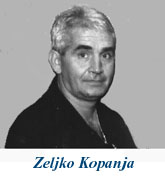 December 15, 1999 — On October 22, 1999, Bosnian Serb newspaper editor Zeljko Kopanja walked out of his home in Banja Luka and got into his car. He remembers a terrible explosion. When Kopanja woke up in the hospital, both his legs had been amputated.
 Throughout Bosnia, Muslim, Serb, and Croat journalists closed ranks to condemn the bombing. Broadcasters paid tribute to Kopanja’s courage. Some newspapers, including Nezavzine Novine, ran blank front pages with a single diagonal headline: “We Demand!” They wanted a more thorough investigation into the bombing, and they wanted the government to explain why it did not provide him with protection, even weeks after he started receiving death threats.