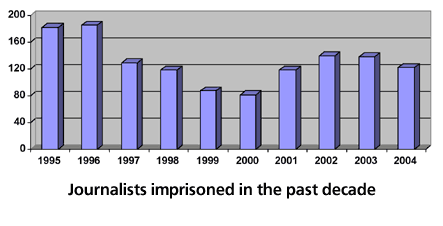
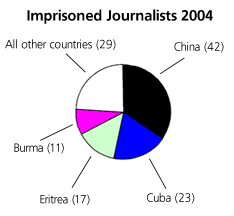
New York, February 3, 2005–Four countries with long records of press repression–China, Cuba, Eritrea, and Burma–account for more than three-quarters of the journalists imprisoned around the world, a new analysis by the Committee to Protect Journalists has found.
 “These four countries operate outside the international mainstream,” CPJ Executive Director Ann Cooper said. “The widespread jailing of journalists is pursued only by those few nations that distrust their own citizens and care little about the opinion of the rest of the world.” “These four countries operate outside the international mainstream,” CPJ Executive Director Ann Cooper said. “The widespread jailing of journalists is pursued only by those few nations that distrust their own citizens and care little about the opinion of the rest of the world.”
CPJ’s annual census found 122 journalists in 20 countries in prison on Dec. 31, 2004, for practicing their profession. The tally is 16 fewer than the year before, a result in part of international advocacy campaigns waged by CPJ and other press freedom groups. At least 74 imprisoned journalists worldwide were charged under various “antistate” laws, such as subversion, sedition, divulging state secrets, or acting against the interests of the state, CPJ’s analysis found. Allegations of “antistate” activity were made in 14 additional cases in which formal charges were not made public, CPJ research found. “The prevalence of these broad ‘antistate’ allegations is striking,” Cooper said. “It illustrates the propensity of repressive governments to simply lock up journalists who write critically about public affairs.” In at least nine cases, CPJ found, journalists were imprisoned under defamation, libel or “insult” laws. Authorities also used a variety of other charges–inciting public unrest, spreading “false” news, and violating restrictive media regulations–to jail journalists. For the sixth consecutive year, China was the leading jailer of journalists, with 42 imprisoned at year’s end. Cuba ranked second with 23 reporters, writers and editors behind bars, the grim legacy of the country’s massive March 2003 crackdown on dissidents and the independent press. Eritrea was the leading jailer of journalists in Africa with 17 in prison, many of whom were being held incommunicado in secret jails, according to CPJ research. In Burma, 11 journalists were behind bars in reprisal for their work at year’s end. (Three were released after the beginning of the year.) Two of those still in jail, documentary filmmakers Aung Pwint and Nyein Thit, were honored with CPJ’s 2004 International Press Freedom Award last November. Imprisoned since October 1999, they are serving eight-year terms for making independent documentaries that portrayed the harsh realities of life in Burma, including poverty and forced labor. CPJ believes that journalists should not be imprisoned for doing their jobs, and that the use of such penalties is debilitating to the fundamental human right to free expression. The organization has sent letters expressing its serious concerns to each country that has imprisoned a journalist. This year’s list includes one U.S. journalist: Jim Taricani, a reporter for WJAR-TV in Providence, R.I., who is serving six months of home confinement. Taricani was convicted on a federal charge of criminal contempt for refusing to reveal who leaked a government surveillance tape to him during a municipal corruption probe. With at least two other U.S. journalists now facing possible federal prison terms–Matthew Cooper of Time and Judith Miller of The New York Times–CPJ has condemned the U.S. government’s stance and noted that it has sent a terrible message worldwide. CPJ’s full list of imprisoned journalists is available online. The list is a snapshot of journalists incarcerated at midnight on December 31, 2004. It does not include the many journalists imprisoned and released throughout the year; accounts of those cases can also be found on this Web site. CPJ considers any journalist deprived of his or her liberty by a government to be imprisoned. Journalists remain on CPJ’s list until the organization receives positive confirmation that they have been released. Journalists who either disappear or are abducted by nonstate entities, including criminal gangs, rebels, or militant groups, are not included on the imprisoned list. Details of these cases are also available on CPJ’s Web site. |
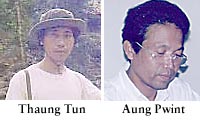 CPJ has begun a campaign seeking the release of the two Burmese filmmakers, with 400 prominent journalists and press freedom advocates joining the effort. This week, CPJ sent to the Burmese embassy signed appeals from these media executives, journalists, and free press activists that call for the release of the men.