About CPJ


Join us in defending press freedom


This year CPJ celebrated 30 years of fighting for press freedom. We have never been more active, more needed -- or more effective.

Please take a few minutes to watch an excerpt from this inspiring documentary about CPJ's history of impact. (If you've got more than a few minutes, click here to watch the full-length version).

You'll see that while the world of journalism has changed tremendously, our core mission has remained remarkably constant. CPJ began with the idea that journalists around the world should come together to defend the rights of our colleagues working in repressive and dangerous environments. We organized our first advocacy campaign in 1982, when three British journalists -- Simon Winchester, Ian Mather, and Tony Prime -- were arrested in Argentina while covering the Falklands War. A letter from CPJ honorary chairman Walter Cronkite helped spring them from prison.

In 2011, Al Jazeera journalists covering the revolution in Egypt tweeted at CPJ to alert us that police were at their door. We used all media -- old, new, and social -- to mobilize a global response. The police backed down.

This year alone, CPJ advocacy helped free at least 69 journalists from prison, from Cuba to South Sudan. We were delighted to meet International Press Freedom Award-winner Eynulla Fatullayev, who was released from prison in Azerbaijan after years of relentless reporting by CPJ. "You never got tired of advocating on my behalf," he told us, in an emotional interview soon after his release. "Your actions kept public attention on my case. And that, in a sense, gave me immunity. I believe it literally saved my life."

CPJ provided direct assistance to a record number of 167 journalists at risk worldwide--arranging for emergency evacuation, medical treatment, financial and legal aid.

We hope you'll consider a year-end gift to support CPJ as we celebrate 30 years of fighting for press freedom. Your support has allowed us to adapt to new challenges and expand our work to keep journalists safe. However, we will need all your help to meet the growing threats to media freedom, both online and off.

Please use this secure link to give as generously as you can. Your tax-deductible donation will help support brave journalists who risk their lives to pursue stories that matter


Spotlight on Giving: The International Program Network

CPJ's International Program Network was initially launched with an endowed gift from Bloomberg.

A growing team of on-the-ground consultants and stringers helps CPJ respond in real time to press emergencies around the world. Working closely with the program staff at CPJ's headquarters in New York, the International Program Network advances our mission of promoting global press freedom by:

  • Improving our ability to report and investigate attacks on journalists wherever they occur.
  • Strengthening alliances with local and regional press freedom advocacy groups.
  • Enabling more timely, direct assistance to journalists in distress.
  • Meeting with local and international authorities to advocate directly for press safety.

Whether responding to a crisis or lending context to a regional threat, this network of experienced reporters and regional analysts has provided invaluable support to CPJ's work.

Here are just a few of their accomplishments.


Reporting from the scene

November 23, 2009 was the single deadliest day for journalists in recent history. Thirty-two journalists and media workers were systematically killed in a massacre in the Philippines province of Maguindanao. Within two days, CPJ's Southeast Asia Consultant Shawn Crispin, a veteran reporter based in Bangkok, was at the site of the massacre. Crispin helped coordinate an international investigation that found that family members of victims had been offered financial inducements to drop their cases against the suspected killers. He has also followed closely the stalled efforts to bring those responsible to justice, keeping a spotlight on the conditions that allow the killing of journalists in the Philippines to go unpunished.


Direct assistance to journalists

East Africa Consultant Tom Rhodes launched a Nairobi office in 2010, improving CPJ's ability to document and investigate threats to journalists in the region. In 2011, his work took him to South Sudan, where journalists are struggling to build a free press in the newly independent country. Just as important has been Rhodes' direct contact with a growing number of journalists in the region who have sought CPJ's help in leaving their home countries to escape violence and persecution. In coordination with international and regional assistance organizations, he has helped CPJ's Journalist Assistance program to support relocation efforts for journalists in exile, and to provide medical care and emergency aid when needed.


In-depth analysis and advocacy

Veteran reporter Mike O'Connor, CPJ's Mexico Representative, worked closely with Americas Program Coordinator Carlos Lauria to write "Silence or Death in Mexico's Press" in September 2010. This report documents in chilling detail the killing, kidnapping and other attacks on Mexico's journalists in a wave of drug-related criminality since President Felipe Calderón Hinojosa took office in 2006, and the systematic impunity that has taken hold at the state and local levels. A month after the report was published, a CPJ delegation presented it in person to Calderón and his cabinet, and received in response a pledge to push for an end to the systematic impunity at state and local levels. Based in Mexico City, O'Connor travels frequently to the site of journalist attacks, and has met with government officials to urge investigation and prosecution of these crimes.

In fall 2011, CPJ also had consultants, stringers and representatives working in the UK, Belgium, Senegal, Russia, Brazil, India and Hong Kong SAR.


What We Do With Your Money

The Committee to Protect Journalists (CPJ) fights for the rights of journalists around the world to report the news freely, without fear of reprisals. As a nonprofit, nonpartisan organization, CPJ relies solely on contributions from individuals and corporations to carry out our important work. In order to preserve our independence, we do not accept any government grants or support of any kind.

Donate to CPJ with our secure online system.
Become a Member
Spotlight on Giving

Individual and corporate donations help us investigate, publicize, and protest attacks on press freedom worldwide. CPJ responds whenever a journalist is in peril. We also assist journalists with urgent needs, such as emergency evacuation, resettlement in exile, medicine, and legal defense. CPJ publishes articles and news releases, special reports, and Attacks on the Press, the most comprehensive annual book on press freedom around the world.

Every report we author and distribute, every campaign we undertake to free jailed journalists, and all our missions to countries where journalists are in distress are funded entirely by donations and gifts from supporters. Your tax-deductible contribution and membership will make a crucial difference in the lives of embattled journalists worldwide.

Our 2011 annual report, which includes our financial statements and a description of our initiatives, may be downloaded in pdf.


Donating To CPJ

In November 2002, CPJ launched a "Comprehensive Campaign" to build the organization's long-term financial stability, with a goal of raising $12 million and creating a permanent endowment. Our campaign is off to a very positive start, with leadership support from major media organizations and corporations dedicated to press freedom (click here for a list of supporters). We invite you to join our campaign; your donations will help CPJ continue to work on behalf of journalists worldwide and to defend those who risk their lives to bring us the news. CPJ is a 501(c)3 nonprofit and all donations are tax-deductible. To make individual donations to the campaign, please contact the Development Department at (212) 465-9344 ext. 144 or development@cpj.org.


Matching Gifts

Many organizations will match their employees' contributions to nonprofit organizations. Please contact your public/corporate affairs office and find out if your company will match your contribution to CPJ. All donations are tax-deductible.


Corporate Donors

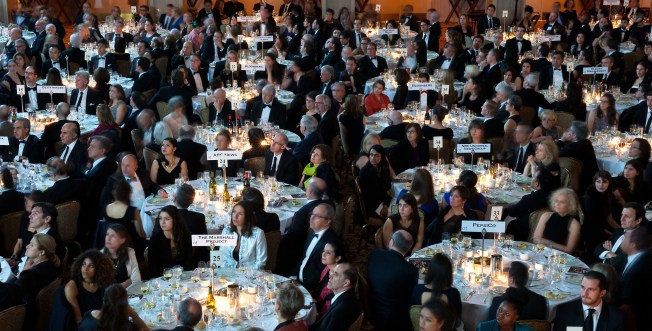
CPJ is extremely grateful to its many corporate donors, which include major media organizations, corporations, and financial institutions. All corporate donors are recognized in CPJ promotional materials; are listed in the current supporters section of our Web site; receive the electronic newsletter CPJ Impact and our annual publication on press freedom worldwide, Attacks on the Press. Corporate donors are also given priority access to tables at our annual International Press Freedom Awards dinner, which has been a sold-out event for more than 12 years.

To become a corporate donor to CPJ, please choose one of the following options:

Corporate Leader $50,000
Corporate Underwriter $25,000
Sponsor $15,000
Patron $10,000
Friend $5,000
Benefactor $1,000

Foundations

CPJ is grateful to the many foundations that have supported its activities and worked closely with CPJ to defend press freedom in the more than 120 countries we monitor. Program officers or members of foundations interested in learning more about CPJ should contact the Department of Development and Outreach via e-mail or call Elena Snyder at (212) 465-9344 ext. 109.

You can also write to:
Department of Development and Outreach
Committee to Protect Journalists
330 Seventh Avenue, 11th Floor
New York, NY 10001


In-kind Donations

In-kind donations and services can make a significant difference to CPJ. Consider donating a broad range of products and services, including research; technology; advertising; publicity; printing; graphic design; photography; video; office space; furniture; and equipment. Write to development@cpj.org or call (212) 465-9344 ext. 144.


Memorial Contributions

If you would like to make a contribution in memory of a family member, friend, or journalist or in honor of someone's special occasion, please contact the Development Department. All contributions will be acknowledged in the Current Supporters section of the Web site and in the print edition of Attacks on the Press. CPJ will send a letter to whomever you choose notifying them of your gift.


Name CPJ in your will

Including the Committee to Protect Journalists in your estate plans is a wonderful way to help ensure the organization's future, and it is easy to carry out. A charitable bequest to CPJ may be included in your will when it is written or revised. You may also add a bequest through a codicil, a separate document consisting of an amendment to an existing will. All charitable bequests are fully deductible from your gross estate.

The following examples are meant to illustrate a variety of bequest techniques. You should consult an attorney to adapt this language to your individual circumstances as part of an overall estate plan.

A specific bequest is a gift of a particular dollar amount or a particular piece of property.
For example: I bequeath (dollar amount or description of property) to the Committee to Protect Journalists (or its successor).

A residuary bequest is a gift of all or part of the property remaining in your estate after debts, expenses, and specific bequests have been paid. When you use a percentage instead of a specific amount, your gift will stay relatively the same in proportion to your entire estate, regardless of unexpected increases or decreases in its value.

For example: I give, bequeath, and devise (all, or XX percent of) the rest, residue, and remainder of the property, both real and personal, wherever situated, which I may own or be entitled to at my death, to the Committee to Protect Journalists (or its successor).

A contingent bequest is a gift that takes effect only if the primary beneficiary or beneficiaries of the bequest predecease you.

For example: If neither my husband nor any descendants of mine survive me, then I give, bequeath, and devise all the rest, residue, and remainder of the property, both real and personal, wherever situated, which I may own or be entitled to at my death, to the Committee to Protect Journalists (or its successor).


Include CPJ in your retirement plans


Retirement Plans

One of the most cost-effective ways of including the Committee to Protect Journalists in your estate plans is to leave either the remainder or a portion of the remainder of your retirement plan to the Committee to Protect Journalists. If the unused portion of your pension fund, 401k, or IRA is assigned to any individual(s) other than a spouse, it is subject to an estate tax at your death, as well as an income tax when received by the heirs (if your estate is $650,000 or more). The two combined could erode up to 80 percent of the remaining benefits. If bequeathed to the Committee to Protect Journalists, those funds would escape both income and estate taxes, thereby reducing your taxable estate.


Life Insurance

If you own a life insurance policy that is no longer needed for the protection of your family or for other purposes, you may use it to make a gift to the Committee to Protect Journalists. The simplest way is to make the Committee to Protect Journalists both owner and irrevocable beneficiary of the policy, which would entitle you to an income tax deduction based on either the total value of the premiums paid, or the cash surrender value, whichever is less. An alternative is to name the Committee to Protect Journalists beneficiary of a policy you receive through your place of employment.


Become a Member

All CPJ members receive a subscription to CPJ's annual survey Attaks on the Press, as well as our electronic newsletter, CPJ Impact. Members can also opt to receive e-mail alerts, protest letters, and special reports from selected geographical regions. If you'd like to become a member of CPJ, please choose one of the following options:

Friend $5,000
Benefactor $1,000
Supporter $500
Contributor $100
Participant $45
Student $20

Click here to fill out a membership form

Thank you for your interest in CPJ, and for helping us to defend journalists and press freedom.


back to top