Go »
  Go »

Africa

2013


Facebook joins Global Network Initiative

With more than a billion users, Facebook is not only the biggest global social network but also an increasingly important forum for journalists. In some repressive countries it has even served as a publishing platform for journalists whose newspapers or news websites have been closed down. That is why journalists and bloggers should note today's news that after a year of standing on the threshold, Facebook has decided to step inside the Global Network Initiative tent.

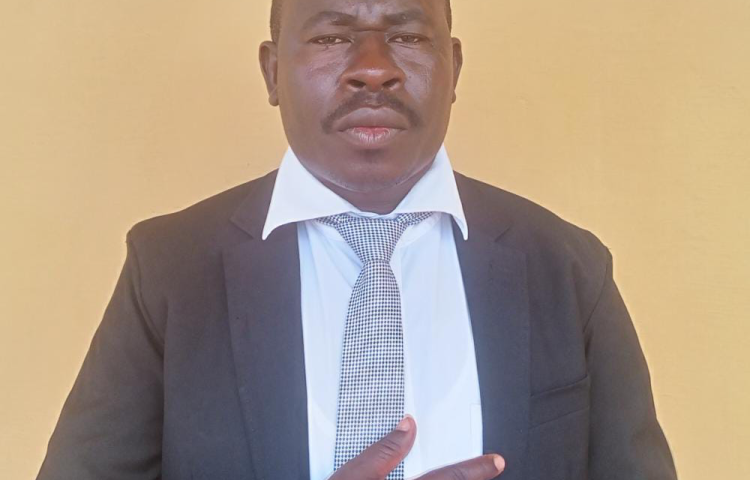
Police arbitrarily arrested Michael Koma, the managing editor of South Sudan's daily Juba Monitor, on May 2 and detained him for four days following the publication of an article critical of the deputy security minister. A veteran journalist, Koma has experienced firsthand the poor state of press freedom within Africa's newest country. CPJ spoke with him briefly this week.

May 22, 2013

His Excellency President Salva Kiir Mayardit
Office of the President, State House
Juba, South Sudan
Via email

Dear President Salva Kiir Mayardit,

We are writing to express our deep concern about the deteriorating state of press freedom in your country. In the past six months, CPJ has documented several cases of attacks, intimidation, and detention of journalists by security agents in South Sudan and we are concerned that this harassment has led to self-censorship and even exile among the local press corps. We urge you to use the power of your office to ensure that journalists are allowed to work freely without harassment and censure from state security officials.

In the past six months, CPJ has documented at least 12 cases of attacks, harassment, and detention of journalists in South Sudan. In all but two of the cases, security officials were the perpetrators. Security agents, including police, have routinely harassed, intimidated, and occasionally detained journalists.

The latest episode occurred on May 2, when Deputy Interior Minister Salva Mathok Gengdit ordered the unlawful detention of the chief and managing editors of the private daily Juba Monitor for publishing a statement that implicated him in the March murder of a traffic policeman, according to news reports. Gengdit denied the allegations, according to news reports. In early April, security agents arbitrarily detained and threatened a Miraya FM journalist in Malakal, and in January, security officials arrested seven journalists in an apparent attempt to stifle reporting on a violent crackdown on protesters in the city of Wau.

Local journalists have told CPJ that this official intimidation has caused them to censor themselves and, in some cases, even flee the country. In December 2012 and January 2013, two outspoken columnists, Zehariah Manyok and John Penn de Ngong, went into exile after receiving anonymous threats, according to news reports and CPJ research.

Mr. President, official threats and attacks against the press violate Article 24 of South Sudan's transitional constitution, which stipulates that "all levels of government shall guarantee the freedom of the press."

While it is encouraging that the Media Authority Bill, which was designed to provide the press with an independent regulator, was signed into law this week, the state must also address security concerns of journalists in South Sudan. In your New Year's address, you expressed concern about the cases of harassment, abuse, and arbitrary detention of members of the public who are critical of the government. In your statement, you called such actions "unacceptable" and disrespectful to those who fought for South Sudan's independence.

We urge you to ensure that security agents who continue to intimidate and censor the South Sudanese press face consequences up to and including criminal prosecution. Such a firm response to these violations will restore confidence among the local media and ensure that the freedoms for which your government fought will be upheld.

Sincerely,

Joel Simon
Executive Director


CC List:

H.E. Salva Kiir Mayardit, President of the Republic of South Sudan

H.E. Riek Machar, Vice-President of the Republic of South Sudan

Barnaba Marial, Minister of Information of South Sudan

General Alison Manani Magaya, Minister of Interior of South Sudan

Atem Yak Atem, Deputy Minister of Information of South Sudan

Hanne-Marie Kaarstad, Norway Ambassador to South Sudan

Susan D. Page, U.S. Ambassador to South Sudan

Ian Hughes, U.K. Ambassador to South Sudan

Kees Van Baar, Netherlands Ambassador to South Sudan

Ariane Quentier, United Nations Mission in South Sudan Spokesperson

Joseph Karangwa, Head of Office, International Monetary Fund 

Monica Moore, USAID Deputy General Development Officer

Catherine Ashton, High Representative of the European Union

Elizabeth Carriere, Head of DFID, South Sudan

Oliver Modi, Chairman of the Union of Journalists in South Sudan

Biel Boutrous, Chairperson of South Sudan Human Rights Society

Edmond Yakani, Chairperson of the Community Empowerment for Progress Organisation

David de Dau, Executive Director, Agency for Independent Media

Police stand outside the offices of the Daily Monitor. (Daily Monitor)

Nairobi, May 21, 2013--Ugandan police surrounded the Kampala offices of two private newspapers for seven hours on Monday, barring access to the premises, disabling printing presses, and effectively halting publication indefinitely, according to news reports. The police said they had search warrants to find documents related to a letter written by an army official that described an assassination plot.

A journalist is being harassed in connection with a seven-month-old story about Azeb Mesfin, seen here with her husband, the late leader Meles Zenawi. (AP/Samson Haileyesus)

New York, May 15, 2013--Ethiopian police in Addis Ababa questioned an editor for several hours today in connection with a story published in October about the widow of the late Ethiopian leader Meles Zenawi, according to news reports.

| Kenya

The working environment for journalists and media workers in Kenya is increasingly hostile, with at least 91 percent of journalists at local media outlets having faced security threats in the course of their work, a new study has revealed. The harassment of and attacks against journalists, with nearly 40 percent coming from politicians, indicates a need for urgent attention from both state and non-state actors if press freedom is to be guaranteed in the country.

Gen. David Sejusa (Facebook)

While Uganda's politicians and social media are abuzz over a sensational letter reportedly written by a top security official about a high-level assassination plot, police have dutifully harassed the mainstream press in a bid to suppress the chatter.

Liberian newspapers protest threatening remarks by President Ellen Johnson Sirleaf's security chief. (Wade Williams/FrontPage Africa)

Most governments, even repressive ones, at least give lip service to supporting freedom of the press--especially on World Press Freedom Day, May 3. But in Liberia this month, Othello Daniel Warrick, President Ellen Johnson Sirleaf's chief security aide, shocked local journalists by threatening them and calling them "terrorists" at a public event to mark the occasion, according to news reports and local media groups.

The staff of Foundation Radio (Fomunyoh Foundation)

New York, May 13, 2013--The Committee to Protect Journalists condemns the closure of an independent radio station on April 22 in retaliation for its broadcast of an interview that authorities said incited secessionism.

A French freelance reporter has said she was expelled from the city of Gao after reporting on allegations of human rights abuses in a nearby town, according to news reports.

Cape Town, South Africa, May 8, 2013--Police in Harare have filed criminal charges against two Zimbabwean journalists on accusations they published "false statements prejudicial to the state" in a story about behind-the-scenes discussions between military leaders and the opposition Movement for Democratic Change. 

Nigeria's press freedom record is on the decline.

For the first time since 2008, when CPJ began publishing its annual Impunity Index, Nigeria has made the list of the "worst nations in the world for deadly, unpunished violence against the press."

Patrick Paggio
Niyonkuru is recovering from a bullet wound to the arm. (Courtesy Patrick Paggio
Niyonkuru)

Burundi's government took unusually swift action last week in response to the police shooting of a radio reporter, after the journalist sought information at a roadblock in the capital Bujumbura where market vendors were allegedly being "taxed" for passage. Perhaps the shooting could have been averted if authorities had bothered to discipline officers involved in previous attacks on journalists.

Activists protest impunity in journalist murders in the Philippines. (AFP/Noel Celis)

Gerardo Ortega's news and talk show on DWAR in Puerto Princesa, Philippines, went off as usual on the morning of January 24, 2011. Ortega, like many radio journalists in the Philippines, was outspoken about government corruption, particularly as it concerned local mining issues. His show over, Ortega left the studios and headed to a local clothing store to do some shopping. There, he was shot in the back of the head. His murder underlines the characteristics and security challenges common to many of the killings documented as part of CPJ's new Impunity Index: A well-known local journalist whose daily routines were easily tracked, Ortega had been followed and killed by a hired gunman. He had been threatened many times before in response to his tough political commentary, a pattern that shows up time and again on CPJ's Impunity Index.


New York, May 2, 2013---In response to today's ruling by Ethiopia's Supreme Court to uphold an 18-year prison sentence imposed on award-winning journalist Eskinder Nega and reject his appeal, the Committee to Protect Journalists issued the following statement: 

"This ruling trivializes the serious crime of terrorism, upholds a politically motivated travesty of justice, and lessens Ethiopia's international standing," CPJ Africa Advocacy Coordinator Mohamed Keita said. "As a member of the U.N. Human Rights Council, Ethiopia should comply with its obligations under international law and its own constitution and release Eskinder unconditionally. The persecution of Eskinder and other journalists is the hallmark of a regime fearful of the opinions of its citizens."

CPJ’s 2013 Impunity Index spotlights countries where journalists are slain and the killers go free

Mohamed Ahmed Jama's arm was broken in the attack. (Hubaal Media Network)

New York, April 30, 2013--A senior administration official in Somaliland has said that police officers were the perpetrators of an April 24 attack on the owner of a media network, according to news reports. The Committee to Protect Journalists calls on authorities in the semi-autonomous republic to conduct a thorough investigation and ensure that all those responsible are brought to justice.

Two masked gunmen burst into the offices of the critical independent daily Hubaal in the capital, Hargeisa, at around 11:30 p.m. as the paper's employees were proofreading the next day's issue, according to local journalists and news reports. One assailant fired at least once at Mohamed Ahmed Jama, but missed, the reports said. Mohamed is the owner and manager of the Hubaal Media Network, which publishes Hubaal and the English daily The Independent, according to Hubaal Editor-in-Chief Hassan Hussein Abdillahi. Mohamed is also the manager of both papers.

| CPJ

In 2 major efforts, journalist security tailored to fit

Two major security efforts coincide with World Press Freedom Day.

In the past, donors and groups providing security to journalists in less-developed nations tended to export a Western, military-style of training designed for a war-time environment. But the danger of covering combat is one thing. Being fired upon by a motorcycle-riding assassin is another--as is being sexually molested in a crowd, discovering a video camera in one's bedroom, or having one's phone calls intercepted. And then there is emotional toll of losing dear colleagues, and wondering whether you or your family will be next.

So your Twitter account is hacked? Reset, tweet, pray.

More than a quarter million Twitter accounts have been hacked worldwide, the social media company disclosed in February, but Tuesday's attack on The Associated Press's verified account, @AP, had unusual effect. The Dow Jones industrial average fell 143 points after someone hijacked the AP's account to falsely tweet that two explosions at the White House had wounded President Barack Obama. The market recovered, but the hacking--just the latest in a series of attacks on news organizations--sent shudders through a profession that's grown accustomed to breaking its news on Twitter.

New York, April 23, 2013--The Committee to Protect Journalists today called on Swaziland's appeals court to overturn last week's conviction of an editor for "contempt by scandalizing the court" in relation to two articles criticizing the country's chief justice.

New York, April 23, 2013--The Committee to Protect Journalists condemns the passage in the Senate of highly restrictive amendments to Burundi's Press Law and calls on President Pierre Nkurunziza to reject the bill when it comes to him for confirmation.

It seemed clear-cut and sadly familiar: A journalist was shot and killed while walking in Mogadishu, one of the deadliest places in the world for the press. Yet in the four weeks that have passed since those initial reports from international and local news agencies--accounts that were then amplified by the United Nations, CPJ, and numerous human rights groups--virtually everything about the case has been cast into doubt. Was there a murder, after all? Who was the woman said to have been targeted? Does she even exist, at least as she was described? What did the people described as eyewitnesses really see? And why, after telling local journalists early on that the case was actually being investigated as a false report, have police gone silent for weeks?

Mourners carry the coffin of Somali journalist Mohamed Ibrahim Raage in Jazira on the outskirts of Mogadishu on Monday. (AFP/Mohamed Abdiwahab)

Nairobi, April 22, 2013--The Committee to Protect Journalists calls on Somali authorities to keep their promise to prosecute journalists' killers by investigating the murder of Mohamed Ibrahim Raage. Two unidentified gunmen shot Mohamed around 5:30 p.m. Sunday near his home in Mogadishu's Dharkenley district, according to local journalists.

(Awramba Times)

New York, April 22, 2013--The Committee to Protect Journalists protests Ethiopian authorities' transfer of independent newspaper editor Woubshet Taye to a remote prison several hours away from his family's home. Woubshet has been imprisoned since June 2011 on vague terrorism charges that CPJ has determined to be unsubstantiated.

Ali and Namu are threatened after suggesting foul play in a government official's death. (The Standard)

Nairobi, April 19, 2013--Two investigative journalists have reported receiving death threats in Kenya shortly after airing a story suggesting foul play in a government official's death, according to news reports and local journalists.

Two journalists with a daily paper in Nigeria have been charged with forgery. (Courtesy Leadership)

Lagos, Nigeria, April 19, 2013--Two Nigerian journalists and their employer have been charged with forgery in connection with their publication of a memo reported to be from President Goodluck Jonathan, according to news reports. If convicted, the journalists could face life terms.

Lagos, Nigeria, April 17, 2013--The Committee to Protect Journalists condemns a recent decision by the Nigerian government to ban the exhibition and distribution of a documentary film on corruption in the state's management of oil wealth, "Fuelling Poverty."

The office of Nigerian President Goodluck Jonathan said a memo published by Leadership newspaper was fictitious. (AP/Sunday Alamba)

Lagos, Nigeria, April 10, 2013--Nigerian police should stop harassing the staff of the leading independent daily Leadership over a story critical of President Goodluck Jonathan, the Committee to Protect Journalists said today.

On Monday, police in the capital Abuja summoned four Leadership journalists for questioning over an April 3 story entitled "Outrage Trails Presidential Directive on Tinubu, APC," according to the newspaper. The story reported on public criticism of Jonathan following Leadership's publication a day earlier of a purported presidential memorandum in which Jonathan allegedly laid out plans to increase petrol prices and sabotage a merger of opposition political parties ahead of the 2015 elections by targeting their leaders' business interests.

Eskinder Nega (Eskinder family)

Authorities in Ethiopia describe Eskinder Nega, a prominent columnist and government critic jailed since September 2011 on vague terrorism charges, as a dangerous individual bent on violent revolution. However, in an opinion handed down in 2012--publicized only this week by Washington, D.C.-based legal advocacy group Freedom Now--a United Nations panel of five independent experts ruled that Eskinder's imprisonment came "as a result of his peaceful exercise of the right to freedom of expression."

New York, April 5, 2013--Police in Somalia say they have been holding a woman in custody for much of this week after they say questions were raised about the veracity of reports that a journalist was fatally shot in Mogadishu on March 24.

Lagos, Nigeria, April 4, 2013--The Committee to Protect Journalists today called on authorities in Togo to investigate an apparently deliberate hit-and-run attack Wednesday on freelance photojournalist and videographer Koffi Djidonou Frédéric Attipou. 

The National Communications Council suspended Ruben Malick Djoumbissie, host of Canal 2tective, for three months. The investigative TV show has been banned indefinitely. (Canal 2 International)

New York, April 3, 2013--In a wave of censorship, Cameroon has indefinitely banned two TV programs for what regulators considered violent content and another three radio programs on vague charges of ethics violations, according to news reports. The Committee to Protect Journalists condemns the move, which also includes the suspension of at least seven journalists.

(Boukary Daou)

New York, April 2, 2013--The Committee to Protect Journalists welcomes today's decision by a judge in Mali to grant bail to a journalist who was jailed for 27 days in connection with his paper's publication of a letter critical of a military leader. CPJ calls on the public prosecutor to drop the charges against Boukary Daou, an editor of the daily Le Républicain.

Daou was released from the central prison in Bamako, the capital, at around 3 p.m. after the judge granted his application for bail pending trial, Assane Koné, editor-in-chief of the paper, told CPJ. Daou told CPJ he shared a cell with about 50 other inmates. Daou has been charged with incitement to mutiny and publishing false information and faces up to three years in prison and a maximum fine of 150 million CFA francs (US$293,000) if convicted, according to local journalists. His trial is scheduled to resume on April 16.

Wesonga

Nairobi, April 1, 2013--A correspondent for The Star daily newspaper was found dead Sunday morning in his house in the coastal city of Mombasa, local journalists told CPJ. A housemate found reporter Bernard Wesonga with blood on his nose and mouth at around 11:30 a.m., Star Deputy Editor Charles Kerich said.

CPJ launches Somali Security Guide

Last week, two gunmen waited near the home of a young Somali journalist, Rahmo Abdulkadir, who had recently returned to the capital from the Galgadud district in central Somalia where she worked as a reporter for Radio Abudwaq (Worshipper). According to local journalists, 25-year-old Rahmo had just left an Internet café in Mogadishu around 9:30 p.m. on March 24 with a friend when she was shot and killed. Her companion was not harmed.

New York, March 28, 2013--An appellate court in Cameroon should overturn the defamation conviction and jail sentence handed to a newspaper editor on Monday, the Committee to Protect Journalists said today.

Seleka fighters cruise a neighborhood in Bangui. (AFP/Sia Kambou)

New York, March 26, 2013--At least two news outlets were raided in the Central African Republic on Sunday when rebel groups ousted the president from power, according to news reports and local press freedom groups.

Nairobi, March 26, 2013--An appellate court judge in the Rwandan capital, Kigali, on Monday upheld the criminal conviction of an editor who is serving a one-year prison sentence in connection with an opinion column, according to local journalists.

Reporters surround Beatrice
Mtetwa as she exited a courthouse today. (ZLHR/Kumbirai Mafunda)

Beatrice Mtetwa, a tenacious lawyer who has won accolades for stubbornly defending journalists and others persecuted by Robert Mugabe's regime in Zimbabwe, regained her freedom today after a hellish week that began on March 17 when she was arrested and charged with the criminal offense of "defeating or obstructing the course of justice."

EDITOR'S NOTE: Subsequent to the publication of this report, questions were raised about the veracity of the account given by the primary sources. CPJ has published two follow-up reports detailing those questions, which raise doubts as to whether a killing took place as described. CPJ continues to monitor the case.


Nairobi, March 25, 2013--Somali authorities must immediately investigate the murder of a radio journalist who was shot dead on Sunday evening in Mogadishu, the Committee to Protect Journalists said today.

This week in Mogadishu, Abdiaziz Abdinuur, left was freed from prison, but Mohamed Ali Nuxurkey was killed in a bombing that injured three other journalists. (AFP, Raxanreeb)

"He's free! He's free!" a friend of mine from Somalia's capital, Mogadishu, shouted down the phone line on Sunday. For a fleeting second I did not know whom he referred to, given the high number of journalists imprisoned in the Horn region of Africa--but then it dawned on me: Abdiaziz Abdinuur had finally found justice. The 25-year-old freelance reporter was arrested on January 10 in Mogadishu for the most incomprehensible alleged crime: conducting an interview.

Lagos, Nigeria, March 21, 2013--The Committee to Protect Journalists welcomes Wednesday's ruling by Togo's Constitutional Court to reject repressive amendments to a media law that granted the state-run media regulator sweeping powers of censorship.

Information Permanent Secretary Bitange Ndemo has criticized the press in the past. (The Nation)

Kenya has passed peacefully through its election period, but questions still hang over the legitimacy of presidential candidate Uhuru Kenyatta's victory--as well as over the future of the country's media coverage. During polling, challenges arose for both local and international media, and they have not subsided. For the foreign press, it is now unclear how to get accreditation to report in the country. Local journalists are worried about the rise of self-censorship, and freedom of expression advocates are concerned by plans for vague regulations on hate speech.

Several journalists and news outlets covering political unrest in the capital, Conakry, were attacked in late February and March 2013, according to local journalists and news reports.

Angolan President Jose Eduardo dos Santos (left) and Anibal Cavaco Silva, president of Portugal, in Lisbon in 2009. (AFP/Joao Cortesao)

Portuguese journalists are increasingly concerned by Angola's growing investment and influence in their country. Buoyed by petrodollars and diamonds, powerful Angolan interests have been indulging in a buying spree in their former colonial power. Angolan capital invested in Portugal increased 35 times in the past decade, according to news reports. In a process often acidly described in Lisbon as a form of "reverse colonization," Angolans have gobbled up not only significant chunks of Portugal's banking, telecommunications, and energy companies, but also invested in the Portuguese media sector. 

(Boukary Daou)

Lagos, Nigeria, March 19, 2013--A journalist in Mali was charged on Monday with incitement to mutiny and publishing false information in connection with his publication of an article that was critical of a former coup leader, according to news reports.

Boukary Daou, a top editor for the daily Le Républicain, has been in custody since March 6, according to news reports. He was held incommunicado by State Security for eight days before being handed over to the Judicial Investigation Brigade of the police. If convicted, the journalist faces a maximum prison sentence of three years and fine of 150 million CFA francs, Assane Koné, editor-in-chief of Le Républicain, told CPJ. His lawyers have filed a petition seeking his release on bail pending trial. His next court date is scheduled for April 16, Koné said.

A journalist shouts at police during a peaceful sit-in to protest recent repressive amendments to a media law. (AFP/Daniel Hayduk)

Lagos, Nigeria, March 18, 2013--Togolese police on Thursday fired rubber bullets and tear gas to disperse journalists protesting new censorship authority granted to the government media regulator, according to news reports and local journalists.

Nairobi, March 18, 2013--The Committee to Protect Journalists is gravely concerned by a recent directive from authorities in Somalia's semi-autonomous Puntland region banning local broadcasters from airing content produced outside the region.

News stands in Mali are empty as journalists strike. (news.abamako.com)

Mali's press has endured one attack too many.

Since the coup d'état of March 22, 2012, CPJ has documented a staggering 62 anti-press violations across Mali. Journalists and media houses have become ready targets of attacks, threats, intimidation, assassination attempts, arbitrary arrests, detentions, and censorship by separatist and Islamist militant groups and government security forces alike. 

Nairobi, March 12, 2013--Somali police attacked and obstructed more than a half-dozen journalists who were seeking to cover a rape trial in Mogadishu on Saturday, as authorities continue to struggle in meeting law enforcement and free expression demands in sexual assault cases. The Committee to Protect Journalists condemns the attacks and calls on authorities to hold the officers accountable.

Lagos, Nigeria, March 11, 2013--Authorities in Mali must investigate an attack on a critical radio journalist that came two weeks after he received threats warning him to resign from the station, the Committee to Protect Journalists said today.

| Kenya

In tense climate, Kenyan press can draw on solidarity

A supporter of Raila Odinga, a presidential candidate who was defeated last week by Uhura Kenyatta. (AFP/Jennifer Huxta)

Amid a tense presidential election, Kenyans have avoided a repeat of the deadly violence that followed the vote in 2007, when half a million people were uprooted and more than 1,000 people were killed. Still, the situation today is fraught. Ethnic identity dominates the nation's political divisions--and those same loyalties can undermine solidarity in the press corps.

Today marks International Women's Day. Hashtags like #IWD and #InternationalWomensDay have been trending on Twitter. Among the twitterati who voiced their support for women's rights was Indian Prime Minister Manmohan Singh. He tweeted: 

Absalom Kibanda was beaten by three unidentified men on Tuesday. (Absalom Kibanda)

Nairobi, March 7, 2013--Authorities in Tanzania must immediately investigate a vicious attack on a veteran journalist in Dar es Salaam, the capital, on Tuesday night, the Committee to Protect Journalists said today.

(Boukary Daou)

New York, March 6, 2013--State security agents in Mali detained an editor today in connection with his newspaper's publication of an open letter criticizing a financial package awarded to a former coup leader, according to news reports and local journalists.

Six agents of State Security, Mali's intelligence agency, arrested Boukary Daou, a top editor for the daily Le Républicain, in the capital, Bamako, according to Assane Koné, the paper's editor-in-chief. Koné told CPJ that several journalists went to the agency's headquarters to inquire about Daou, but officials denied having him in custody. Local journalists and news reports, which cited an unnamed Malian security official, later confirmed the journalist's detention.

Hassan Ruvakuki, seen here after his release from prison today. (RFI)

Nairobi, March 6, 2013--Burundian authorities today released Hassan Ruvakuki, a reporter who has been imprisoned for 16 months on charges related to his interview with a rebel leader. The circumstances of the release were not immediately clear, and the Committee to Protect Journalists called on authorities to vacate Ruvakuki's conviction and prison sentence.

Presidential candidate Uhuru Kenyatta speaks to the press on election day. (AP)

Journalists could be seen rushing from polling station to polling station Monday to see long queues of determined Kenyan voters in what was apparently a largely peaceful election, according to the Deputy Director of Kenya's statutory media council, Victor Bwire. But leading up to the vote, many journalists worked in a climate of fear; and many of them say they are still wary that, once results are in, they will face attacks and other challenges such as they experienced in the aftermath of the last presidential election in 2007.

Nairobi, March 4, 2013--Sunday's decision by an appellate court in Mogadishu to uphold the conviction of a freelance Somali journalist in connection with his interview of a reported rape victim prolongs a miscarriage of justice and is a direct assault on press freedom, the Committee to Protect Journalists said today.

New York, March 4, 2013--The Committee to Protect Journalists condemns a decision by Nigeria's media regulatory body to shut down a radio station in connection with a broadcast that questioned the local government's motives in an anti-polio vaccination program.

Zenzele Ndebele is released after being detained by police for several hours. (Kucaca Phulu)

Nairobi, March 1, 2013--Authorities in Zimbabwe have stepped up their crackdown on independent news coverage in the country by raiding the production studios of a radio station and confiscating radios distributed by nongovernmental organizations, the Committee to Protect Journalists said today.

Local Zimbabweans often use radios to hear news coverage of elections. (Reuters/Emmanuel Chitate)

Nairobi, February 28, 2013--Zimbabwean authorities' seizure of hand-cranked and solar-powered radios distributed by nongovernmental organizations prevents local citizens from accessing diverse sources of information in the run-up to the country's general elections in July, the Committee to Protect Journalists said today.

Do news blackouts help journalists held captive?

An image grab from a YouTube video uploaded on December 18 allegedly shows NBC employees, from left to right, Aziz Akyavas, Richard Engel, and John Kooistra in captivity in Syria. (AFP/YouTube)

At any given time over the past two years, as wars raged in Libya and then Syria, and as other conflicts ground on in South Asia and sub-Saharan Africa, a number of journalists have been held captive by a diverse array of forces, from militants and rebels to criminals and paramilitaries. And at any given time, a small handful of these cases--sometimes one or two, sometimes more--have been purposely kept out of the news media. That is true today.

| Kenya

As Kenya votes, journalists must take precautions

Kenyan Prime Minister and presidential candidate Raila Odinga waves to supporters at a campaign rally in Mombasa on Sunday. (Reuters/Joseph Okanga)

Election-related violence is a worry for journalists in many countries, but perhaps nowhere more so than Kenya, where presidential polls will be held March 4. In the aftermath of the nation's last presidential elections in 2007, over one thousand people were killed in ethnic and political violence, live news broadcasts were banned, and the press faced a torrent of threats, leading to widespread self-censorship. Already, in recent weeks, some journalists have been harassed and their equipment confiscated, while media houses have been threatened in relation to coverage.

Somali Prime Minister Abdi Farah Shirdon met February 16 with the local journalist union. (NUSOJ)

Spirits of journalists in Somalia, the most dangerous country in Africa to practice the profession, were lifted slightly this week after Prime Minister Abdi Farah Shirdon made several auspicious announcements. The key concern on the minds of journalists in the capital, Mogadishu, is access to justice--both in terms of journalists' own court appearances and in terms of solving the many outstanding murder cases of their colleagues. Twelve journalists were killed in the line of duty last year, the worst on record, and there hasn't been a single prosecution. 

Burundi journalists react to tear gas at Tuesday's protest. (Teddy Mazina)

On Tuesday, Burundi's press corps did what it has done for the past three weeks: protest the imprisonment of one of its own. Hassan Ruvakuki is a reporter jailed since November 28, 2011 on anti-state charges; for the first time, the journalists wore white t-shirts showing Ruvakuki in his green prison uniform. But this time, the reaction by police caught journalists by surprise.

Joachim Diana Gikupa (Radio Okapi)

New York, February 15, 2013--Authorities in the Democratic Republic of Congo should release pending appeal a journalist who was sentenced to six months in prison in December on defamation charges, the Committee to Protect Journalists said today. The journalist was taken into custody on Tuesday.

Police arrested Joachim Diana Gikupa, editor of the private daily La Colombe in Kinshasa, and held him at a local court before transferring him to Malaka central prison, according to local news reports. Gikupa's lawyers filed an appeal, saying the journalist was in poor health and should be released on bail, according to the U.N.-backed broadcaster Radio Okapi. Gikupa was also ordered to pay US$20,000 in damages, local press freedom groups reported. 

Al-Mizan editor Musa Muhammad Awwal. (Al-Mizan)

Abuja, Nigeria, February 15, 2013--Authorities should halt their harassment of a Nigerian journalist whose paper published allegations of extrajudicial detentions being carried out by the country's special army unit, the Committee to Protect Journalists said today.

Armed officers of Nigeria's Joint Task Force and members of the State Secret Service (SSS) raided the Kaduna home of Musa Muhammad Awwal, an editor of the Hausa-language weekly Al-Mizan, early on Thursday, according to news reports. The agents seized Awwal's laptop and phone and took him into custody, saying they had been told to bring him to Abuja, the capital, Al-Mizan Editor-in-Chief Ibrahim Musa, said in a press release. The officers did not cite a reason for the detention or produce a warrant, Abdulmumin Giwa, an editor at Al-Mizan, told CPJ. Giwa also said that the Nigeria Union of Journalists had confirmed that Awwal was being held by the SSS.


CPJ's Robert Mahoney identifies the 10 countries where press freedom suffered the most in 2012. They include Syria, the world's deadliest country for the press; Russia, where repressive laws took effect; Brazil, where journalist murders soared; and Ethiopia, where terror laws are used to silence the press. (3:26)

New oil deals drive optimism, but the public knows little about the details. By Tom Rhodes

(AFP/Tullow Oil Uganda)

The rise of extremist groups who target journalists is a potent risk. By Mohamed Keita

(AFP/Pius Utomi Ekpei)

The right to news and opinion is enshrined in international law. It's not enough. By Joel Simon

(AFP/Spencer Platt)

Governments exploit national security laws to punish critical journalists. By Monica Campbell

(AFP/Jonathan Nackstrand)

Your cellphone allows authorities to locate you and uncover your sources. By Danny O'Brien

(AFP/Filippo Monteforte)

Police assaulted and obstructed numerous journalists covering opposition demonstrations, repeating an abusive pattern set during the previous year’s presidential campaign. Police officials repeatedly professed determination to investigate the attacks but ultimately held no officer publicly accountable. Several journalists began to seek redress in the courts, although no cases had been resolved by late year. President Yoweri Museveni signed the Uganda Communications Act in September. The measure ostensibly merged two regulatory bodies, but it also imposed vague new requirements that broadcasters respect “public morality” and “ethical broadcasting standards.” Press freedom organizations said the law also granted the Information Ministry broad powers to modify broadcast licenses at will.

President Faure Gnassingbé and his allies used the multiple levers of power to dominate the political and media landscapes. Coverage of dissenting political views came under attack from government regulators who censored critical programming, and from security agents who violently obstructed journalists covering protests. Government regulators barred a popular current affairs call-in radio program in July, while continuing their two-year-old ban on another station known for its vernacular political debate program. Street protests against human rights violations and abuses of power flared throughout the year but were violently dispersed by security forces. CPJ documented at least three instances in which security agents or police assaulted journalists covering the demonstrations. Journalists filming or photographing police dispersal tactics were targeted. Ahead of parliamentary elections scheduled for 2013, Gnassingbé’s ruling majority in the National Assembly passed legislation giving its loyalists control over local polls and vote counting, setting off another round of public protests by the opposition, according to news reports.

A journalist was killed in the line of duty in September, the first Tanzanian work-related fatality documented by CPJ in the 20 years it has kept detailed records. Police attacked veteran TV reporter Daudi Mwangosi, who was shot point-blank with a tear-gas canister and died at the scene, witnesses said. Mwangosi, of the private Channel 10 station, had confronted officers over the arrest of another journalist during an opposition rally, news reports said. The authorities arrested a junior officer in connection with the killing, but they didn’t pursue at least six other officers thought to be associated with the death, according to a report released by the independent Media Council of Tanzania. The government can use 17 repressive, media-related statutes to crack down on critical coverage. Under the Newspaper Act of 1976, the information ministry indefinitely banned the Swahili-language weekly MwanaHalisi in July on vague charges of sedition and false reporting in unspecified articles. The paper’s chief editor, Jabir Idrissa, said he suspected the publication was targeted for its coverage of a physicians’ strike in the country and the abduction and torture of Steven Ulimboka, a doctor leading the strikers. Reports from MwanaHalisi had suggested the authorities were involved in the attack on Ulimboka, but the government denied the allegations, news reports said.

Despite a relatively peaceful presidential election and the government’s continuing control of the capital, Mogadishu, a record number of Somali journalists were killed in 2012. Amid comparative calm in the capital, targeted killings of journalists and political figures continued, most notably in a deadly September blast at a café frequented by reporters and government officials. Given the ouster of Al-Shabaab insurgents from Mogadishu in 2011, the continuing killings raised concern that journalists and others were being targeted by a widening field of politically motivated antagonists. Though most fatalities occurred in the capital, unknown gunmen killed two journalists in separate attacks in Galkayo, a commercial hub of the semi-autonomous region of Puntland. Three radio stations were forced to close during the year, two on the orders of Al-Shabaab and one at the directive of Puntland officials. Pervasive insecurity has forced dozens of Somali journalists to flee into exile in the last five years, the highest number in the world. Although peaceful in comparison to the rest of the country, the semi-autonomous republic of Somaliland had a high number of journalist detentions.

President Paul Kagame used his August address before the East African Community Media Summit to cast the domestic press “as an important partner in our country’s development” while accusing Western journalists of misrepresentation that “derails our progress or even fuels conflict.” The dual theme--calling on domestic journalists to advance a government agenda while depicting international news media as adversaries--has become common among regional leaders. But critical journalists are seen as foes, not partners, by Kagame’s government. The authorities have engaged in several years of aggressive harassment of critical journalists, forcing many into exile, landing some in prison, and sowing self-censorship among the rest. CPJ identified three imprisoned journalists when it conducted its annual worldwide survey on December 1, and at least two others who were detained for significant periods during the year. Red lines appeared to be easily crossed and harshly punished: The authorities detained a radio presenter for nearly 100 days after the journalist mistakenly used a phrase deemed offensive to survivors of the 1994 genocide. Although Kagame spoke in support of media reform at the summit, three bills backed by the Rwandan press remained stalled in parliament. The bills would provide access to government information, create a media ombudsman independent of the government, and establish a public broadcaster.

President Goodluck Jonathan struggled to maintain stability as Boko Haram, an Islamist militant group based in northern Nigeria, carried out a wave of terrorist attacks against churches, government buildings, and, for the first time, news outlets. In April, the group staged coordinated attacks on offices of three newspapers in two cities, and threatened reprisals against 14 news outlets it accused of misrepresenting its activities. The threats forced many journalists to relocate from northern Nigeria. The press corps also faced persistent harassment at the hands of the government: CPJ documented more than 100 assaults, cases of obstruction, and other anti-press actions by security forces and officials. Jonathan also came under fire for his decision to suspend consumer fuel subsidies, which prompted a nationwide strike and street protests in this top oil-producing nation. Protesters surrounded the studios of the national public broadcaster Nigerian Television Authority and the private Africa Independent Television, two prominent outlets seen as pro-government, to demand more coverage of their concerns. The anger spread to social media with the #OccupyNigeria hashtag trending globally on Twitter.

After an extended period of relative calm and freedom, the Malian press faced severe threats amid a military coup and an armed insurrection. In March, a junta ousted President Amadou Toumani Touré just weeks before his second and final term would have expired. Touré had been the target of public discontent over setbacks suffered by the army in its fight against ethnic Tuareg separatists of the National Movement for the Liberation of Azawad in Mali's Saharan north. The rebels allied with hard-line Islamist militants to take advantage of the political turmoil after the coup, seizing Timbuktu and other northern cities and towns. Islamist groups imposed draconian censorship on dozens of radio stations, and shut down at least one. Their orders included bans on music and demands that programming feature Quranic recitations, local journalists said. Journalists operating in rebel and Islamist-controlled areas were also subjected to intense intimidation; those in government-controlled areas faced kidnappings, detentions, and assaults.

In the run-up to the March 2013 elections, tensions ran high among local journalists, who feared a repeat of the violent aftermath of the disputed 2007 vote in which the press was targeted and harassed in connection with news coverage. Several journalists were threatened or attacked throughout 2012 in reprisal for their reporting on official corruption. CPJ found that most of the anti-press episodes took place in Western Kenya. The installation of fiber-optic cable networks drove up the number of Internet users. With its Internet penetration having doubled since 2010, Kenya boasted the highest rate in East Africa. The country also leads East Africa in mobile phone use with 29 million clients, according to International Telecommunication Union data. Kenya continued to be the main regional refuge for journalists fleeing their home countries in fear of attack or imprisonment. Since 2007, at least 52 journalists have resettled in Kenya, but often under extreme hardship.

The death of Prime Minister Meles Zenawi in August in a Belgian hospital brought an end to a 21-year rule characterized by repression of dissent and iron-fisted control of the independent press. His fatal illness was shrouded in secrecy. After Meles disappeared from public view in June, the government played down rumors of his illness and suppressed in-depth domestic reporting. The government also faced rare demonstrations by members of the Muslim community, who protested what they called government interference in their affairs. Security forces violently dispersed the gatherings, cracking down on journalists who reported on them, and forcing three Muslim-oriented newspapers to close. The government drew widespread international condemnation for the convictions of nine Ethiopian journalists on vague and politicized terrorism charges. The journalists, five of them exiles tried in absentia, were handed sentences ranging from eight years to life imprisonment. The government finally freed two Swedish journalists who were imprisoned for 14 months for reporting on separatist Ogaden rebels. Six journalists remained behind bars in late year, including award-winning writer Eskinder Nega.

CPJ identified Eritrea as the most censored country in the world in 2012. No independent domestic news outlets have been allowed to operate since a widespread September 2001 government crackdown on dissent. The last accredited foreign news reporter was expelled in 2007. State media operate under the rigid control of Information Minister Ali Abdu, who uses intimidation and imprisonment to enforce a government-approved message. The Red Sea nation is the continent’s leading jailer of journalists; the detainees include independent reporters and editors swept up in the 2001 crackdown, along with numerous state media journalists who have somehow violated the government’s strict controls. The detainees are held without charge and in secret locations. President Isaias Afwerki has consistently refused to account for the whereabouts, legal status, or health of the jailed journalists, or even confirm reports that some have died in custody. Fearful state media journalists have fled the country in large numbers. Eritrea has the fifth highest number of exiled journalists in the world, according to CPJ data. In July, the U.N. Human Rights Council unanimously condemned “widespread and systematic violations” and appointed a representative to further investigate abuses, according to news reports.

Journalists reporting on renewed conflict in the east were repeatedly censored and intimidated by local officials, the national government, and rebel forces. Fighting resumed in the east after President Joseph Kabila said his government would try to arrest Bosco Ntaganda, a former warlord wanted by the International Criminal Court on war crime charges. In response, Ntaganda joined with army mutineers to form a rebel group that took control of key towns in North Kivu province. The state-run media regulatory agency barred all broadcasters from airing programs discussing the conflict; several radio stations were suspended indefinitely after interviewing the mutineers. At least three journalists fled into hiding after being threatened in reprisal for their reporting on the conflict. Tensions between DRC and neighboring Rwanda also grew after the publication in June of a leaked U.N. report that blamed Kigali for providing military assistance to the rebels. The same month, Communications Minister Lambert Mende accused a Kinshasa newspaper of tribalism and indefinitely suspended the publication in connection with an editorial critical of Congolese of Rwandan ancestry. Although danger was severe in the east, CPJ also documented numerous instances in which officials in Bas Congo detained and intimidated critical journalists.

Analyses and data chart press freedom conditions throughout the region. Mohamed Keita examines the growing risk from media-savvy insurgents, while Tom Rhodes probes oil, money, and secrecy in East Africa.

Worldwide tally reaches highest point since CPJ began surveys in 1990. Governments use charges of terrorism, other anti-state offenses to silence critical voices. Turkey is the world's worst jailer. A CPJ special report

Who is allowed to talk? What are they allowed to say? Award winners seek the answers. By Kristin Jones

(AFP/Michael Nagle)

Editors think twice, reporters do not dig deeply, columnists choose words carefully. By Jean-Paul Marthoz

(AFP/Brian Rasmussen)

No amount of security training can make up for a lack of professional solidarity. By Frank Smyth

(AFP/Orlando Sierra)

Police never bothered to look for cartoonist Prageeth Eknelygoda. It's not unusual. By María Salazar-Ferro

(AFP/Lakruwan Wannirachchi)

From conflict-ridden Syria to aspiring world leader Brazil, 10 nations on a downslope. By Karen Phillips

(Reuters/Enrique Marcarian)

Health care workers gather to administer polio vaccines in Nigeria. (AP/George Osodi)

Abuja, Nigeria, February 13, 2013--Authorities in Nigeria's northern state of Kano should drop the criminal charges filed on Tuesday against two radio journalists who have been detained since Sunday in connection with their criticism of local officials' handling of a polio vaccination campaign, the Committee to Protect Journalists said today.

Two editors of the private trimonthly Abba Garde (The Sentinel) were harassed and attacked in N'Djamena, the capital, in December 2012, according to local journalists and news reports. Local journalists told CPJ they believed the attacks were in reprisal for the paper's critical coverage of the government.

Four men in plainclothes claiming to be police officers briefly detained three journalists inside an office of a college in Aka Offot, a suburb of Uyo, the capital of Akwa Ibom state, on February 6, 2013, according to local journalists and news reports. The journalists were reporting on allegations of mismanagement at the federal government-run Science and Technical College, news reports said.

A court revived criminal charges against Temesghen Desalegn today. (CPJ)

Nairobi, February 8, 2013--The Committee to Protect Journalists condemns the revival of criminal charges against Ethiopian journalist Temesghen Desalegn today in what appears to be a politicized court hearing designed to censor one of the few critical voices left in the country.

Berthe Cakpossa, director of the private Canal 3 TV, was pardoned by President Boni Yayi on January 31, 2013, two weeks after a court sentenced her to jail and fined her for "offending the head of state," according to news reports.

Abdiaziz Abdinuur is sentenced in court. (AFP/Mohamed Abdiwahab)

Nairobi, February 5, 2013--The Committee to Protect Journalists condemns the conviction and prison sentence handed down today against a Somali freelance journalist charged with insulting the government by interviewing a woman who said she was raped by government forces. CPJ calls for the sentence to be overturned and for reporter Abdiaziz Abdinuur to be released immediately pending appeal. 

"Let's have faith in our judiciary system," Somali President Hassan Sheikh Mohamed told an audience Monday at London's Chatham House, the foreign affairs think-tank.

Ali Abdu, Eritrea's longtime information minister, has gone into exile, his brother has confirmed. (YouTube)

On Wednesday, the Swedish newspaper Expressen published what it described as an exclusive interview with Ali Abdu--Eritrea's long-time information minister, government spokesman, and censor-in-chief--who vanished from public view in November. The piece confirmed that Ali had gone into exile, but it shed no light on the whereabouts and well-being of more than two dozen imprisoned journalists.

Authorities have cracked down on reporters and news outlets that covered last year's demonstrations by Muslims, seen here. (AFP/Jenny Vaughan)

Nairobi, February 1, 2013--Ethiopian security forces have detained for two weeks without charge the editor of a newsmagazine and accused him of incitement to terrorism, according to local journalists. The Committee to Protect Journalists calls on authorities to release Solomon Kebede immediately and halt their harassment of journalists affiliated with the weekly Ye Muslimoch Guday.

An information void in Mali as journalists are obstructed

Three weeks after France's military intervention in Mali, the war remains largely "without images and without facts," as described by Jean-Paul Mari, special envoy for the newsweekly Le Nouvel Observateur. Although journalists have been allowed to follow French and Malian forces into the towns that have been recovered from armed Islamist groups, the real battlefields and front lines remain off limits.

An increase in press freedom violations last year created a surge of need among journalists, driving a record number of assistance cases for CPJ's Journalist Assistance Program in 2012. More than three-quarters of the 195 journalists who received support during the year came from East Africa and the Middle East and North Africa, reflecting the challenges--including threats of violence and imprisonment--of working in these repressive regions. Here are some of the highlights of our work over the last year:

In Mali, a war 'without images and without facts'

Soldiers with the Malian army speak to journalists. (Reuters/Joe Penney)

The French army is often called la Grande Muette, or "the Great Silent." The war in Mali confirms the French military's well-deserved reputation of being secretive about front-line actions. "Locking the information is more in the culture of the French army than of the U.S. army," says Maurice Botbol, director of La Lettre du Continent. In the first two weeks of military operations against Islamist militant groups in Mali, the French army has released only a blurry video of an air attack at an undisclosed location.

Abuja, Nigeria, January 24, 2013--An appellate court in Benin should overturn the conviction and toss out a prison sentence handed to the director of a private television station last week in connection with a broadcast of a press conference in September in which a former presidential adviser criticized President Boni Yayi, the Committee to Protect Journalists said today.

| Syria

Preparation helps freelancers survive, thrive

The Baba Amr district of Homs in March 2011. (AFP/Shaam News Network)

When the story is so important but the risks are so high, journalists must keep safety at the forefront of their thinking. That's especially true for freelancers who often do not have the support of a large news organization. Preparation, peer networking, and smart planning can help improve the odds of not only surviving hostile situations but succeeding in one's work.

Two soldiers beat Laolu Harolds, assistant editor of the daily Nigerian Tribune, on January 8, 2013, while he attempted to take pictures of soldiers demolishing local shops in Oyo state, according to news reports. The soldiers were affiliated with the government's demolition task force team, the reports said.

John Otanga seeks treatment for his head injury at a local hospital. (Nation/Billy Mutai)

Nairobi, January 22, 2013--Kenyan authorities must hold to account soldiers with the General Service Unit, Kenya's paramilitary force, in connection with their reported assault of two journalists on Sunday, the Committee to Protect Journalists said today.

What is the humanitarian function of journalism in wartime? How does international humanitarian law protect journalists? Why is impunity the most important challenge facing journalists working in conflict zones?

Abdihared Osman Aden. (Shabelle Media Network)

Nairobi, January 18, 2013--A veteran producer for the Shabelle Media Network was gunned down today in Mogadishu, the fifth Shabelle journalist killed in 13 months. The Committee to Protect Journalists condemns this murder and calls on Somali authorities to not only investigate, but to follow up on the investigative task force on journalist murders that was promised by Somali President Hassan Sheikh Mohamoud in November.

Unidentified assailants shot Shabelle producer Abdihared Osman Aden at around 7 a.m. today while he was walking to work in the Wadajir district of the capital, according to local journalists and news reports. The journalist, who was shot at least three times, died at a local hospital, the sources said.

Hassan Ruvakuki (IWACU)

At 8 o'clock Tuesday morning roughly 50 Burundian journalists silently marched around the courthouses in the capital, Bujumbura, and the offices of the justice minister, protesting the imprisonment of their colleague, Hassan Ruvakuki.

"They sentenced him to three years without following the law," said Patrick Nduwimana, one of the protest organizers and the interim director of local private radio station Bonesha FM. A week earlier, on Tuesday, January 8, an appeals court in Burundi had sentenced Ruvakuki, a reporter for Bonesha FM and the French government-backed Radio France Internationale, to three years imprisonment for "working with a criminal group."

Abuja, Nigeria, January 15, 2013--Nigerian authorities should determine the motive behind the murder of an editor on Saturday and bring the perpetrators to justice, the Committee to Protect Journalists said today.

Police fired tear gas and rubber bullets at protesters in Lomé on Thursday. (AFP/Daniel Hayduk)

Abuja, Nigeria, January 14, 2013--At least four journalists were reported injured by police while covering an anti-government protest in Togo's capital, Lomé, on Thursday, according to news reports. Several of the journalists, along with local press freedom group SOS Journalistes en Danger, said police had targeted a group of reporters with tear gas and rubber bullets in an effort to prevent them from covering the demonstrations, the reports said.

A police officer guards a camp of internally displaced persons in Mogadishu. (AFP/Tony Karumba)

Nairobi, January 11, 2013--Somali authorities should immediately release a freelance journalist who has been in custody in Mogadishu since Thursday for interviewing a woman who claimed she was raped by government soldiers, the Committee to Protect Journalists said today.

Nairobi, January 9, 2013--A journalist was found murdered in northwestern Tanzania on Tuesday, three days after he went missing from his home, according to local journalists and local reports.

New York, January 9, 2013--Authorities in the Democratic Republic of Congo should bring to account soldiers involved in a raid on a radio station in the eastern town of Kabambare, and the arbitrary detention and beating of two of the station's journalists, the Committee to Protect Journalists said today.

Abdoulie John is being detained without charge. (Abdoulie John)

Abuja, Nigeria, January 9, 2013--Gambian authorities should immediately release Abdoulie John, a journalist who has been detained without charge in Banjul since Monday, the Committee to Protect Journalists said today. John has been harassed by the Gambian National Intelligence Agency since early December, news reports said.

John, editor of the online news website Jollof News and a contributor to The Associated Press, was summoned for questioning at the headquarters of the NIA at around 2 p.m. on Monday, Lamin Jahateh, a representative of the Gambia Press Union, who was with John at the time, told CPJ. John was questioned for about three hours, he said. Emil Touray, president of the union, told CPJ that the agents took John to his home where they conducted a search, before returning him to custody.

In a ruling that lasted five minutes, a new judge appointed to the Ethiopian Court of Cassation in the capital, Addis Ababa, rejected on January 8, 2012, an appeal filed on behalf of award-winning journalist Reeyot Alemu, according to local journalists. 

Hassan Ruvakuki attends court in October 2012 to appeal his life sentence. (AFP/Esdras Ndikumana)

Nairobi, January 8, 2013--An appeals court in Burundi today dropped terrorism charges against jailed journalist Hassan Ruvakuki and reduced his sentence from life to three years in prison, according to local journalists and news reports.

Nairobi, January 7, 2013--Malawian authorities must immediately investigate the reported assault of a radio journalist who said he was punched by a business leader angered by an interview question.

Several journalists reported being attacked in the aftermath of Ghana's contested presidential elections on December 7, 2012, according to CPJ interviews, news reports, and local press freedom organizations.

Nairobi, January 4, 2013--Authorities in South Sudan have been holding two state broadcast journalists without charge since Tuesday, according to local journalists and media reports. The journalists were picked up in a sweep of arrests following protests and ethnic clashes last month in the northwestern town of Wau in Western Bahr el Ghazal State. 

On December 18, 2012, a judge convicted editor El Malick Seck of weekly news magazine L'Exclusif of criminal defamation over a column critical of Sidy Lamine Niasse, the chief executive of private media group Walf, according to news reports.

Musa Muhammad Awwal, left, and Aliyu Saleh were held illegally for more than one week. (Al-Mizan)

New York, January 2, 2013--The Committee to Protect Journalists today called on Nigeria's State Security Service (SSS) to return laptops and cell phones confiscated from two journalists who were illegally detained for more than a week without charge.

« Previous Year: 2012

  Go »
Text Size
A   A   A
Attacks on the Press 2012

217 Journalists in exile, 2007-12

Country summary, global, and regional analysis »

Contact

Africa

Program Coordinator:
Sue Valentine

Advocacy Coordinator:
Mohamed Keita

East Africa Consultant:
Tom Rhodes

West Africa Consultant:
Peter Nkanga

svalentine@cpj.org
mkeita@cpj.org
trhodes@cpj.org
pnkanga@cpj.org

Tel: 212-465-1004
ext. 117
Fax: 212-465-9568

330 7th Avenue, 11th Floor
New York, NY, 10001 USA

Twitter: @africamedia_CPJ

Blog: Mohamed Keita
Blog: Tom Rhodes
Blog: Peter Nkanga