Go »
  Go »

Angola

2012


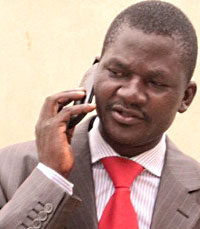
Journalist José Manuel Gimbi's home was robbed on Sunday. (Courtesy José Manuel Gimbi)

New York, June 13, 2012--Authorities in Angola's enclave of Cabinda must immediately launch an investigation into the robbery at the home of an independent journalist on Sunday, the Committee to Protect Journalists said today.

Unidentified assailants ransacked the house of José Manuel Gimbi, a correspondent of the U.S. government-funded broadcaster Voice of America and a human rights lawyer, at around 4 p.m., when no one was at home, the station reported. The assailants stole items related to the journalist's work, including two computers, an external hard drive, a voice recorder, two USB sticks, and a bag containing important documents related to his work, Arão Tempo, a lawyer and Gimbi's mentor, told CPJ. VOA reported that the assailants also stole some personal items, including books and jewelry belonging to Gimbi's wife.

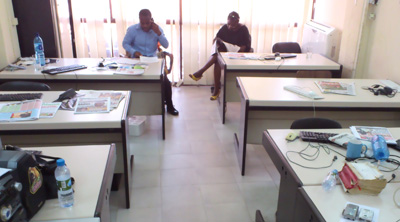
The offices of Angolan weekly Folha 8 have been stripped of their computers, forcing the paper to stop publishing at least for now. (Courtesy A. Neto)

New York, March 12, 2012--The Committee to Protect Journalists condemns today's Angolan police raid at the independent weekly Folha 8, which was conducted in connection with a politicized investigation into the publication of a satirical photo montage. Officers confiscated all of Folha 8's computers, effectively crippling the operations of one of the country's two remaining independent publications.

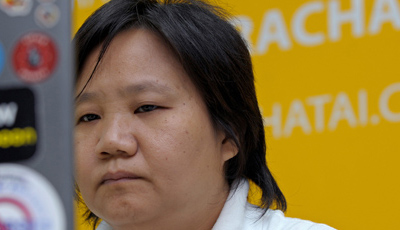
Thai website editor Chiranuch Premchaiporn faces criminal charges. (AFP/Pornchai Kittiwongsakul)

Legislation for Internet security can quickly turn into a weapon against the free press. Cybercrime laws are intended to extend existing penal codes to the online world, but they can easily be broadened to criminalize standard journalistic practices. By Danny O'Brien

Youth-led and social media-fueled protests demanding reform challenged President José Eduardo Dos Santos, who marked 32 years in power. Parliament, controlled by Dos Santos’ MPLA party, considered legislation to “combat crime” in information and communication technology. The bill, pending in late year, would stiffen penalties for defamation and would criminalize electronic dissemination of “recordings, pictures, and video” of any individual without the subject’s consent. In nationally televised remarks targeting citizen journalists, Dos Santos lashed out at the use of the Internet to organize “unauthorized demonstrations to insult, denigrate, provoke uproar and confusion.” (One YouTube user called Kimangakialo posted more than 150 clips of protests.) In the same April address, Dos Santos claimed journalists enjoyed unfettered freedom to criticize his leadership. But CPJ research shows that security forces assaulted, detained, and obstructed independent journalists covering protests and official functions. Powerful public figures and officials used security forces and the courts to settle scores with reporters investigating allegations of abuse of power, corruption, or misconduct. Two journalists, Armando José Chicoca and William Tonet, were sentenced to prison over their critical coverage; they were free on appeal in late year. José Manuel Gimbi faced intimidation from security forces while reporting from the militarized, oil-rich enclave of Cabinda. Denial-of-service attacks targeted the exile-run websites Club-K and Angola24horas, taking them off-line in October.

Português

« Previous Year: 2011

  Go »
Text Size
A   A   A
Killed in Angola

10 journalists killed since 1992

7 journalists murdered

7 murdered with impunity

Contact

Africa

Program Coordinator:
Sue Valentine

Advocacy Coordinator:
Mohamed Keita

East Africa Consultant:
Tom Rhodes

West Africa Consultant:
Peter Nkanga

svalentine@cpj.org
mkeita@cpj.org
trhodes@cpj.org
pnkanga@cpj.org

Tel: 212-465-1004
ext. 117
Fax: 212-465-9568

330 7th Avenue, 11th Floor
New York, NY, 10001 USA

Twitter: @africamedia_CPJ

Blog: Mohamed Keita
Blog: Tom Rhodes
Blog: Peter Nkanga