
Elderly father of Guinean journalist Mamoudou Babila Keita abducted
Dakar, October 7, 2025—The Committee to Protect Journalists calls on Guinean authorities to ensure that Elhadj Adama Keita, father of exiled Guinean journalist Mamoudou Babila Keita, is safely returned home, following his abduction by unidentified men. On September 29, two men grabbed 75-year-old Adama Keita by the neck and forced him into a pickup vehicle…
Guinean regulator bans news site Dépêche Guinée
Dakar, January 30, 2025—Guinea’s High Authority of Communication should reverse its decision to indefinitely suspend the privately owned news site Dépêche Guinée and ensure the public has unrestrained access to diverse media sources, the Committee to Protect Journalists said Thursday. “The banning of Dépêche Guinée represents an escalation of the Guinean communications regulator’s censorship efforts and…

Guinean journalist Habib Marouane Camara attacked, abducted by uniformed men
Dakar, December 6, 2024—The Committee to Protect Journalists calls on Guinean authorities to investigate journalist Habib Marouane Camara’s whereabouts and ensure his safety after he was attacked and abducted on Tuesday by men in gendarme uniforms in Conakry, Guinea’s capital, according to local witnesses. “It’s been more than three days since armed men abducted journalist…

Guinean journalist Bakary Gamalo Bamba charged with violating judge’s privacy
Dakar, October 30, 2024—The Committee to Protect Journalists calls for the release of journalist Bakary Gamalo Bamba, director of the bimonthly newspaper Le Baobab, who has been detained since October 20 on charges of invasion of privacy. “Guinean authorities should immediately and unconditionally release journalist Bakary Gamalo Bamba, who has been jailed since October 20,…
Guinea revokes broadcast licenses of 6 media outlets
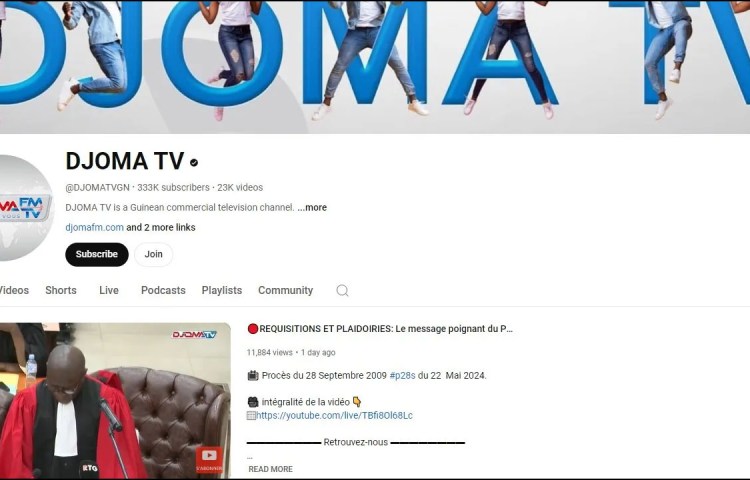
Dakar, May 23, 2023—Guinean authorities should immediately reinstate the media licenses for six blocked outlets and allow them to resume broadcasting freely after months of censorship, the Committee to Protect Journalists said Thursday. On May 21 and 22, Guinea’s Ministry of Information and Communications Technology revoked the broadcasting licenses of the private radio stations FIM, Espace, Sweet,…
Guinea suspends journalist Mamoudou Babila Keita and Inquisiteur website for 6 months
Dakar, May 8, 2023—Guinea’s media regulator should lift its suspension of the Inquisiteur outlet and journalist Mamoudou Babila Keita and allow the press to report on matters of public interest without fear of sanctions, the Committee to Protect Journalists said Wednesday. On April 17, the High Authority for Communication (HAC) suspended the private news website…
In Guinea, journalists censored, expelled, arrested
Dakar, January 31, 2024— Guinean authorities should immediately reverse the suspension of Dépêche Guinée and the privately owned news website’s publishing director, Abdoul Latif Diallo, ensure journalists are not expelled or arrested over critical coverage, and ensure unhindered access to social media platforms, news sites, and broadcasters, the Committee to Protect Journalists said Wednesday. “Guinean authorities…

Guinean radio and TV broadcasters and social media sites blocked
Dakar, December 15, 2023—Guinean authorities should immediately end broadcasting blocks on at least four radio and television outlets and restore access to all social media and online communication platforms, the Committee to Protect Journalists said on Friday. On December 6, the High Authority of Communication (HAC), Guinea’s media regulator, ordered Canal+, a French distributor in…

Guinean journalists arrested, attacked at protest over blocking of news website
Dakar, October 26, 2023—Guinean authorities must identify and hold accountable those officers responsible for arresting and assaulting journalists during an October 16 demonstration calling for authorities to lift restrictions on the privately owned news website Guinée Matin, and drop all legal proceedings against the journalists, the Committee to Protect Journalists said Thursday. On October 16,…
Private news websites restricted in Guinea for over a month
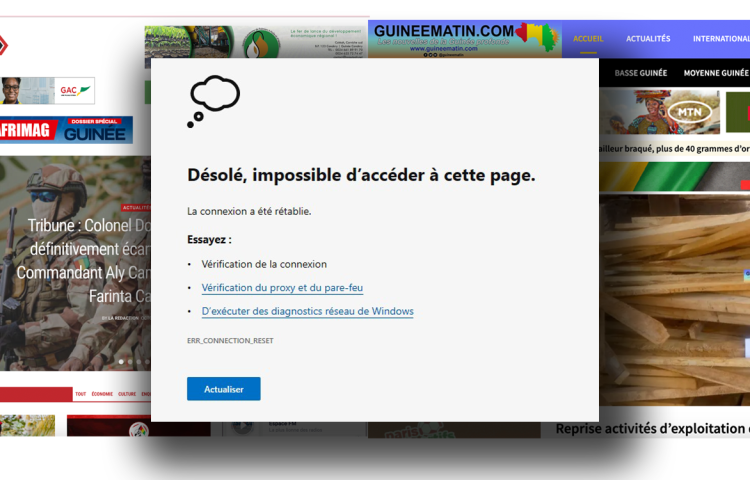
Dakar, Senegal, October 11, 2023—The Committee to Protect Journalists has called on Guinean authorities to investigate why the websites of privately owned news outlets Guinée Matin and Inquisiteur continue to be restricted in the country and ensure they are freely accessible without delay. “Guinean authorities must ensure a free flow of information in the country…