Go »
  Go »

Somalia

2013


Activists protest impunity in journalist murders in the Philippines. (AFP/Noel Celis)

Gerardo Ortega's news and talk show on DWAR in Puerto Princesa, Philippines, went off as usual on the morning of January 24, 2011. Ortega, like many radio journalists in the Philippines, was outspoken about government corruption, particularly as it concerned local mining issues. His show over, Ortega left the studios and headed to a local clothing store to do some shopping. There, he was shot in the back of the head. His murder underlines the characteristics and security challenges common to many of the killings documented as part of CPJ's new Impunity Index: A well-known local journalist whose daily routines were easily tracked, Ortega had been followed and killed by a hired gunman. He had been threatened many times before in response to his tough political commentary, a pattern that shows up time and again on CPJ's Impunity Index.


CPJ’s 2013 Impunity Index spotlights countries where journalists are slain and the killers go free

Mohamed Ahmed Jama's arm was broken in the attack. (Hubaal Media Network)

New York, April 30, 2013--A senior administration official in Somaliland has said that police officers were the perpetrators of an April 24 attack on the owner of a media network, according to news reports. The Committee to Protect Journalists calls on authorities in the semi-autonomous republic to conduct a thorough investigation and ensure that all those responsible are brought to justice.

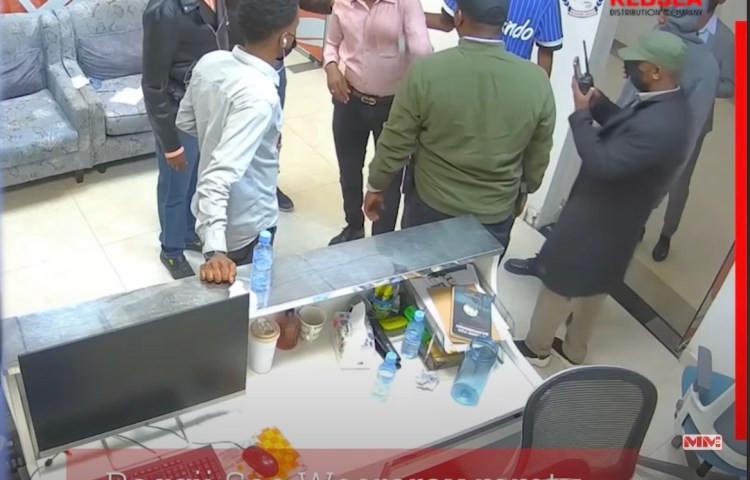
Two masked gunmen burst into the offices of the critical independent daily Hubaal in the capital, Hargeisa, at around 11:30 p.m. as the paper's employees were proofreading the next day's issue, according to local journalists and news reports. One assailant fired at least once at Mohamed Ahmed Jama, but missed, the reports said. Mohamed is the owner and manager of the Hubaal Media Network, which publishes Hubaal and the English daily The Independent, according to Hubaal Editor-in-Chief Hassan Hussein Abdillahi. Mohamed is also the manager of both papers.

It seemed clear-cut and sadly familiar: A journalist was shot and killed while walking in Mogadishu, one of the deadliest places in the world for the press. Yet in the four weeks that have passed since those initial reports from international and local news agencies--accounts that were then amplified by the United Nations, CPJ, and numerous human rights groups--virtually everything about the case has been cast into doubt. Was there a murder, after all? Who was the woman said to have been targeted? Does she even exist, at least as she was described? What did the people described as eyewitnesses really see? And why, after telling local journalists early on that the case was actually being investigated as a false report, have police gone silent for weeks?

Mourners carry the coffin of Somali journalist Mohamed Ibrahim Raage in Jazira on the outskirts of Mogadishu on Monday. (AFP/Mohamed Abdiwahab)

Nairobi, April 22, 2013--The Committee to Protect Journalists calls on Somali authorities to keep their promise to prosecute journalists' killers by investigating the murder of Mohamed Ibrahim Raage. Two unidentified gunmen shot Mohamed around 5:30 p.m. Sunday near his home in Mogadishu's Dharkenley district, according to local journalists.

New York, April 5, 2013--Police in Somalia say they have been holding a woman in custody for much of this week after they say questions were raised about the veracity of reports that a journalist was fatally shot in Mogadishu on March 24.

CPJ launches Somali Security Guide

Last week, two gunmen waited near the home of a young Somali journalist, Rahmo Abdulkadir, who had recently returned to the capital from the Galgadud district in central Somalia where she worked as a reporter for Radio Abudwaq (Worshipper). According to local journalists, 25-year-old Rahmo had just left an Internet café in Mogadishu around 9:30 p.m. on March 24 with a friend when she was shot and killed. Her companion was not harmed.

EDITOR'S NOTE: Subsequent to the publication of this report, questions were raised about the veracity of the account given by the primary sources. CPJ has published two follow-up reports detailing those questions, which raise doubts as to whether a killing took place as described. CPJ continues to monitor the case.


Nairobi, March 25, 2013--Somali authorities must immediately investigate the murder of a radio journalist who was shot dead on Sunday evening in Mogadishu, the Committee to Protect Journalists said today.

This week in Mogadishu, Abdiaziz Abdinuur, left was freed from prison, but Mohamed Ali Nuxurkey was killed in a bombing that injured three other journalists. (AFP, Raxanreeb)

"He's free! He's free!" a friend of mine from Somalia's capital, Mogadishu, shouted down the phone line on Sunday. For a fleeting second I did not know whom he referred to, given the high number of journalists imprisoned in the Horn region of Africa--but then it dawned on me: Abdiaziz Abdinuur had finally found justice. The 25-year-old freelance reporter was arrested on January 10 in Mogadishu for the most incomprehensible alleged crime: conducting an interview.

Nairobi, March 18, 2013--The Committee to Protect Journalists is gravely concerned by a recent directive from authorities in Somalia's semi-autonomous Puntland region banning local broadcasters from airing content produced outside the region.

Nairobi, March 12, 2013--Somali police attacked and obstructed more than a half-dozen journalists who were seeking to cover a rape trial in Mogadishu on Saturday, as authorities continue to struggle in meeting law enforcement and free expression demands in sexual assault cases. The Committee to Protect Journalists condemns the attacks and calls on authorities to hold the officers accountable.

Today marks International Women's Day. Hashtags like #IWD and #InternationalWomensDay have been trending on Twitter. Among the twitterati who voiced their support for women's rights was Indian Prime Minister Manmohan Singh. He tweeted: 

Nairobi, March 4, 2013--Sunday's decision by an appellate court in Mogadishu to uphold the conviction of a freelance Somali journalist in connection with his interview of a reported rape victim prolongs a miscarriage of justice and is a direct assault on press freedom, the Committee to Protect Journalists said today.

Do news blackouts help journalists held captive?

An image grab from a YouTube video uploaded on December 18 allegedly shows NBC employees, from left to right, Aziz Akyavas, Richard Engel, and John Kooistra in captivity in Syria. (AFP/YouTube)

At any given time over the past two years, as wars raged in Libya and then Syria, and as other conflicts ground on in South Asia and sub-Saharan Africa, a number of journalists have been held captive by a diverse array of forces, from militants and rebels to criminals and paramilitaries. And at any given time, a small handful of these cases--sometimes one or two, sometimes more--have been purposely kept out of the news media. That is true today.

Somali Prime Minister Abdi Farah Shirdon met February 16 with the local journalist union. (NUSOJ)

Spirits of journalists in Somalia, the most dangerous country in Africa to practice the profession, were lifted slightly this week after Prime Minister Abdi Farah Shirdon made several auspicious announcements. The key concern on the minds of journalists in the capital, Mogadishu, is access to justice--both in terms of journalists' own court appearances and in terms of solving the many outstanding murder cases of their colleagues. Twelve journalists were killed in the line of duty last year, the worst on record, and there hasn't been a single prosecution. 


CPJ's Robert Mahoney identifies the 10 countries where press freedom suffered the most in 2012. They include Syria, the world's deadliest country for the press; Russia, where repressive laws took effect; Brazil, where journalist murders soared; and Ethiopia, where terror laws are used to silence the press. (3:26)

The rise of extremist groups who target journalists is a potent risk. By Mohamed Keita

(AFP/Pius Utomi Ekpei)

Despite a relatively peaceful presidential election and the government’s continuing control of the capital, Mogadishu, a record number of Somali journalists were killed in 2012. Amid comparative calm in the capital, targeted killings of journalists and political figures continued, most notably in a deadly September blast at a café frequented by reporters and government officials. Given the ouster of Al-Shabaab insurgents from Mogadishu in 2011, the continuing killings raised concern that journalists and others were being targeted by a widening field of politically motivated antagonists. Though most fatalities occurred in the capital, unknown gunmen killed two journalists in separate attacks in Galkayo, a commercial hub of the semi-autonomous region of Puntland. Three radio stations were forced to close during the year, two on the orders of Al-Shabaab and one at the directive of Puntland officials. Pervasive insecurity has forced dozens of Somali journalists to flee into exile in the last five years, the highest number in the world. Although peaceful in comparison to the rest of the country, the semi-autonomous republic of Somaliland had a high number of journalist detentions.

Editors think twice, reporters do not dig deeply, columnists choose words carefully. By Jean-Paul Marthoz

(AFP/Brian Rasmussen)

From conflict-ridden Syria to aspiring world leader Brazil, 10 nations on a downslope. By Karen Phillips

(Reuters/Enrique Marcarian)

Abdiaziz Abdinuur is sentenced in court. (AFP/Mohamed Abdiwahab)

Nairobi, February 5, 2013--The Committee to Protect Journalists condemns the conviction and prison sentence handed down today against a Somali freelance journalist charged with insulting the government by interviewing a woman who said she was raped by government forces. CPJ calls for the sentence to be overturned and for reporter Abdiaziz Abdinuur to be released immediately pending appeal. 

"Let's have faith in our judiciary system," Somali President Hassan Sheikh Mohamed told an audience Monday at London's Chatham House, the foreign affairs think-tank.

An increase in press freedom violations last year created a surge of need among journalists, driving a record number of assistance cases for CPJ's Journalist Assistance Program in 2012. More than three-quarters of the 195 journalists who received support during the year came from East Africa and the Middle East and North Africa, reflecting the challenges--including threats of violence and imprisonment--of working in these repressive regions. Here are some of the highlights of our work over the last year:

Abdihared Osman Aden. (Shabelle Media Network)

Nairobi, January 18, 2013--A veteran producer for the Shabelle Media Network was gunned down today in Mogadishu, the fifth Shabelle journalist killed in 13 months. The Committee to Protect Journalists condemns this murder and calls on Somali authorities to not only investigate, but to follow up on the investigative task force on journalist murders that was promised by Somali President Hassan Sheikh Mohamoud in November.

Unidentified assailants shot Shabelle producer Abdihared Osman Aden at around 7 a.m. today while he was walking to work in the Wadajir district of the capital, according to local journalists and news reports. The journalist, who was shot at least three times, died at a local hospital, the sources said.

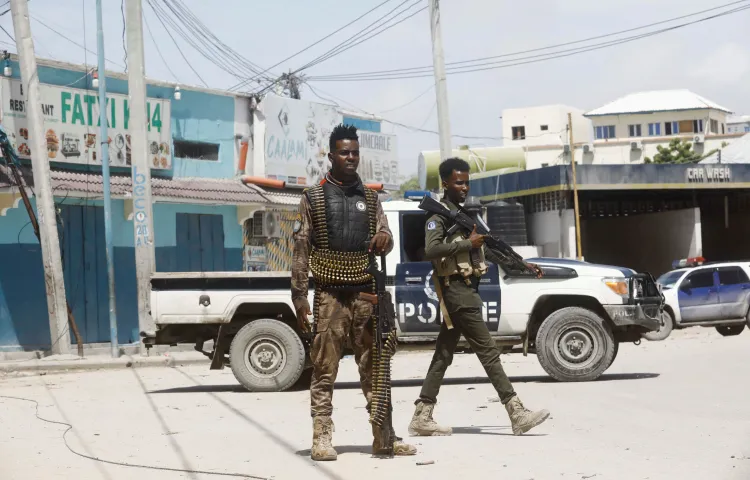
A police officer guards a camp of internally displaced persons in Mogadishu. (AFP/Tony Karumba)

Nairobi, January 11, 2013--Somali authorities should immediately release a freelance journalist who has been in custody in Mogadishu since Thursday for interviewing a woman who claimed she was raped by government soldiers, the Committee to Protect Journalists said today.

« Previous Year: 2012

  Go »
Text Size
A   A   A
Killed in Somalia

50 journalists killed since 1992

33 journalists murdered

33 murdered with impunity

Attacks on the Press 2012

12 Journalists killed in the deadliest year on record for the Somali press.

Country data, analysis »

Contact

Africa

Program Coordinator:
Sue Valentine

Advocacy Coordinator:
Mohamed Keita

East Africa Consultant:
Tom Rhodes

West Africa Consultant:
Peter Nkanga

svalentine@cpj.org
mkeita@cpj.org
trhodes@cpj.org
pnkanga@cpj.org

Tel: 212-465-1004
ext. 117
Fax: 212-465-9568

330 7th Avenue, 11th Floor
New York, NY, 10001 USA

Twitter: @africamedia_CPJ

Blog: Mohamed Keita
Blog: Tom Rhodes
Blog: Peter Nkanga