Cuba
2013
CPJ testifies on challenges to democracy in the Americas
Carlos Lauría’s testimony starts at 1:10 in the video. Carlos Lauría, CPJ’s Americas senior program coordinator, provided testimony before the Subcommittee on the Western Hemisphere of US House of Representatives on Tuesday. Lauría emphasized that violence and government harassment are the main emerging trends that illustrate the major challenges facing the press in the Western…
CPJ welcomes release of Cuban journalist
New York, April 10, 2013–The Committee to Protect Journalists welcomes the release of Cuban journalist Calixto Ramón Martínez Arias, a reporter with the independent news agency Centro de Información Hablemos Press, who had been imprisoned since September while reporting on an international medical donation to Cuba.
Haunted by cancer after Cuba’s Black Spring
As the world welcomes celebrated Cuban blogger Yoani Sánchez on her first international tour in a decade, we must also remember journalist Calixto Ramón Martínez Arias, who continues to be confined not only to the island nation, but to a prison cell in Havana Province.
CPJ urges OAS not to weaken human rights system
Dear OAS Ministers of Foreign Affairs: Ahead of the assembly of the Organization of American States on Friday, the Committee to Protect Journalists urges you to oppose any attempts to debilitate the regional human rights system. The failure of member states to preserve the autonomy and independence of the Inter-American Commission on Human Rights and its special rapporteur on freedom of expression would make citizens throughout the hemisphere more vulnerable to human rights violations and represent a blow to democracy in the Americas.
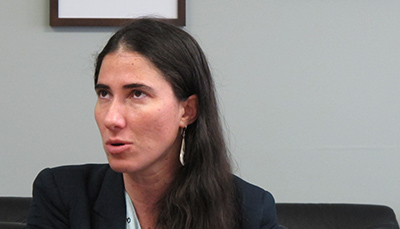
Sánchez, Cuba’s blogging pioneer, eyes a new trail to blaze
Having broken through one long-standing barrier, Yoani Sánchez, the pioneering figure in Cuba’s independent blogosphere, is looking to smash another. “It seemed like an impossible dream, but here I am,” Sánchez told a gathering today at CPJ’s New York offices. After being denied travel authorization at least 20 times in the past, Sánchez is in…
Authorities must explain conviction of Cuban writer
New York, February 28, 2013–Cuban writer and blogger Ángel Santiesteban Prats is expected to begin serving a five-year jail sentence today on assault and trespassing charges brought by his former wife, accusations he has insisted have been fabricated.
Attacks on the Press in 2012: Cuba
Though Cuba projected an image of a nation opening up economically and politically, it took no substantive steps to promote freedom of expression. The authorities announced plans to eliminate exit visa regulations that had long restricted Cuban travel, but skeptics expressed doubts about the government’s commitment to the reform. The prominent blogger Yoani Sánchez, has…
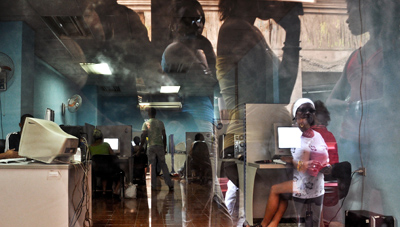
Eating a cable: Internet access still elusive in Cuba
There is a popular expression in Cuba that is synonymous with difficulty and crisis. When you want to indicate that someone is doing badly economically, it is sufficient to say that he is “eating a cable.” Street humor has identified the act of chewing and swallowing a bundle of wires with scarcity and material want.…