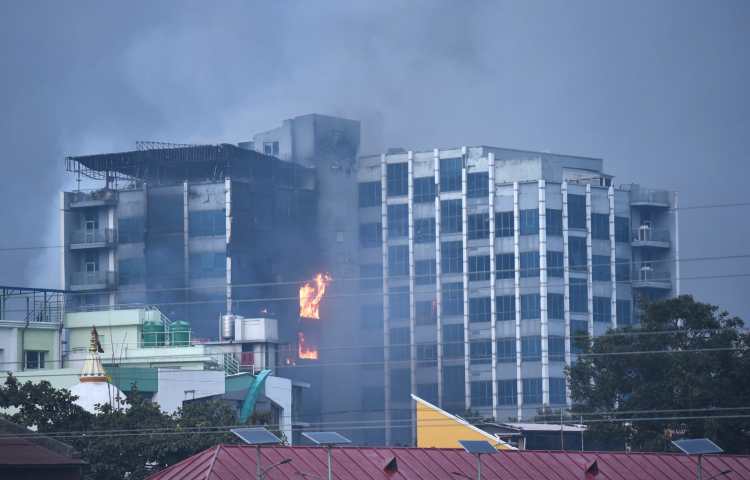
Nepal protests: Media outlets torched and journalists injured in deadly unrest
New Delhi, September 10, 2025—The Committee to Protect Journalists calls on Nepali authorities to ensure the safety of journalists covering protests in the Himalayan nation, following reports the offices of at least two media outlets were set on fire and four journalists were injured in the unrest. Violent protests erupted in Kathmandu and other parts…
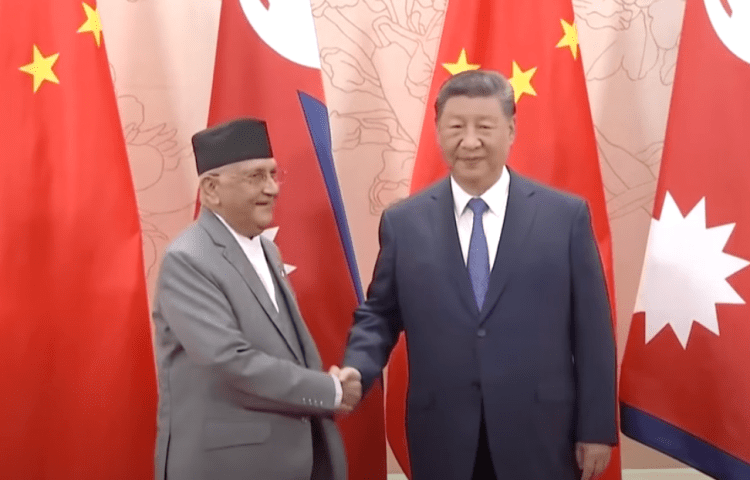
Nepal orders ban on major social media platforms
Editor’s Note: On September 9, Nepal’s government lifted its ban on social media platforms after 19 people were killed in mass protests. New Delhi, September 4, 2025—The Committee to Protect Journalists warns that the Nepali government’s decision to block access to social media platforms across the country will seriously hinder journalists’ work and people’s access…
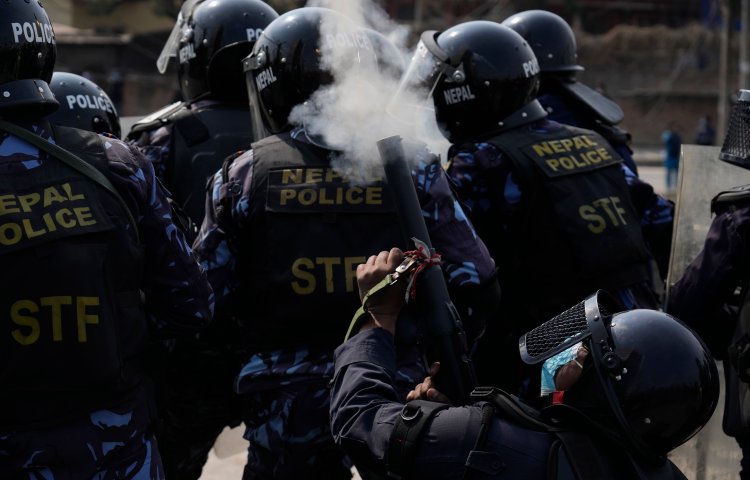
Backlash: Nepal’s police, courts retaliate as journalists expose corruption
Journalist Dil Bhusan Pathak could face up to five years in prison for alleging on his YouTube channel that Jaiveer Singh Deuba, the son of two powerful Nepalese politicians, was linked to questionable deals involving the new Hilton Kathmandu. His case illustrates a disturbing trend in Nepal, where journalists reporting on alleged corruption by high-profile individuals and state institutions…

CPJ joins call for Nepal to revise new media council, social media bill
The Committee to Protect Journalists joined more than two dozen media and civil society groups in a joint statement on March 5, urging the Nepalese government and parliament to revise a recently proposed social media bill and the newly established Media Council. The statement noted that the bill granted the government “overreaching powers” that could…
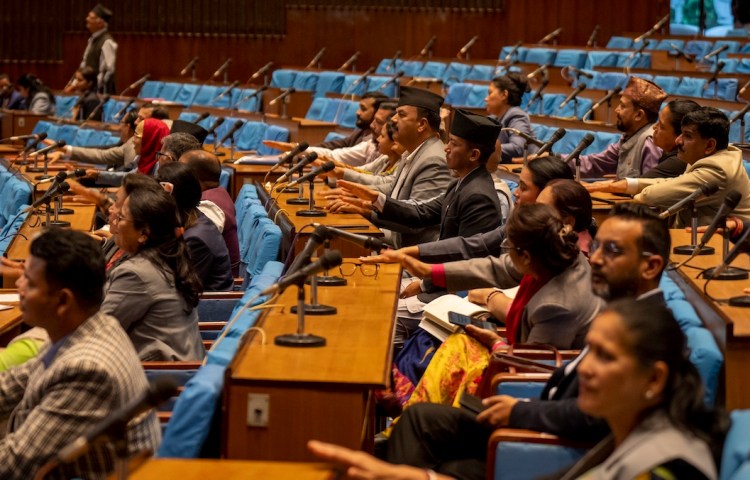
CPJ: Nepal lawmakers should reject social media bill threatening press freedom
New York, February 14, 2025—The Nepalese government should withdraw a recently introduced social media bill that is expected to undermine press freedom, the Committee to Protect Journalists said Friday. “Nepal’s proposed social media law is ripe for misuse against journalists reporting on critical topics of public interest,” said CPJ Asia Program Coordinator Beh Lih Yi….
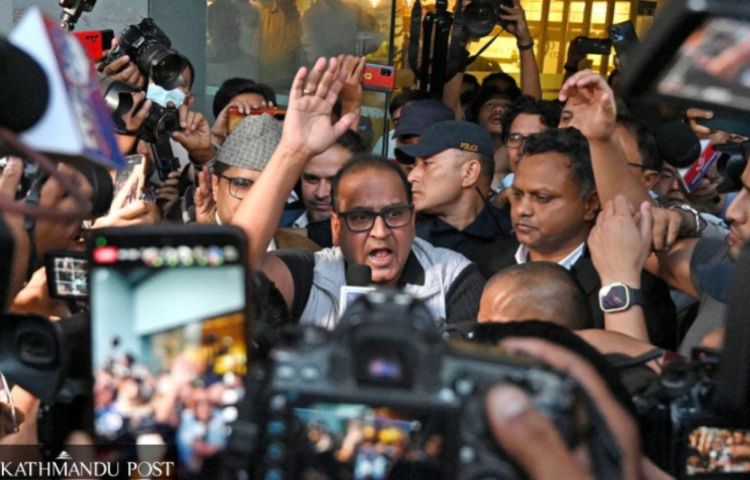
Chair of Nepal’s largest media group arrested after publication of reports alleging fraud
New York, May 23, 2024—The Committee to Protect Journalists on Thursday expressed alarm over the arrest of Kailash Sirohiya, chair of the Kantipur Media Group, and called on Nepali authorities not to harass or intimidate the leadership or staff of the country’s largest media group in retaliation for its reporting. On Tuesday, May 21, four…
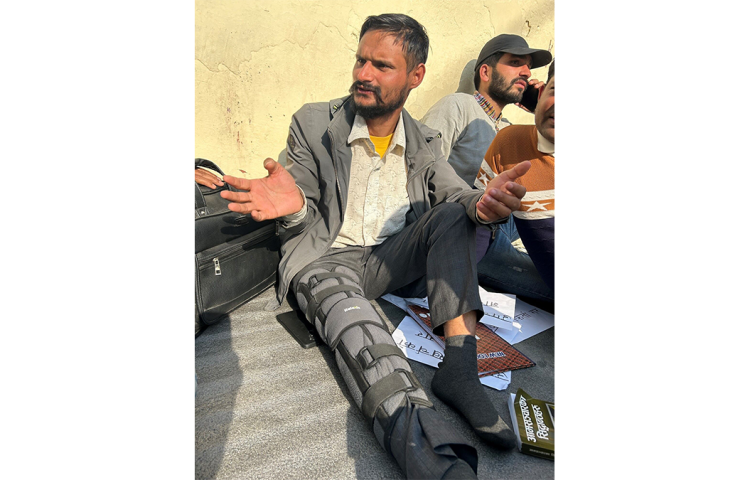
Journalist Padam Prasad Pokhrel attacked while covering alleged police assault in Nepal
New York, March 19, 2024—Nepali authorities must swiftly and impartially investigate the attack on journalist Padam Prasad Pokhrel and hold the perpetrators to account, the Committee to Protect Journalists said Tuesday. On the evening of February 28, up to 15 police officers attacked Pokhrel, editor-in-chief of the news website Pranmancha, while the journalist was filming…
Nepali journalists Aishwarya Kunwar, Puskar Bhatt arrested under cybercrime law
On February 10, police in Kanchanpur district of western Sudurpaschim province arrested Aishwarya Kunwar, a reporter for the privately owned news website Nigarani Khabar, and Puskar Bhatt, a correspondent for the privately owned broadcaster Mountain Television, following their reporting and social media commentary on allegations of police misconduct, according to the local advocacy organizations Media…
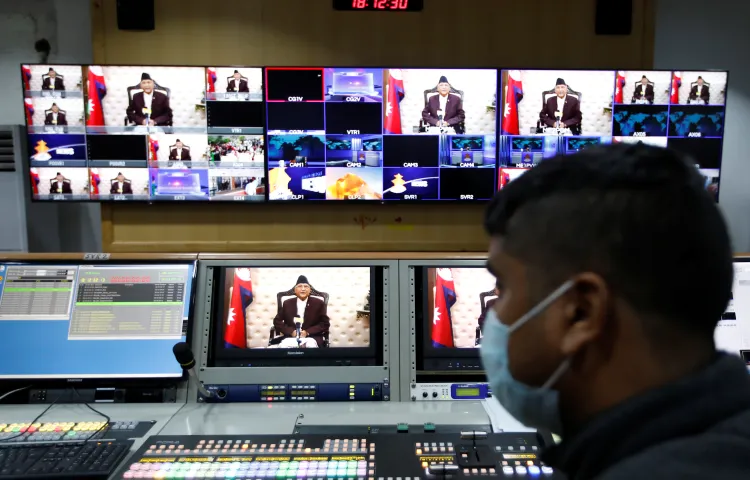
Nepal TV operators refuse to air Indian news channels following critical reports
From July 9 to 13, 2020, at least eight Nepalese cable and satellite operators stopped airing broadcasts from about 20 Indian news channels, following reports perceived to be critical of Nepalese Prime Minister Khadga Prasad Sharma Oli, according to news reports. The vice-chair of Nepalese cable company Max TV, Dhruba Sharma, said that on July…
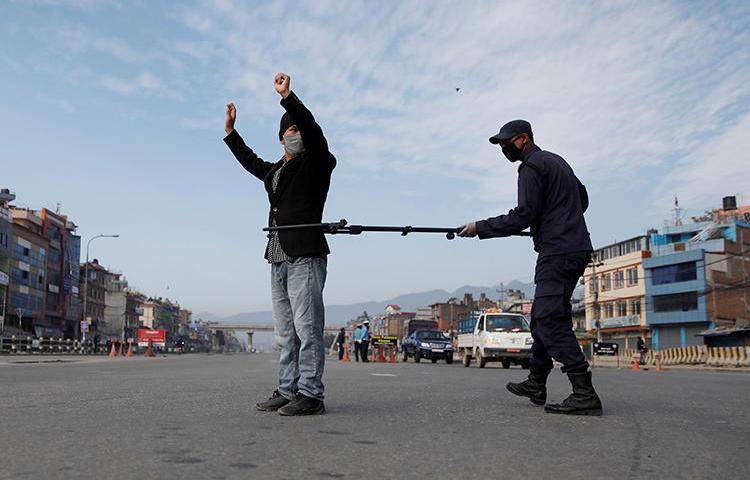
Nepali reporters detained, threatened while reporting on COVID-19 pandemic
Police in districts around Nepal briefly detained at least four journalists in relation to coverage of the coronavirus pandemic since the government introduced containment measures on March 23, 2020, while at least six others reported being threatened or attacked by a range of actors seeking to suppress allegations of wrongdoing over the same period, according…