Go »
  Go »

Pakistan

2012


Syrian violence contributed to a sharp rise in the number of journalists killed for their work in 2012, as did a series of murders in Somalia. The dead include a record proportion of journalists who worked online. A CPJ special report

A journalist dodges gunfire in the Syrian city of Aleppo. (AFP/Tauseef Mustafa)
(AFP/Pedro Pardo)

Almost half of the 67 journalists killed worldwide in 2012 were targeted and murdered for their work, research by the Committee to Protect Journalists shows. The vast majority covered politics. Many also reported on war, human rights, and crime. In almost half of these cases, political groups are the suspected source of fire. There has been no justice in a single one of these deaths.

There is an absolutely terrific seven-part special report by The News on Sunday on Pakistan's problem with the killing of journalists and the impunity surrounding their deaths. It's written by and for Pakistanis, with compelling direction from Adnan Rehmat of Intermedia Pakistan--and not only describes and analyzes the problem, but offers approaches to potential solutions.

The tortured and decapitated body of 39-year-old María Elizabeth Macías Castro was found on a Saturday evening in September 2011. It had been dumped by the side of a road in Nuevo Laredo, a Mexican border town ravaged by the war on drugs. Macías, a freelance journalist, wrote about organized crime on social media under the pseudonym "The Girl from Laredo." Her murder, according to the Committee to Protect Journalists, was the first in which a journalist was killed in direct relation for reporting published on social media. It remains unsolved.

Several journalists were reported injured at this explosion near a Shia site in Karachi today. (AFP/Asif Hassan)

New York, November 21, 2012--Several Pakistani journalists were injured in a bomb blast today at a Shia site in Karachi that came just 30 minutes after an earlier explosion, according to news reports.

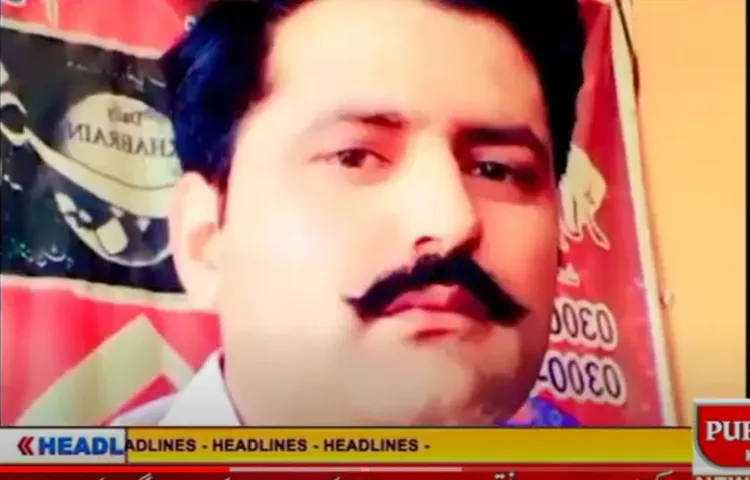
New York, November 19, 2012--Pakistani authorities must immediately investigate the murder of a journalist who was shot to death in Baluchistan on Sunday, the Committee to Protect Journalists said today. Rehmatullah Abid was the second Dunya News TV journalist to be killed this year.

Murders of journalists such as Wali Khan Babar give Pakistani journalists plenty of reason to fear. (AP/Mohammad Sajjad)

Haider Ali, an eyewitness to the 2011 murder of Geo TV reporter Wali Khan Babar, was gunned down on Sunday, two days before he was set to testify in the trial of five suspects. The murder sent shockwaves across Pakistan--one of the deadliest countries in the world for journalists and one of the worst in bringing the killers to justice. According to the prosecutor in the case, Ali had identified several suspects as being involved in Babar's murder in a recent statement before a judicial magistrate. His killing was the latest in a series of murders that have targeted people linked to the Babar investigation. Five others--including eyewitnesses, police officers, an informant, and a family member of an investigator--have also been murdered.

Will UN plan address impunity, security for journalists?

A woman stands next to a banner reading "No more impunity" in Colombia. (AFP/Raul Arboleda)

Here are the facts:

  • A journalist is killed in the line of duty somewhere around the world once every eight days.
  • Nearly three out of four are targeted for murder. The rest are killed in the crossfire of combat, or on dangerous assignments such as street protests.
  • Local journalists constitute the large majority of victims in all groups.
  • The murderers go unpunished in about nine out of 10 cases.
  • The overall number of journalists killed, and the number of journalists murdered, have each climbed since the 1990s.

Baluchistan has become one of Pakistan's 'hubs of hazard' for journalists in recent years. (AFP/Banaras Khan)

It is one step forward and two steps back in Pakistan's restive Baluchistan province. The nation's highest court has acknowledged the dangerous climate journalists face in Baluchistan, but it has also affirmed a directive that only adds to the pressure cooker conditions that journalists work under.

Pakistani children in Karachi pray for the recovery of 14-year-old schoolgirl Malala Yousafzai, who was shot by the Taliban, on October 12. (AP/Shakil Adil)

Journalists, like many others in Pakistan, have spoken out strongly since the Taliban attempted to kill the teenage Malala Yousafzai on October 9. The Taliban, in return, are threatening the media over their coverage, according to journalists and news reports.

In Pakistan, a murderous exercise in democracy

Covering political rallies in Pakistan must be considered a dangerous assignment. One journalist was killed and three others injured on Sunday when gunmen opened fire on a Pakistan People's Party (PPP) rally in Khairpur in Sindh province. All told, at least six died and 10 were wounded critically.

New York, October 1, 2012--Unidentified assailants shot to death a prominent journalist on Saturday in the city of Khuzdar in Baluchistan province, according to news reports. Abdul Haq Baloch was the secretary-general of the Khuzdar Press Club and a longtime correspondent of ARY Television, news reports said.

Ansar Abbasi, editor of investigations for Pakistan's leading media group Jang, is apparently facing a de facto ban from his own employers. Other TV channels also report being told not to air his views. Abbasi has charged cable operators with spreading immoral, anti-Islamic messages through Indian movies and other popular culture broadcasts. In response, he says, they are censoring his views.

"Elections will not be fought, but will be bought," is a saying being used by political tacticians in Pakistan. Hope for the legitimacy of the country's first fair transfer of power between two civilian governments with the oversight of unbiased media is disappearing quickly. Billions of rupees are pouring into media outlets through secret sources, journalists and media watch organizations say. The cash is being paid out in several different ways. 

With ratings driving the profits of media channels, journalists and political talk show hosts are being motivated to stir up controversy at any cost. Meanwhile, the professionals who believe in credibility, objectivity, and honesty as essential parts of ethical journalism are becoming sidelined.

New York, June 25, 2012--The Committee to Protect Journalists condemns today's attack on the offices of a Pakistani television outlet and calls on authorities to immediately investigate the attack and bring the perpetrators to justice.

Crisis in East Africa

Fifty-seven journalists fled their country in the past year, with Somalia sending the greatest number into exile. Journalists also fled Ethiopia, Eritrea, and Rwanda--mostly for Kenya and Uganda. Exiles in East Africa must grapple with poverty and fear. A CPJ special report by María Salazar-Ferro and Tom Rhodes

Somali journalists carry the body of Abdisalan Sheikh Hassan of Horn Cable TV who was killed in December 2011. Fear of violence is one of the top reasons why journalists flee into exile. (AFP/Mohamed Abdiwahab)

CPJ has received an encouraging letter from Ambassador Maria Luiza Ribeiro Viotti, Brazil's permanent representative to the United Nations, affirming the country's support for the UNESCO-led U.N. Plan of Action for Security of Journalists and the Issue of Impunity

U.N. High Commissioner for Human Rights Navi Pillay, in opening remarks at her press conference in Islamabad on Thursday, addressed a wide range of problems in Pakistan, including those faced by journalists. (The full statement is on the website of the Office of the High Commissioner for Human Rights.) What was especially gratifying was her mention of meeting with human rights defender and former president of the Supreme Court Bar Association Asma Jahangir at her home--a request we made on Tuesday of Pillay and E.U. Foreign Policy Chief Catherine Ashton, who was also on an official trip to Pakistan.

Asma Jahangir has revealed that government agencies have been threatening her. (AFP/Ben Stansall)

There is no better time than now for U.N. High Commissioner for Human Rights Navi Pillay and EU Foreign Policy Chief Catherine Ashton to step out of their tightly planned schedule of meetings in Pakistan and make a trip to the home of human rights activist Asma Jahangir.

The murder of a part-time journalist and a gunfire attack on the house of the president of the Turbat Press Club, both on May 28, underscore the nature of the escalating violence in Baluchistan. According to the Delhi-based Institute for Conflict Management, which monitors violence across South Asia, at least 10 people were killed in Baluchistan on May 28 alone.

A Pakistani journalist holds a sign at a protest against Shahzad's murder in Karachi last year. (AFP/Rizwan Tabassum)

On May 21 this year, a military court convicted three Pakistani naval officers of negligence and dereliction of duty for their actions during an attack on the main naval airbase in the heart of Karachi on May 22, 2011. After the incident had ended, the military said 10 security guards were killed, two aircraft were blown up, and the four men who carried out the attack were shot or blew themselves up after they had held out for 16 hours on the Mehran Naval Base.

Perhaps the best insider details about the raid came from Saleem Shahzad, a political reporter for Asia Online, in his article, "Al-Qaeda had warned of Pakistani strike," that ran two days before his abduction on May 29, 2011. He had written in the past about militant groups and the military, with a book, Inside Al-Qaeda and the Taliban, released just weeks before his murder. In his last article, he wrote about the Mehran events, reporting that armed forces personnel sympathetic to Al-Qaeda had helped coordinate the attack. On May 31 last year, his body was found floating face-down in an irrigation ditch.

May has been a terrible month for journalists in Pakistan, a country that has ranked as the world's deadliest place for the press for two consecutive years. Two journalists have been killed, two more shot and wounded, and one attacked while in police custody, all in less than a month, according to news reports.

Supporters of a Pakistani opposition party carry effigies of Prime Minister Yousuf Raza Gilani and President Asif Ali Zardari at a protest rally in Multan on May 11. (AFP/S.S. Mirza

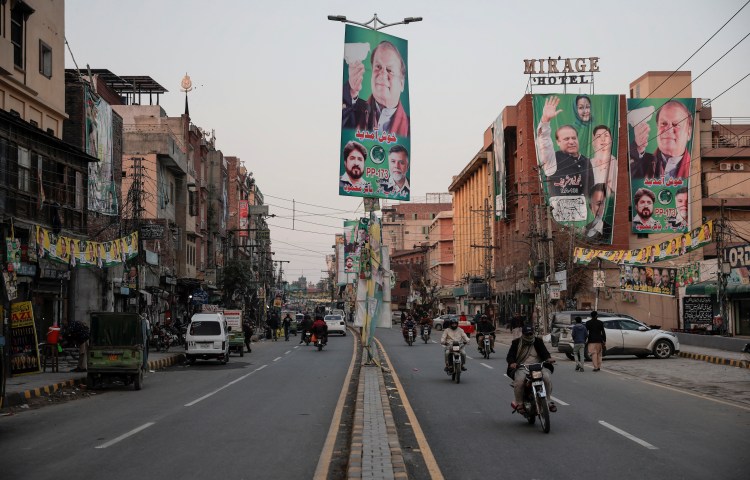
With general elections approaching, the landscape is again bearing eerie resemblance to the final days of General Pervez Musharraf's reign. In November 2007 he banned selected TV channels for 88 days to stifle what he saw as "irresponsible journalism." Now, Pakistani electronic media might be chained again, this time for violating cultural and ethical values by airing satirical programming and interviewing political leaders the government does not like seeing on air.

New York, May 11, 2012--The Committee to Protect Journalists condemns the murders of a local Pakistani journalist, his brother, and a friend, and calls on authorities to immediately investigate and bring the perpetrators to justice. 

British Prime Minister Cameron and Pakistani Prime Minister Gilani at a joint press conference in Islamabad in 2011. (AFP/Aamir Qureshi)

Amid political tumult in Islamabad, Pakistani Prime Minister Yousuf Raza Gilani and a team of six ministers are in London for far-ranging meetings today through May 13. The Pakistan-U.K. Enhanced Strategic Dialogue will review education, health, defense, security, and cultural cooperation. CPJ has written a letter to Prime Minister David Cameron to urge that press freedom conditions be raised as well.

The Friday Times in Lahore has come under cyberattack. Earlier Friday, its website could not be accessed.

Najam Sethi, the paper's editor, told CPJ that someone has "launched an attack on the websites of both The Friday Times and Vanguard Books [the book publishing and distribution company that owns the Times]. A tsunami of killer spams and log-ins have clogged the sites and blocked them."

Murtaza Razvi (Dawn.com)

The ceremony for Murtaza Razvi was held in Karachi Friday. Even as more details of the killing of one of the Dawn Media Group's most senior journalists emerge, it's difficult to discern a motive. Several Pakistani media quoted an anonymous police official as saying, "We are investigating into the matter but it is a case of murder because his hands were tied and his body bore torture marks and he had apparently been strangled to death" with a belt. The official said police are waiting for the postmortem report.

New York, April 19, 2012--Pakistani authorities must thoroughly investigate the death of prominent editor and writer Murtaza Razvi, determine a motive in his killing, and apprehend all those responsible, the Committee to Protect Journalists said today.

Pakistani court says website blocking violates constitution

When CPJ covered the Pakistani government's attempt to build a massive censorship system for the country's Internet in February, we noted a key problem with such huge blocking systems: they are, at heart, democratically unaccountable.


CPJ's María Salazar-Ferro names the 12 countries where journalists are murdered regularly and governments fail to solve the crimes. Where are leaders failing to uphold the law? Where are conditions getting better? And where is free expression in danger? (4:46)

Read CPJ's 2012 Impunity Index. And visit our Global Campaign Against Impunity and see how you can help.

CPJ’s 2012 Impunity Index spotlights countries
where journalists are slain and killers go free

At a protest against the murder of a journalist in Sao Paulo, Brazil, a sign reads: "Enough of violence, exclusion and impunity." (AP/Dario Lopez-Mills)

Brazil, Pakistan, and India--three nations with high numbers of unsolved journalist murders--failed an important test last month in fighting the scourge of impunity. Delegates from the three countries took the lead in raising objections to a U.N. plan that would strengthen international efforts to combat deadly anti-press violence.

Journalist Hayatullah Khan, shown in the picture above surrounded by his family, was killed in 2006. (AP/Abdullah Noor)

In case there was any doubt about the stance of Pakistani authorities on the murder of journalists, UNESCO's 28th biennial session offered an instructive insight. In addition to discussing the U.N. Draft Plan of Action on the Safety of Journalists and the Issue of Impunity during the meeting, held in Paris in March, member states were to report on judicial inquiries into the killings of journalists from 2006 to 2009. Pakistan was among 17 countries that did not respond to the request. It was also one of three countries that refused to discuss the UNESCO draft, intended to take legislative measures to combat attacks on the press. This was a reflection of our sad state of affairs.

Pakistani journalists rally against the killing of their colleague Mukarram Khan Atif. No arrests have been made in the case. (AP/Mohammad Sajjad)

Pakistani journalists are under threat, and the public is paying the price. The most recent report from the Human Rights Commission of Pakistan includes a detailed chapter on freedom of expression, which ties growing suppression to rising incidence of violence and threats against news media. Not coincidentally, Pakistan sits near the top of CPJ's Impunity Index and other the global lists of most dangerous countries for reporters.

Given that it is usually punishable by death, "treason" is a dangerous word to bandy about. When it is applied to journalists, it is even more worrisome. We've seen that in Sri Lanka, which is in the throes of a backlash against a U.N. resolution on past human rights abuses. (See "Amid Sri Lankan denial, threats rise for journalists.") Photographs of journalists who have been critical of Colombo, their faces barely obscured, have been shown on television; one broadcast even repeatedly used the picture of a journalist's daughter, according to the Network for Rights media support group. 

At Columbia University on Monday evening, CPJ board member Ahmed Rashid held forth to a full house in a conversation with Steve Coll about U.S. foreign policy in Afghanistan and Pakistan. If you're reading this blog, there's most likely no need to explain who Rashid is--or Coll, for that matter. The earliest reference I could find on cpj.org to Rashid dated back to 2000, about events in 1999, when he was the Islamabad bureau chief for the now-defunct Far Eastern Economic Review. His latest book, Pakistan on the Brink: The Future of America, Pakistan, and Afghanistan, is the most recent installment in a steady stream of trenchant, reliable, reality-based analysis of geopolitical affairs in Central and South Asia. If you need to be convinced, check out Foreign Policy's list of Top 100 Global Thinkers.

A video of the event, which was co-sponsored by CPJ, is now available here.

Pakistan's excessive Internet censorship plans

A Pakistani man removes movie posters on a cinema wall in Rawalpindi. (AFP/Abid Zia)

Last month, Pakistan's government put out requests for proposals for a massive, centralized, Internet censorship system. Explaining that "ISPs and backbone providers have expressed their inability to block millions of undesirable web sites using current manual blocking systems," the state-run National Information Communications Technology Research and Development Fund said it therefore requires "a national URL filtering and blocking system."

Pakistani military stand guard during a protest by journalists over the death of Saleem Shahzad in June 2011. (AP/B.K.Bangash)

In Pakistan, the term "a war of words" can take on a menacing dimension beyond the metaphorical. Words--written, spoken, or reported--regularly land journalists in trouble, a very literal, physical sort of trouble. Reporters have become accustomed to being threatened, and over the years they've seen threats sometimes build to abductions, beatings, and even death. Such violence seldom comes without a string of prior warnings.

Police in Santiago seize a photographer during an anti-government demonstration. (Reuters/Carlos Vera)

Even as trade and new systems of communication turn us into global citizens, the information we need to ensure accountability often stops at national borders. New platforms like social media are valuable tools, but the battle against censorship is hardly over. By Joel Simon

CPJ awardee Natalya Radina.

How does one negotiate the choice to stay and report potentially dangerous news, rather than take a less risky assignment, leave the profession, or flee the country? The recipients of the 2011 International Press Freedom Awards explain. By Kristin Jones

The global rate of unpunished murders remains stubbornly high at just below 90 percent. Senior officials in the most dangerous countries are finally acknowledging the problem -- the first step in what will be a long, hard battle. By Elisabeth Witchel

A journalist crouches behind a cement block during clashes between Israeli forces and Palestinian protesters in the West Bank. (Reuters/Mohamad Torokman)

The danger of covering violent street protests has become a significant risk for journalists, alongside combat and targeted killings. Sexual assault, organized crime, and digital vulnerability are also hazards. The security industry is struggling to keep up. By Frank Smyth

A demonstrator holds a poster with the photo of slain Pakistani journalist Wali Khan Babar and the question, 'Why?' (AP/Mohammad Sajjad)

As journalists continue to be targeted, the government of Asif Ali Zardari has shown itself unable and unwilling to stand up for a free press. Whatever solutions exist will have to be found by people in the profession. By Bob Dietz

Pakistani reporter Umar Cheema speaks out on the climate of impunity that led to his being abducted and brutally assaulted for his work. (4:15)

Read the Attacks on the Press 2011 country profile on Pakistan.


Murders decline, but fatalities rise during coverage of protests. Photographers and freelancers pay an especially high price. Pakistan is the world's most dangerous nation.

Meeting with a CPJ delegation in May, President Asif Ali Zardari committed his government to the pursuit of justice in journalist murders. But with seven journalists killed, five in targeted killings, Pakistan was the world's deadliest country for the press for the second consecutive year. High-profile investigations into the drive-by shooting of Wali Khan Babar in January and the abduction and fatal beating of Saleem Shahzad in May yielded no prosecutions, replicating the country's long-standing record of impunity in journalist murders. Intelligence officials were suspected of complicity in the Shahzad case and other anti-press attacks. With Zardari's government unwilling or unable to protect journalists, media organizations stepped up efforts to protect reporters working in the field. But widespread violence in Baluchistan, the Federally Administered Tribal Areas, Karachi, and the Swat Valley--combined with the war in Afghanistan--made the challenge exceptionally difficult. At least three Pakistani journalists fled into exile during the year.

In the last few days, messages from two journalists in Pakistan have made me realize that I can't turn away from publicizing the threats they are facing, because they just keep coming. 

Pakistani journalists protest the killing of Mukarram Khan Aatif in Peshawar. (AP/Mohammad Sajjad)

CPJ award winner Mazhar Abbas penned a strong Sunday op-ed piece, "Death is the only news--Challenges of working in conflict zones," for The News. It's about conditions for journalists working in Pakistan's Federally Administered Tribal Areas (FATA) and Baluchistan. As Abbas says, "The killing of one journalist is a message for another." He goes on to describe the situation in FATA:

Pakistani journalists protest the killing of journalist Saleem Shahzad. (AFP/Rizwan Tabassum)

Yesterday marked the 10th anniversary of the disappearance of Wall Street Journal reporter Danny Pearl in Karachi on January 23, 2002. On February 21 of that year, a video of his beheading was released. In the wake of the judicial inquiry into the murder of journalist Saleem Shahzad, veteran Pakistani journalist Mazhar Abbas has taken a comparative look at the two investigations with this article from the most recent magazine section of The News on Sunday.

Protesters denounce the murder of Mukarram Khan Aatif. (AFP/A. Majeed)

It was in January four years ago that nearly 100 journalists from all over Pakistan got together to launch a new TV channel in Lahore, Dunya TV. That was where I first met Mukarram Khan Aatif, our reporter from Mohmand.

With the shooting of Mukarram Khan Aatif on Tuesday, the once high-profile case of Saleem Shahzad has almost been overtaken by events. The day before Aatif's death, Umar Cheema had sent me a link to his analysis of the judicial inquiry into the killing of Saleem Shahzad.

New York, January 17, 2012--Unidentified gunmen killed broadcast journalist Mukarram Khan Aatif in a mosque north of Peshawar today, according to news reports. Aatif was a correspondent for private TV station Dunya News and also worked for Deewa Radio, a Pashto-language channel of the U.S. government-funded broadcaster Voice of America, news reports said.

Pakistani journalists protest the death of Wali Khan Babar, killed one year ago today. (AFP/Asif Hassan)

Today is the first anniversary of the killing of Geo TV broadcast reporter Wali Khan Babar in Karachi, a case that has almost been forgotten, particularly in the shadow of the release of the judicial inquiry into the murder of journalist Saleem Shahzad. The report on Shahzad has been posted on the Ministry of Information's website.

About six months after it was launched, the commission investigating the murder of journalist Saleem Shahzad submitted its report to Prime Minister Yousuf Raza Gilani on Tuesday. In the past, the government has not released results of such investigations into the deaths of journalists, but there might be an exception this time. There are early media leaks of its content: The Express Tribune's bylined story is "No culprit named in Saleem Shahzad report," and Dawn's story ("Posted by a reporter," the byline says) is here. Dawn echoes The Express Tribune's headline a bit further down in its posting:  "According to sources, the commission has stopped short of fixing responsibility for the journalist`s killing." But with no names named, the government might find it politically viable to make the report public.

A quick pointer to a statement issued by the Human Rights Commission of Pakistan on Monday: It said, in part, that "The HRCP is alarmed at reports of threats received by journalists on account of their work." The commission asked the government to ensure that threats to journalists end and that risks associated with practicing journalism in general are eliminated, as noted in the English-language daily Dawn.

« Previous Year: 2011 | Next Year: 2013 »

  Go »
Text Size
A   A   A
Killed in Pakistan

52 journalists killed since 1992

28 journalists murdered

27 murdered with impunity

Attacks on the Press 2012

7 Killed in 2012, making Pakistan the world's third deadliest nation.

Country data, analysis »

Contact

Asia

Program Coordinator:
Bob Dietz

bdietz@cpj.org

Tel: 212-465-1004
ext. 140, 115
Fax: 212-465-9568

330 7th Avenue, 11th Floor
New York, NY, 10001 USA

Twitter: @cpjasia
Facebook: CPJ Asia Desk

Blog: Bob Dietz