Pakistan
2013
In Pakistan, another journalist breaks his silence
CPJ’s report, Roots of Impunity, published earlier this year, provides a glimpse of the grim realities that journalists in Pakistan face when they cross red lines. Many journalists are threatened, harassed, and intimidated by a host of actors, including members of Pakistan’s security and intelligence apparatus. Some of these cases get reported, but in many…
CPJ joins Pakistani groups in condemning Express attack
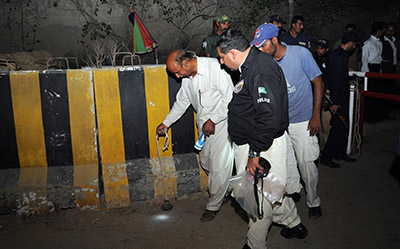
The Committee to Protect Journalists has joined the Alliance for Access, a coalition of Pakistani media groups, academic and student organizations, and telecommunications companies working to promote open access, in condemning Monday’s attack on the offices of Express Media Group in Karachi.
Pakistan should support International Day to End Impunity
New York, November 18, 2013–As one of the focus countries for implementation of the U.N. Plan of Action for the Safety of Journalists and Issue of Impunity, a strong statement on November 23, the International Day to End Impunity, would affirm that the Pakistani government has political will to investigate and punish the murderers of journalists, the Committee to Protect Journalists stated in a letter to Muhammad Nawaz Sharif, prime minister of Pakistan.
Training can help journalists survive captivity
Two murdered journalists for the Africa service of Radio France Internationale, Ghislaine Dupont, 51, and Claude Verlon, 58, might have had a chance. They were abducted on November 2 in Kidal in northern Mali, but the vehicle their captors were driving suddenly broke down, according to news reports.
In Pakistan, one journalist murdered, another attacked
New York, October 15, 2013–The Committee to Protect Journalists calls on Pakistani Minister of Information Pervaiz Rasheed to follow through on a public commitment he made last week to appoint a special prosecutor to investigate attacks against journalists. Since his statement, one journalist was murdered on Friday and another was beaten on Thursday, according to…
Chishti abducted, beaten: Challenge for Pakistan
Ali Chishti, who writes for The Friday Times, has gone public in Islamabad with details of his abduction and beating last Friday, August 30. Chishti is making the rounds of TV talk shows describing how he was picked up in Karachi by uniformed police driving a police vehicle, blindfolded, switched to another police vehicle, taken…
Pakistan Prime Minister should address abuse of journalists
New York, September 6, 2013–The Committee to Protect Journalists calls on the Pakistani government to ensure that there is a full investigation into the abduction and beating of a journalist for The Friday Times. Ali Chishti, who writes on national security and counter-terrorism, told CPJ and local news outlets that he was abducted and beaten…
A fine and shifting line for Pakistan’s media
The government of Balochistan, the troubled southwestern province of Pakistan, registered a case against national television news channel ARY on Monday, August 26, after it aired a video clip of the destruction of the residence of Pakistan’s founder, Muhammed Ali Jinnah. The case was filed under Pakistan’s Anti-Terrorist Act of 1997, claiming that airing the…