
We’ve launched a new section of our Web site, and we hope you take a few minutes to read some of its pages. There is one, for example, on Russian reporter Natalya Estemirova, who dared to examine human rights crimes in Chechnya. Another is devoted to Francisco Javier Ortiz Franco, a Tijuana newspaper editor who exposed the workings of the Arellano Félix drug cartel. They are among the 758 journalists killed for their work since 1992. Our new database memorializes these women and men, most of whom were local reporters, photographers, producers, and editors who confronted the powerful or took unpopular positions.
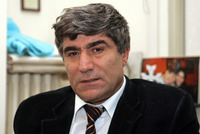
Take Hrant Dink, an Istanbul editor who fearlessly explored sensitive topics such as the mass killing of Armenians in the early 20th century. In the Philippines, Marlene Garcia-Esperat, a columnist known as “Madam Witness,” took on entrenched corruption in the agriculture department. Nigerian journalist Bayo Ohu did much the same, writing about fraud in the government’s customs agency.
Their lives are powerful reminders of why independent, critical journalism is so important. Their deaths should call us to action. More than 500 journalists have been targeted for murder, our research shows, and nearly nine in 10 of these slayings go unpunished. Another 200 journalists have been killed in combat or on dangerous assignments; their stories offer lessons in how to improve security and hold governments accountable.
Through interactive maps, timelines, and statistical breakdowns, our new database provides analysis by country, year, and type of death. It puts a special emphasis on unsolved murders, a focal point of CPJ’s Global Campaign Against Impunity.
By analyzing these deaths we intend to hold governments and their leaders to account. Why, for example, have Russian authorities obtained convictions in just one of 18 journalist murders since 2000? In September, CPJ’s Kati Marton and Nina Ognianova met with top Russian investigators in Moscow to ask that very question and to demand a change in course. Why has a democracy such as the Philippines allowed three dozen journalists to be killed since 1992? CPJ’s