It’s been a couple of weeks since I left Gabon, and a month since elections to pick a successor to Omar Bongo, who ruled Africa’s fourth-largest oil producer for 41 years. There are unresolved questions about the ballot count and the number of people killed in post-election violence.
Until this summer, I did not know much about Gabon, except for a random tidbit—that the nation of 1.4 million had a GDP matching Portugal. Things changed after July 3 when Lova Rakotomalala and I, both bloggers from Madagascar, received an e-mail from Alice Backer, a former French editor of Global Voices Lingua, about covering Gabon’s presidential elections scheduled for August 30.
I accepted because I need fresh air. After all, as a citizen blogger of Global Voices teny Malagasy, I had already experienced covering the bitter political crisis tearing apart my Indian Ocean island of Madagascar. With crisis reporting platform Foko-ushahidi, which allowed ordinary citizens to send testimonies via SMS, real-time reporting on Twitter, and local Web sites such as Topmada, Lova, myself and other citizen journalists helped cover all sides of the unfolding crisis. Citizen media reports were even quoted by international media as the Malagasy media was divided into partisan political positions.
Gabon, on the other hand, is not known as a “wired” country in tech speak. Less than 6 percent of the population has access to the Internet, according to InternetWorldStats. While intense public outcry opposed our former president’s closure of rival’s TV station and eventually led to his toppling from power, government censorship of media appeared to be the accepted norm in Gabon for many years, according to press freedom organizations.
Nevertheless, as I left the winter-season cool temperatures of Madagascar for the hot and humid air of Gabon’s seaside capital of Libreville, just above the Equator, I knew the elections would be historic, if not for the unprecedented role of new media technologies.
Twenty-three candidates were contesting the elections, many with appealing campaign Web sites such as Ali9, Mamboundou, AndreMbaObame or Moubamba. Candidates were also aggressively campaigning on social networking sites. One of the candidates for instance, Franco-Gabonese journalist Bruno Ben Moumbamba, was among the most active on Facebook, Flickr, YouTube and Twitter. Ali Ben Bongo, the ruling party candidate, even distinguished his campaign by sending on two separate occasions a personal SMS message to the customers of Gabon’s three main mobile carriers, Zain, Libertis, and Moov.
In the many bars (commonly called “makis”) of downtown Libreville’s Louis district, people discussed everything around the local beer “Regab” and braised fish dishes. With Bongo’s monopoly of state media, most local radio stations oriented toward religious and entertainment programming, and a handful of partisan TV stations controlled by the elite in politics, business, and the clergy, most Gabonese turned to international media for objective news. Unfortunately, the print and broadcast media’s coverage of the elections was limited by censorship, intimidation, and violence against reporters.
When I arrived in Libreville, I quickly detected that people were reluctant to freely express their views in public to someone they do not know. Even the barber I went to for a haircut politely declined to share his views on the elections, when I put the question to him as the TV in his salon was blaring Africa 24’s coverage of the polls. Bizarre.
At first, many young people I met did not seem very interested in the Internet. In fact, the most educated told me they used the Web exclusively to check e-mail and visit chat or dating sites. Others appeared motivated by the idea of blogging, but wanted to be paid to do it. Nevertheless, with help, a few people took their first steps in using the Web as social media, and a handful of new citizen voices slowly emerged. Journalist and activist Gaston Asséko shared his experience on voting day on YouTube. Roger Edima Mavoungou Wilson, a communications professional, started a blog and is actively tweeting. Régis Ngoma, a local comedian, even started a YouTube channel with videos satirizing the elections.
Regardless, there were many difficulties in my reporting. I remember being unable to text after the mobile companies suspended SMS service during the elections. As a result, a crisis reporting platform deployed by a Gabonese diaspora movement based in France called The Guardian Angels of Gabon on Ushahidi never took off. Nevertheless, social media facilitated the flow of information between the Gabonese diaspora and those living home. “#Gabon” even jumped to the top tag on francophone Twitter following the announcement of elections results, according to Twirus.
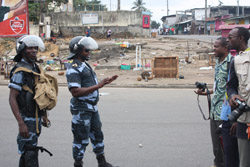
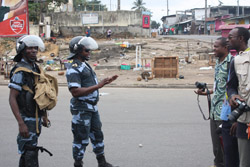
Doubts persist over the results of the presidential elections and with a recount of the votes in progress, journalists are still under pressure. Just last weekend, local caricaturist and blogger Patrick Essono was detained for drawing a cartoon of two policemen. A day before, the editor of state daily L’Union,
Andriankoto Harinajaka Ratozamanana, is co-founder of the Foko Blog Club, which trains Malagasy citizens in citizen journalism. He blogs on Posterous.