Today, May 3, is World Press Freedom Day. But on this day, this year, I am not thinking about the dangers for the many journalists whose bylines I’ve come to associate with places like Mogadishu or Manila, Kabul or Islamabad. It’s not because I don’t have immense respect for them and for the risks they take to bring their readers essential reports from some of the most dangerous corners of the world. I do.
This year my thoughts are with those who rarely, if ever, get a byline. Yet without these individuals, most foreign journalists (including me) could never report a story.
These nameless men and women are the fixers, the translators, the drivers, the local reporters and aspiring journalists who make the work of their foreign peers possible. They are brave and determined individuals who assume great risk for helping journalists tell stories that those in power would rather stifle. They are too rarely recognized for their efforts.
Of all the journalists who have died around the world because of their work, 90 percent are locals, according to CPJ research. It is common that their murderers are never found, prosecuted or convicted.
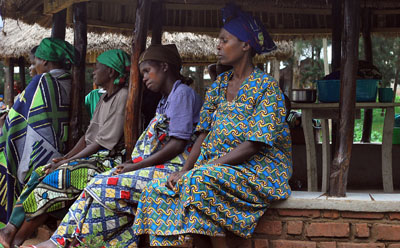
I recently returned from a three-week reporting trip to the eastern Democratic Republic of the Congo. It was my second time there, covering stories primarily about women’s and children’s rights and sexual and gender-based violence. I was mostly in Bukavu and Goma, the regional capitals of South and North Kivu respectively, where violence and insecurity has been ongoing since the late 1990s.
Impunity and disregard for the rule of law is rife in Congo, a vast nation with a shoddy record of protecting members of its media, especially in the east. Six journalists have been murdered since 2005, according to Reporters Without Borders, three of them in Bukavu (one each in 2007, 2008 and 2009). Fixers are not immune. According to a 2004 CPJ report, Acquitté Kisembe, a fixer for Agence France-Presse, disappeared while on assignment in 2003. He is presumed dead.
Although some parts of the Congo are seeing increased stability, risks for journalists remain. On my first trip, last October, I reported on death threats made one month earlier against three female journalists based in Bukavu. On both trips I worked closely with a local interpreter whose assistance has come to be not just helpful, but a professional and personal necessity.
He, like so many of his colleagues around the world, guides me through every step of what I do in Congo. He’s found for me secure accommodations and reliable drivers to ferry me safely along eastern Congo’s gutted, perilous roads. He’s made contact with countless sources before I’m even in country to ensure that I’ll have the story I’ve promised my editors. He’s spent hours helping me schedule interviews and translating them as we go. He never lets me walk into a police station or military compound alone. He tells me where I can go safely and where I can’t. I don’t question his judgment.
As we bump our way through Bukavu’s muddy streets, he shares his insider’s take on Congolese culture, politics and history. His lessons often become the silent background informing so much of what I write. And, no less important, he steers me to the best food and Internet connections in town. I’ve told him many times—and I can only hope he knows how sincere I am when I say this—I would be totally lost without him.
But his name goes nowhere on my stories. He’s a silent, but invaluable, partner. For me, this World Press Freedom Day is a reminder of my indebtedness to him and his colleagues everywhere.
At CPJ’s Impunity Summit, held last month at the Columbia University Graduate School of Journalism, Owais Aslam Ali, secretary-general of the Pakistan Press Foundation, underscored this point that unnamed locals are key to our work. Yet he felt that the international media community is not doing enough to protect and support those journalists and fixers upon whom we rely so heavily.
“This war is being covered by the foreign media on the cheap,” he said of the ongoing conflicts in Pakistan. The brunt of the dangers are being borne by the local media, he said, adding that they are pushing the limits of what they cover for, and because of, the foreign press.
Yet Ali felt that there was scant support by the international media community for the journalists who take risks to bring us these stories, who become internally displaced as they flee their homes in the face of threats because of their work. He called the foreign media “callous” in this regard. The only journalist murder in the last decade to have been solved and prosecuted to a conviction in Pakistan was that of Daniel Pearl, an American, in 2002. To Ali, the case was evidence that with international pressure, attention, and support, there can be justice for all journalists.
So, today, I’ll be thinking about the names behind the names we see in print. I’ll be thanking them for their courage and tenacity and wisdom. I am grateful for the continuing work CPJ does to protect fixers. I hope that others at the summit heard what I did from Ali: that when we speak up for journalists, let’s not speak only for those whose names appear in print.
Danielle Shapiro is a freelance journalist based in New York City whose work focuses primarily on women and children in the developing world. A podcast of an interview Shapiro recently did for KUOW (NPR) Seattle about some of her Congo reporting is here.