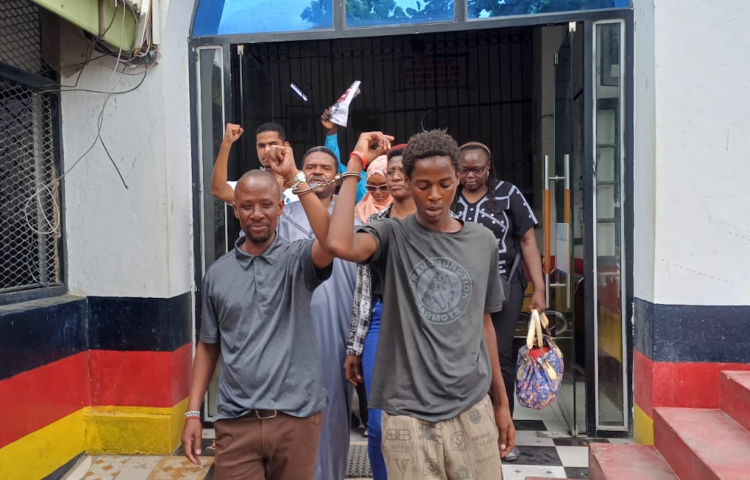
Kenya court due to rule on cybercrimes law as another journalist faces jail
Journalist Peter Maseke Mwita has a keener interest than most in Friday’s upcoming ruling on the constitutionality of Kenya’s cybercrime law — legislation that could see him jailed for up to 10 years over a mistaken WhatsApp message. On February 27, a three-judge court of appeal bench is due to rule in a case brought…

In Nigeria, at least 56 journalists attacked and harassed as protests roil region
“He hit me with a gun butt,” Premium Times newspaper reporter Yakubu Mohammed told the Committee to Protect Journalists, recalling how he was struck by a police officer while reporting on cost-of-living protests in Nigeria’s capital of Abuja on August 1. Two other officers beat him, seized his phone, and threw him in a police…

Chained and blindfolded: Nigerian journalist Segun Olatunji recounts his detention
The arrest and detention of Segun Olatunji, the then-editor of the privately owned First News site, by Nigeria’s military in March triggered on outcry from local and international civil society, highlighting an uptick in the unlawful detention of journalists in the West African nation. Olatunji was taken from his Alagbado home in southwestern Lagos state by more…
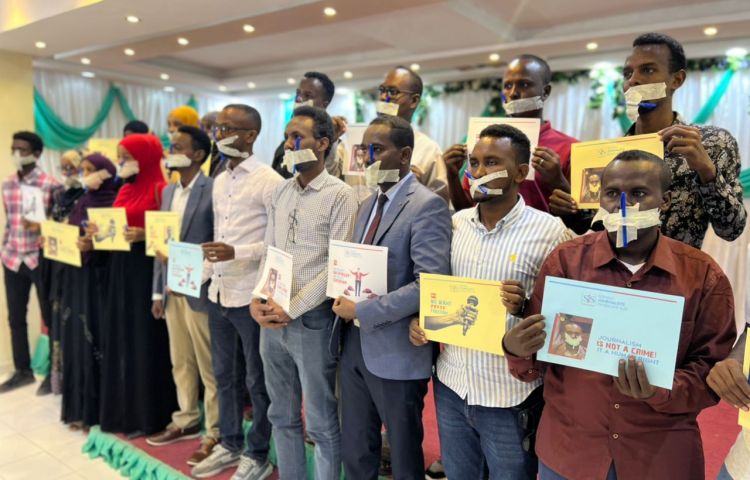
Cyberattackers used US company RayoByte in efforts to crash media sites
The cyberattack against the Somali Journalists Syndicate could not have come at a worse time. A distributed denial-of-service attack, known by its acronym DDoS, flooded the local press freedom group’s website with traffic in early August and knocked it offline. Days later, authorities arrested SJS staff member and Kaab TV editor Mohamed Ibrahim Osman Bulbul…

CPJ joins call for Nigeria to maintain internet, social media access during 2023 elections
The Committee to Protect Journalists joined an open letter by the KeepItOn coalition of press freedom and human rights groups on February 16, 2023, calling on Nigerian President Muhammadu Buhari and other officials to “ensure that the internet, social media platforms, and all other communication channels remain free, open, secure, inclusive, and accessible” during the…
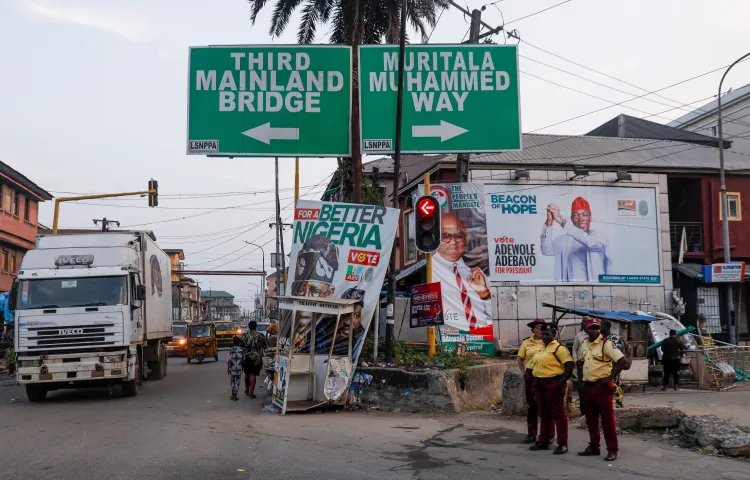
‘Like going to the war front’: Nigerian journalists offer tips for covering 2023 elections
In the early hours of February 1, unknown gunmen set fire to an office of Nigeria’s Independent National Electoral Commission and a police station in the country’s southeastern Anambra state. Days earlier, gunmen had attacked and killed soldiers and policemen at checkpoints along a road that connects nearby Enugu and Ebonyi states. The incidents underscored…
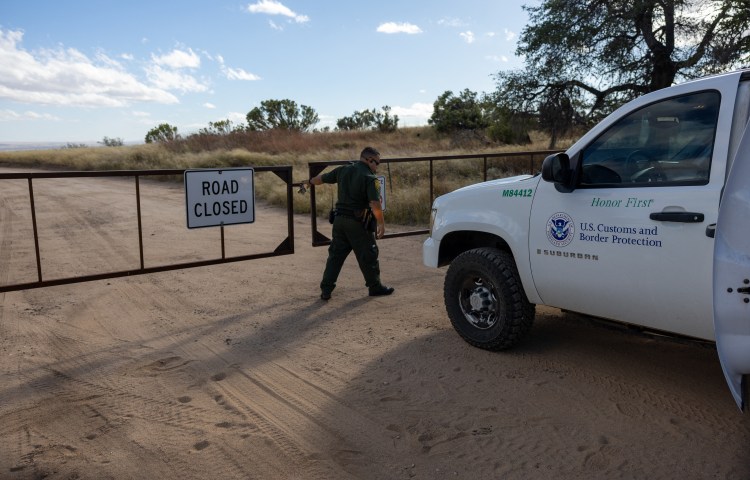
Forensic tools open new front for using phone data to prosecute journalists
On April 13, police in Russia’s Khakassiya republic arrested Mikhail Afanasyev and seized his digital devices. Afanasyev, chief editor of the online magazine Novy Fokus, was detained based on an article about riot police in southern Siberia refusing to serve in Ukraine. He faces a possible 10-year prison sentence for spreading “false” information. It’s not surprising for…
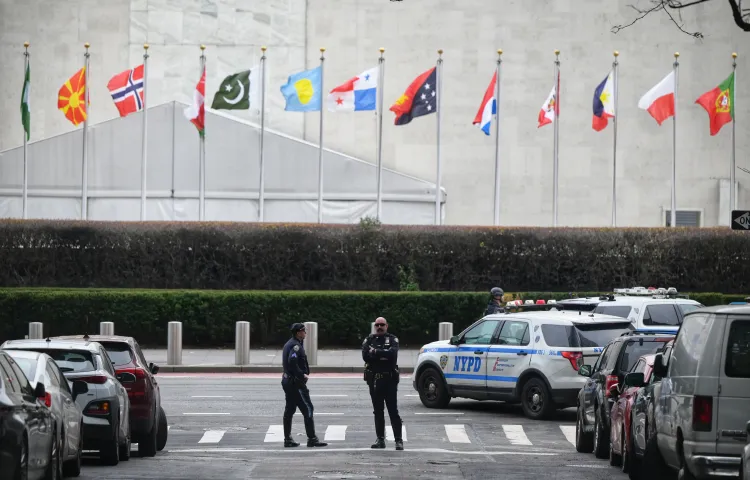
Why the UN’s push for a cybercrime treaty could imperil journalists simply for using the internet
Cybercrime is on the global agenda as a United Nations committee appointed to develop a treaty on the topic plans for its first meeting amid pandemic-related delays. The process is slated to take at least two years, but experts warn that such a treaty – initially proposed by Russia – could hand new tools to…

A Nigerian journalist took photos at the scene of killings his government denies. Then the harassment started
The photos showed blood-soaked concrete, a gashed open thigh, and an injured protester grimacing in pain on the ground. Taken by photojournalist Eti-Inyene Godwin Akpan on October 20, 2020, the images tell the story of Nigerian forces’ mass shooting of anti-police brutality protesters at Lagos’ Lekki Toll Gate, an incident the government continues to deny….
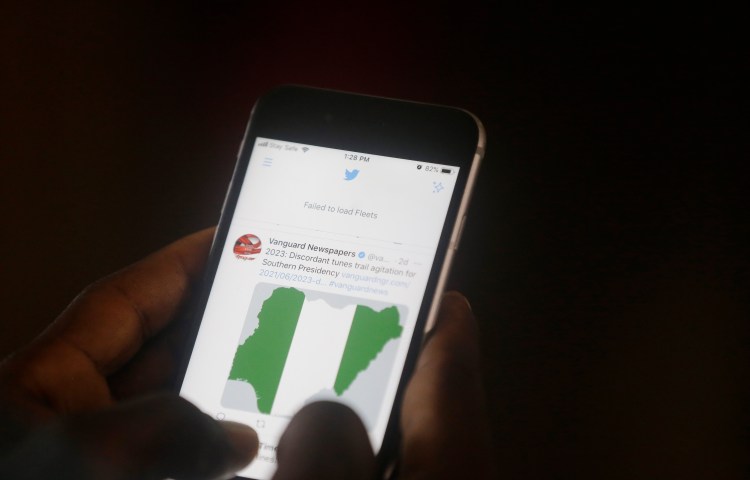
Two Nigerian journalists respond to the government’s ongoing Twitter ban
More than a month after Nigeria’s federal government suspended access to Twitter, CPJ’s review of local accounts found at least some run by media outlets have gone silent. Twitter was inaccessible when CPJ tried to visit it from Nigeria in mid-July. However, after the ban, Nigerian outlet The Guardian reported a huge spike in searches…