Faces of impunity across the world
CPJ’s 2023 Global Impunity Index lists the top 12 countries where the murderers of journalists go free. But impunity knows no borders. The mosaic below shows the faces of slain journalists around the world. Beneath each journalist’s photo is the location of their death. Click the images for more details about these unsolved cases. (Photo grid by Geoff McGhee)
‘Network abuse’: Attacks on 3 media sites involved services of US, UK firms
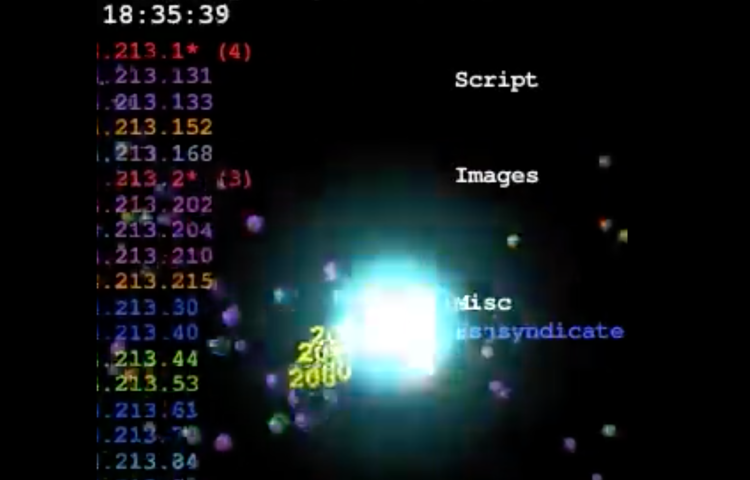
Cyberattackers used services of technology companies based in the U.S. and U.K. to target media sites from Somalia, Kosovo, and Turkmenistan, Qurium, a nonprofit hosting the sites, said Tuesday. Earlier this month, CPJ reported on how cyberattackers used a Nebraska company, RayoByte, in attempts to knock those same media sites offline, as well as at…
Cyberattackers used US company RayoByte in efforts to crash media sites
The cyberattack against the Somali Journalists Syndicate could not have come at a worse time. A distributed denial-of-service attack, known by its acronym DDoS, flooded the local press freedom group’s website with traffic in early August and knocked it offline. Days later, authorities arrested SJS staff member and Kaab TV editor Mohamed Ibrahim Osman Bulbul…

CPJ joins call for Somali authorities to drop all charges against journalist Abdalle Ahmed Mumin
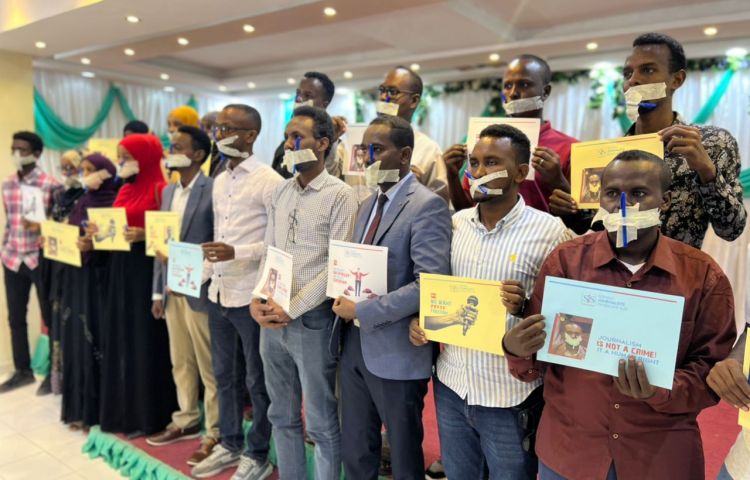
The Committee to Protect Journalists joined six other press freedom and human rights groups in a letter Monday calling on Somali authorities to drop the criminal charges filed against Abdalle Ahmed Mumin, a press freedom advocate and freelance journalist. Authorities arrested Abdalle, secretary-general of the Somali Journalists Syndicate press freedom group, on October 11, after…
CPJ, Human Rights Watch, and Amnesty International express concern over Somalia’s amended media law
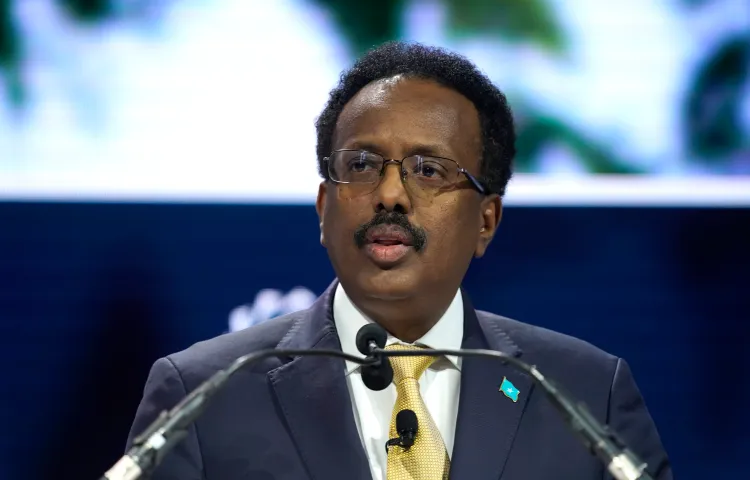
The Committee to Protect Journalists, Human Rights Watch, and Amnesty International today sent a joint letter to the president of the Federal Republic of Somalia, Mohamed Abdullahi Mohamed, expressing concern over a restrictive amended media law and asking the president to take concrete steps to safeguard press freedom and journalist safety during upcoming elections. The…
Somali journalist Abdalle Ahmed Mumin says there is ‘nobody to trust’ for COVID-19 information
Somali freelance journalist Abdalle Ahmed Mumin has covered the news for 17 years, spending much of that time in one of the most dangerous places in the world to work as a journalist. Since CPJ started keeping records in 1992, at least 69 journalists have been killed in Somalia for their work.

Q&A: Somali editor says efforts to make media law less restrictive don’t go far enough
On July 13, Somalia’s Cabinet approved proposed changes to the country’s national media law as part of a review to overhaul the regulatory framework under which journalists currently work. But Somali journalists and local media rights groups have criticized the government for not doing enough to provide journalists with a less restrictive environment.
From Charlie Hebdo in Paris to bloggers in Bangladesh, extremists target press
Thursday marks one year since two gunmen burst into the Paris offices of satirical magazine Charlie Hebdo and opened fire. Over the following year, CPJ documented the deaths of 28 journalists who were killed for their work by Islamic militant groups such as Islamic State and Al-Qaeda. This StoryMap charts the deadly attacks that took…

Mission Journal: Fewer arrests but fear still lingers for Somaliland’s press
Conditions for the press in the semi-autonomous republic of Somaliland may, on the surface, appear to be improving. But without a functioning media law to lend protection, and pending legislative elections, journalists remain wary of state harassment.
Slideshow: Journalists killed in 2014
In 2014, at least 60 journalists and 11 media workers were killed in relation to their work, according to CPJ research. Local and international journalists died covering conflicts, including in Syria, Iraq, and Ukraine, while many others were murdered reporting on corruption and organized crime in their own countries. Here, CPJ remembers some of the…