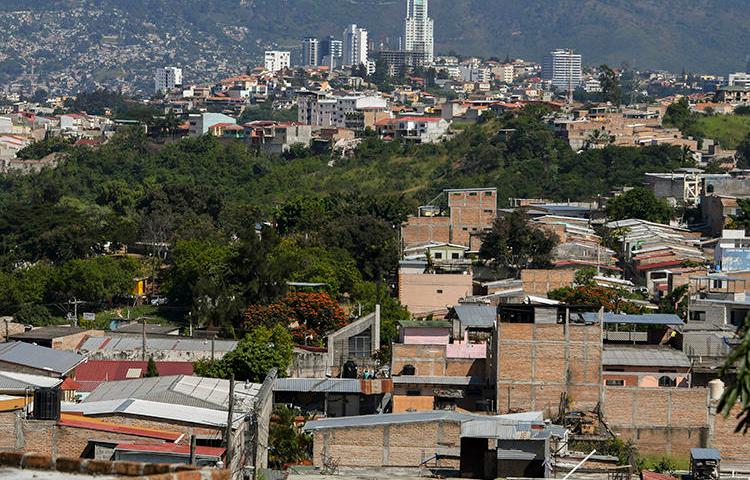
CPJ testifies on challenges to democracy in the Americas
Carlos Lauría’s testimony starts at 1:10 in the video. Carlos Lauría, CPJ’s Americas senior program coordinator, provided testimony before the Subcommittee on the Western Hemisphere of US House of Representatives on Tuesday. Lauría emphasized that violence and government harassment are the main emerging trends that illustrate the major challenges facing the press in the Western…
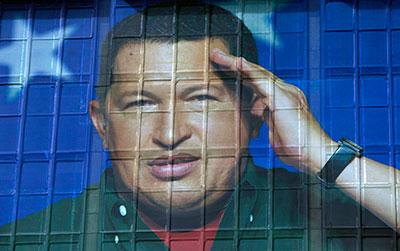
Latin American press faces violence, legal harassment
Violence and legal harassment: the two greatest obstacles to press freedom in Latin America today. That’s the message that CPJ Executive Director Joel Simon is delivering this morning in Washington, D.C., at a briefing hosted by Congressman Sam Farr. Farr, a California Democrat, hosts a monthly series looking at emerging trends in the Western Hemisphere.…
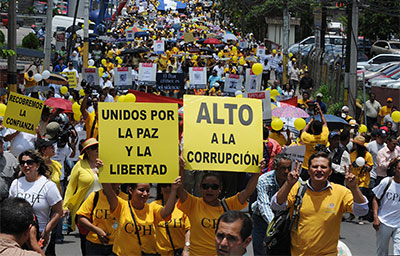
Amid violence, lack of unity among Honduran journalists
On May 25, the Honduran press corps took to the streets of Tegucigalpa and four other cities to reject the growing levels of violence against members of the media. Many marchers donned yellow-and-black t-shirts emblazoned with the words: “Killing journalists will not kill the truth.”
Video: Who is killing Honduran journalists?
With another journalist murdered in Honduras on Tuesday, bringing the total killed since March to eight, the country’s press is understandably jittery. In a new documentary jointly produced by the Inter-American Press Association and the Video Journalism Movement, Carlos Mauricio Flores, the executive director of Tegucigalpa-based El Heraldo newspaper says, “We journalists are living in uncertainty and fear.”
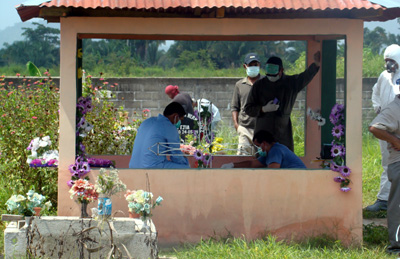
In Honduran murders, a flawed government response
In a letter to the editor published Sunday in The New York Times, Honduran minister on human rights Ana Pineda took issue with the findings of CPJ’s recent special report on the murders of seven local reporters this year. Our report, which the Times detailed in a July 27 story, found a pattern of botched…
Honduran decree lifted, but broadcasters still shuttered
Three days after the Honduran interim government led by Roberto Micheletti lifted a September 27 decree that allowed them to shut down Radio Globo and Canal 36, broadcasters loyal to ousted President Manuel Zelaya, the two stations were still prevented from resuming normal transmissions, according to local and international news reports.
Honduran radio station goes online after suspension
Early Monday morning, military and police personnel forcefully shut down the Tegucigalpa-based Radio Globo under a decree by the de facto government that suspends civil liberties, CPJ reported. Today, Honduran and international media outlets said the radio station was being broadcast online.