
Abe administration throttles media independence, journalists and UN say
Late in 2015, the Japanese government asked David Kaye, the U.N. special rapporteur on the right to freedom of opinion and expression, to reschedule a visit planned for December. At the time, some news outlets speculated that the administration of Prime Minister Shinzo Abe, under criticism for rising threats to free expression, was trying to…
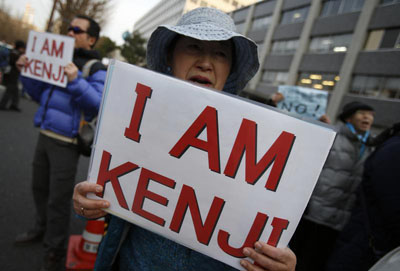
Kenji Goto’s reporting is voice of humanity in times of atrocity
Kenji Goto, the 47-year-old television journalist held captive by the Islamic State (IS), is not a typical reporter, nor is he typically Japanese. But his courage and commitment to broadcasting humane stories from some of the world’s most dangerous conflict zones would put him at the pinnacle of his profession anywhere in the world. It…
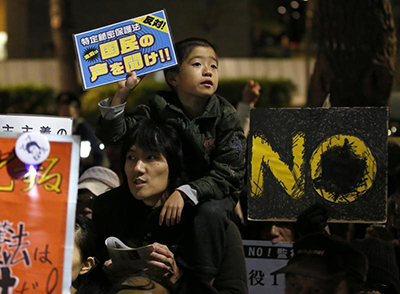
Japan’s state secrets law, a minefield for journalists
On October 14, as Japan prepared to mark Newspaper Week–an event set up to promote the public right to know–Prime Minister Shinzo Abe’s cabinet publicly announced guidelines on how the country’s security law, which was passed in December 2013, is to be implemented. This date will be remembered as the point at which the public’s…
Journalists in Japan face threats 3 years after Fukushima
At the end of last month, an evacuation order declared during the 2011 Fukushima-Daiichi nuclear plant power plant meltdown was lifted for residents of a small town in Fukushima Prefecture, the first time an area so close to the site was declared suitable for habitation. Yet, three years after Earthquake Tōhoku killed 15,000 people and triggered…
Japan: State security does not justify restricting information
To the group of developed democracies, such as Britain and the United States, each with increasingly restrictive attitudes toward press freedom, add Japan, which appears to be on the brink of passing a new state secrets protection law. If passed by the upper house of the Diet today, it would broaden the criteria the government…
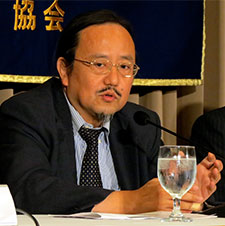
Japan’s independent journalism on trial with Tanaka
It doesn’t take a baseball bat to silence a reporter in Japan–increasingly the blunt weapon being wielded by corporations, power brokers, and politicians is the court gavel. In May of this year, a writer for the weekly magazine Shukan Kinyobi was sued by one of Japan’s most powerful nuclear industry figures, for a total of…
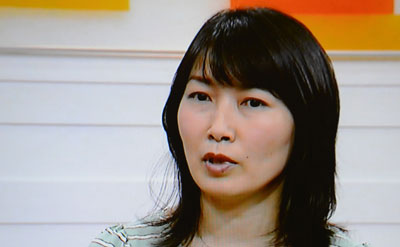
Yamamoto’s death reflects Japan’s media reach, duty
My colleagues and I were saddened to learn of the death of Mika Yamamoto, a Japan Press video and photo journalist who was killed while covering clashes in Aleppo, Syria, on Monday. The moment was all the more poignant because of the similarities with two other Japanese journalist fatalities: Kenji Nagai of APF News in…
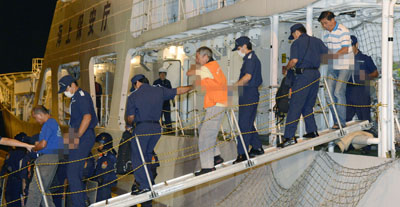
Japan releases Chinese journalists–China’s up next
It’s not often we at CPJ find ourselves calling on other countries to release Chinese journalists from detention. But that’s just what happened yesterday. Hong Kong-based Phoenix TV contacted us to say that two of their journalists were among a group of 14 arrested by Japanese authorities over a disputed territory in the East China…
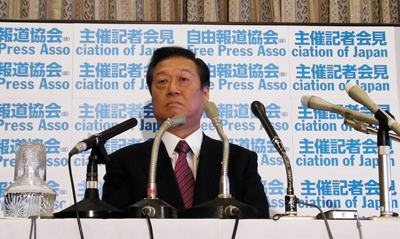
Following disaster, Free Press Association of Japan launches
After the huge catastrophe that hit Japan this March, the country is in need of a freer media culture. A less restricted media would allow more people access to information at press conferences. In the name of this aim, in April 25, a group of Japanese freelance journalists launched a new organization called the Free Press Association of…
In Japan, scenes of devastation
Here is a selection of photos by Japanese freelancer Hiro Ugaya showing the devastation in northeastern Japan caused by the March 11 earthquake and tsunami. Photos are copyright Hiro Ugaya and used with permission. View his full Picasa gallery here. In an interview on the CPJ Blog, Ugaya tells CPJ’s Madeline Earp how he covered…