
David Kaye: Here’s what world leaders must do about spyware
In late June, the general counsel of NSO Group, the Israeli company responsible for the deeply intrusive spyware tool, Pegasus, appeared before a committee established by members of the European Parliament (MEPs). Called the PEGA Committee colloquially, the Parliament established it to investigate allegations that EU member states and others have used “Pegasus and equivalent…
Spain is set to reform ‘gag law,’ but press freedom groups are skeptical
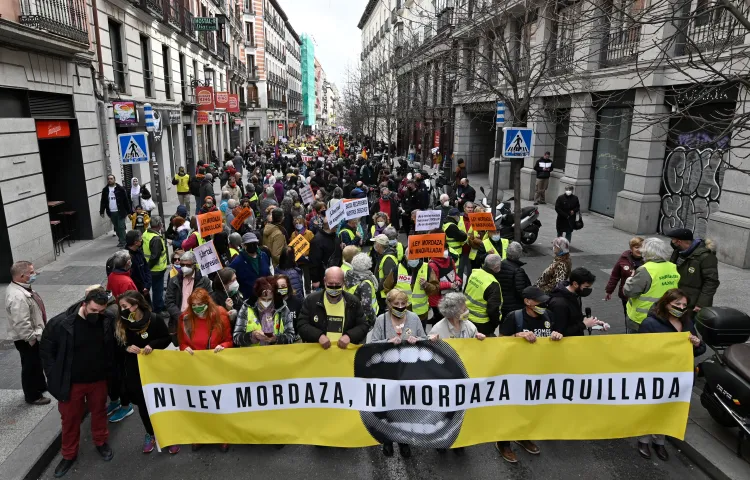
In May, Diego Díaz Alonso, editor of Spanish non-profit news outlet Nortes, was surprised to receive a 601 euro (US$611) fine in the mail. The letter claimed that Díaz Alonso had resisted police and obstructed emergency services as they were treating a homeless person lying unconscious in the street in Gijón, in northern Spain, the previous summer….

Data journalists describe challenges of reporting on the true toll of COVID-19
How many people worldwide have been infected by the coronavirus, and how many have died as a result? Finding reliable information on the virus’s toll has proven such a challenging task that it is nearly impossible to answer these basic questions, five data journalists from around the world told CPJ in May and June. In…

EU rulings on whistleblowers and right-to-be-forgotten laws puts press freedom at risk
European journalists were reminded today that their freedom to report is not only determined by national laws, but increasingly by European institutions. Today, after years of political battle, the European Parliament adopted the Passenger Name Record directive, the Data Protection Package, and the Trade Secrets Protection Act. The stakes were immense and the debates long…
Why Spain’s new gag law is threat to free flow of information
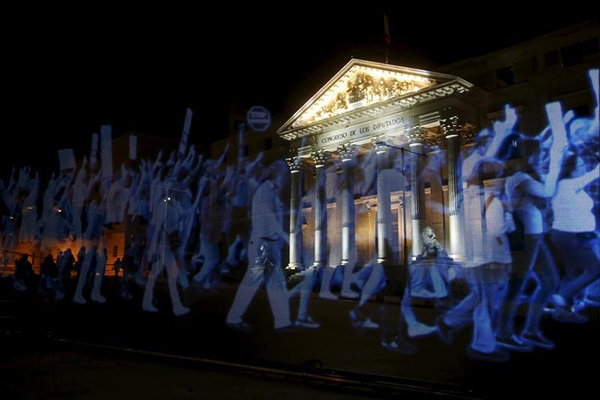
On July 1 a public security law is due to come into force in Spain amid an increasingly vocal chorus of concern among the media and press freedom groups. The bill–dubbed the “ley mordaza,” or “gag law,” by opposition groups–would define protests in front of parliament and other government buildings as a “disturbance of public…
EU ‘right to be forgotten’ ruling will corrupt history
Google has taken its first public steps to comply with a troubling ruling by the European Court of Justice establishing a so-called “right to be forgotten” throughout the European Union. The ruling, on May 13, requires that search companies consider individuals’ demands to remove Internet links that reference them, and to give those requests priority…
EU underscores support of free expression, but slights access to information
A new document on freedom of expression and opinion, adopted May 12 by the 28 foreign ministers of the European Union, presses nearly all the right buttons. Drawing its inspiration from international human rights norms as well as from the EU’s treaties and its charter of fundamental rights, the document reaffirms the role of freedom…
Morocco accuses Spain’s El País of inciting terrorism
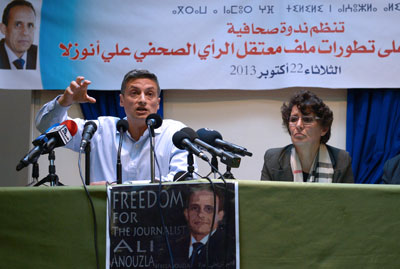
Morocco’s inclination for wielding terrorism accusations against journalists and news outlets who report on extremist groups has extended to Spain, where authorities are investigating El País newspaper and one of its journalists at the behest of the Moroccan government.
The long shadow of Spanish politics over public media
A recent wave of personnel changes at Spanish state-owned broadcaster Radio Televisión Española (RTVE) has raised concerns about political and ideological influence, with many fearing that journalists closer to the current conservative government are being promoted at the expense of those with alleged progressive views. It is the latest controversy in a long debate about…

Expelled from Cuba jails, journalists languish in Spain
In 2010, following midsummer negotiations between the Catholic Church and the government of President Raúl Castro, Cuban authorities began releasing imprisoned journalists, sending them into forced exile with their families. In April 2011, the last of more than 20 journalists arrived in Spain. They had been granted liberty and respite, and were promised support from…