Go »
  Go »

Italy

2012


Alessandro Sallusti (AP/Luca Bruno)

Brussels, September 28, 2012--The Committee to Protect Journalists condemns the criminal defamation conviction and 14-month prison sentence handed to Alessandro Sallusti, editor-in-chief of the Milan-based daily Il Giornale, and calls on Italian authorities to reform the country's defamation laws.

On Wednesday, the Fifth Chamber of the Cassation Court, Italy's highest, upheld an earlier guilty verdict delivered against Sallusti by a lower court in Milan in June, 2011. 

Trickling back from the summer recess, European press freedom advocates and media lawyers are taking stock of facts and statements that went underreported during the holiday lull. And libel reform stands on top of the pile.  

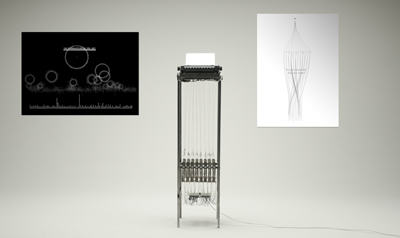
The "On Journalism #2 Typewriter." (Julian Koschwitz)

Julian Koschwitz is doing his part to ensure that the 918 journalists killed for their work since 1992 don't fade into mere numbers.

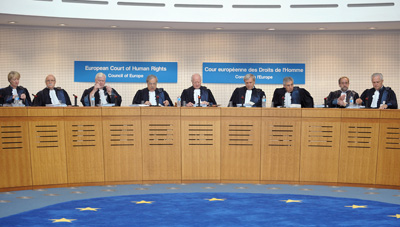
Judges hear a case in the European Court of Human Rights. More than 60,000 people sought the court's help in 2011. (AFP/Frederick Florin)

The European Court of Human Rights is a victim of its success. In 2011, more than 60,000 people sought its help after exhausting all judicial remedies before national courts. But now, some member states of the Strasbourg-based Council of Europe are pushing for reforms of the prestigious institution and are pointing at the number of cases to make their argument. Instead of enhancing the court's capacity to deal with the backlog of cases, their moves would clip the court's prerogatives and undermine a citizen's capacity to defend his most fundamental rights.

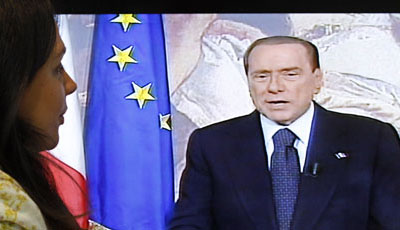
Until his last days in office, Italy's Silvio Berlusconi pursued restrictive legislation known as the 'gag law.' (Reuters/Alessandro Garofalo)

In the EU, some countries appear more immune than others to scrutiny and reproach. Anti-terror laws, political and economic concerns, and a lack of common standards all challenge the credibility of the EU's diplomacy. By Jean-Paul Marthoz

Silvio Berlusconi’s government crumbled in November amid the country’s economic crisis, ending a tenure marked by manipulation and restriction of the press. As prime minister and media owner, Berlusconi owned or controlled all of Italy’s major national television channels, ensuring news coverage favorable to his administration. He worked methodically for three years to enact controversial legislation to prevent print and online media from publishing embarrassing information about alleged corruption in his government and his dalliances with young women. Even in the final days of his tenure, Berlusconi sought to revive a bill that would have limited the use of police wiretaps, penalized journalists for publishing the contents of wiretaps, and forced websites to publish “corrections” to information considered damaging to a person’s image within 48 hours of receiving a complaint. Parliament had already postponed action on the measure, termed Berlusconi’s “gag law,” in 2010. In Perugia, prosecutor Giuliano Mignini used Italy’s harsh defamation laws to intimidate journalists, authors, and media outlets--in Italy and the United States--that reported critically about his performance in two high-profile cases.

« Previous Year: 2011 | Next Year: 2013 »

  Go »
Text Size
A   A   A
Contact

Europe and Central Asia

Program Coordinator:
Nina Ognianova

Research Associate:
Muzaffar Suleymanov

nognianova@cpj.org
msuleymanov@cpj.org

Tel: 212-465-1004
ext 106, 101
Fax: 212-465-9568

330 7th Avenue, 11th Floor
New York, NY, 10001 USA

Facebook: CPJ ECA Desk

Blog: Nina Ognianova
Blog: Muzaffar Suleymanov

Subscribe

Italy Atom Feed