Go »
  Go »

Middle East & North Africa

2010


Six stories: Online journalists killed in 2010

Greek blogger Giolias (AP)

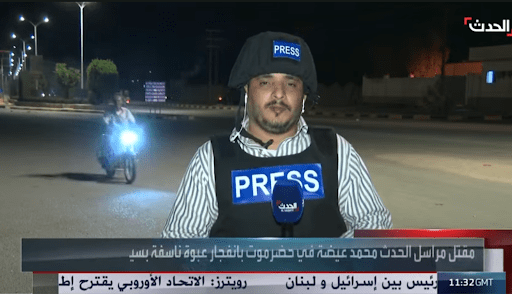
This week, CPJ published its year-end analysis of work-related fatalities among journalists. Six of the 42 victims worked online. While you can read the full statistics and our special report elsewhere, I want to highlight the stories of these six journalists who worked on the Web.

New York, December 17, 2010--Sudanese security officers attacked BBC correspondent James Copnall on Tuesday as he was reporting on a demonstration and ensuing arrests, the journalist reported. Officers also confiscated Copnall's recording equipment.
New York, December 15, 2010--Omar Rasim al-Qaysi, an anchor working for Al-Anbar TV, was killed on Sunday in a car bombing in central Ramadi, al-Anbar province. His brother, a fellow staffer at the station, was injured in the attack. Security forces then detained a journalist for the daily Al-Anbar, preventing him from covering the explosion's aftermath.

At least 42 journalists are killed in 2010 as two trends emerge. Suicide attacks and violent street protests cause an unusually high proportion of deaths. And online journalists are increasingly prominent among the victims. A CPJ special report

A December suicide attack in Pakistan's Mohmand tribal district claimed the lives of two journalists. (Reuters/Umar Qayyum)
AP

New York, December 14, 2010--In a continuation of its relentless attack on independent and opposition media, Iranian authorities have arrested three journalists from the daily Sharq, bringing the number of the newspaper's incarcerated staffers to seven in less than a week, according to news reports. In other developments, veteran journalist Mashallah Shamsolvaezin, at left, has been sentenced to 16 months in prison, the BBC reported, and blogger Hossein Derakhshan was returned to jail after being temporarily released on bail, according to a blog entry posted by his family on Saturday. 

Tueni (AP)On a rainy Sunday in downtown Beirut, in St. George Cathedral at Place d'Etoile, the family of murdered Lebanese journalist Gebran Tueni gathered with the staff of his newspaper, Al-Nahar, to hold a memorial marking the fifth anniversary of Tueni's assassination. The memorial was held in the same church where Tueni was married in 2001, and where his funeral was held in 2005, as if to complete the circle of life and memory.

Al-Jazeera staffers in the network's offices in Kuwait today. Authorities shut the bureau down on Monday after it covered a violent police crackdown on a meeting of opposition lawmakers. (Gustavo Ferrari/AP)
New York, December 13, 2010--The Kuwaiti Ministry of Information announced today it has shut down Al-Jazeera's office in Kuwait, the official Kuwait News Agency (KUNA) reported. The ministry also withdrew press accreditation from all of Al-Jazeera's local staff. The suspension came after the Doha-based pan-Arab news satellite station aired live footage of Kuwaiti police cracking down on an opposition gathering and broadcast an interview with an opposition member of parliament. CPJ calls on Kuwaiti authorities to reopen Al-Jazeera's office immediately and to reinstate all accreditations.

Current Lebanese media laws exist in the perfect state of chaos. For example, a print journalist who is a member of the Journalists' Syndicate, according to the Publication Law, is protected from administrative arrest for an opinion piece or an article he writes. However, if the same journalist broadcasts the very same opinion and some find it defamatory, according to the penal code, he can end up in jail. Provisions concerning media and journalists are scattered among numerous pieces of legislation like the penal code, the Publications Law, the Audiovisual Media Law, and the Military Justice Code.

  • Venezuela prepares law to regulate media, including the Internet.
  • Iranian blogger Hossein Derakhshan briefly released from jail on $1.5 million bail...
  • ...but fellow Iranian-Canadian anti-censorship software designer Saeed Malekpour still faces death penalty.
  • Syrian telecom minister says awareness of the dangers, not censorship of the Internet is the solution.
Mohammad Davari (RAHANA)

Just before a new round of nuclear talks with Iran began on December 6, the German newspaper Frankfurter Allgemeine Zeitung interviewed a high-ranking Iranian official who indicated that two German journalists detained in Iran would possibly be allowed to spend the Christmas holiday with their families at the German Embassy.

New York, December 10, 2010--The Committee to Protect Journalists condemns harassment of the Lebanese news website Al-Akhbar after it published U.S. diplomatic cables that were first disclosed by WikiLeaks. The website was hacked this week by unknown attackers, while the Tunisian government blocked domestic access to the site. Saudi officials blocked access to the independent website Elaph, which also published some of the cables.

New York, December 9, 2010--Authorities in Libya must ensure the safety of Libya Press reporters and stop harassing the private news agency, the Committee to Protect Journalists said today. CPJ is alarmed by the agency's decision to shut down its Tripoli office and leave Libya because security officials have said they "do not want any presence of the agency inside Libya," the agency said in a statement posted on its website Tuesday. 
New York, December 8, 2010--The Committee to Protect Journalists calls on Saudi authorities to immediately release Mohamed al-Abdulkarim, an Islamic law professor, human rights activist, and the editor-in-chief of an online magazine. He was arrested on Sunday, two weeks after an article he wrote was published online.

Relying heavily on vague antistate charges, authorities jail 145 journalists worldwide. Eritrea, Burma, and Uzbekistan are also among the worst jailers of the press. A CPJ special report

From Africa to the Americas, more journalists are imprisoned today than at any time since 1996. (AFP)


In this video companion to CPJ's 2010 census of imprisoned journalists, Sri Lankan columnist J.S. Tissainayagam describes his own time in prison and how international advocacy can make a difference in winning the freedom of jailed reporters, editors, photojournalists, and bloggers. (4:09)

Read the special report "Iran, China drive prison tally to 14-year high" and view our database of journalists in prison.

Five of 17 journalists released from Cuban prisons give a press conference on their arrival in Madrid in July. They have since told CPJ they suffered torture in jail. (AP/Paul White)

Today we released our annual census of imprisoned journalists around the world, citing 145 reporters, editors, and photojournalists behind bars on December 1, an increase of nine from 2009 figures. The tally begs the question, What's in a number?

New York, December 7, 2010--The Committee to Protect Journalists condemns today's arrest of four Iranian journalists at the daily Sharq. CPJ is also disturbed by recent news reports that indicate the abusive treatment endured by dozens of imprisoned Iranian prisoners has adversely affected the health of many of them--including Issa Saharkhiz, at left, a founding member of the now-defunct Association of Iranian Journalists, who has reportedly undergone surgery for internal hemorrhaging at Rajaee Shahr Prison.
New York, December 6, 2010--A court in Jendouba is expected to rule Wednesday in a criminal case against Mouldi Zouabi, a senior reporter for the online news outlet Kalima. The Committee to Protect Journalists calls on Tunisian authorities to drop the charges, which have been brought in reprisal for Zouabi's critical journalism.

Facebook gets caught up in Egypt's media crackdown

As CPJ has previously documented, journalists in Egypt have faced a deterioration in press freedom in the run-up to the parliamentary vote on Sunday. Editors have been fired, TV shows suspended, and regulations over SMS texting suddenly tightened. In the final few days, a new forum found itself caught up in this attempt to control the media message--the social networking site Facebook.

CPJ board member Kati Marton presents a 2010 International Press Freedom Award to Nadira Isayeva. (Getty/Michael Nagle)
New York, November 24, 2010--Outstanding journalists at the forefront of the battle for press freedom in Ethiopia, Iran, Russia, and Venezuela were honored Tuesday evening at the Committee to Protect Journalists' 20th Annual International Press Freedom Awards benefit dinner.
New York, November 23, 2010--The Committee to Protect Journalists condemns a one-year prison sentence given to Mohammed Abdulqader al-Jassem, a Kuwaiti writer and journalist, on Monday. A criminal court convicted al-Jassem of criminal defamation in connection with an article he published on his personal news blog, Al-Mizan. The case is only one of 18 that the government has filed against the journalist in the past year.
New York, November 22, 2010--Egyptian authorities should immediately release Youssef Shaaban, a reporter for the online newspaper Al-Badil who was arrested while covering street protests in Alexandria, and drop the criminal charges against him, the Committee to Protect Journalists said today.  
New York, November 22, 2010--Mazen Mardan al-Baghdadi, a reporter for Al-Mosuliya television, was gunned down on Sunday in front of his home, according to news reports. The Committee to Protect Journalists calls on Iraqi authorities to thoroughly and transparently investigate the murder.
Left to right: Nadira Isayeva, Dawit Kebede, and Laureano Márquez in Washington. (CPJ/Rodney Lamkey Jr.)

The last few weeks have been extremely busy for everyone at CPJ as we've been preparing for the 2010 International Press Freedom Awards. Today's press conference in Washington will be followed by a series of events culminating in our awards ceremony Tuesday in New York. As always, the awardees make it special. 

New York, November 17, 2010--Iranian authorities announced on Tuesday that two German reporters for Bild am Sonntag will be charged with espionage, according to international news reports. They were arrested in October while interviewing the son of a woman sentenced to death by stoning on charges of adultery. The Committee to Protect Journalists is alarmed by these developments and calls on Iranian authorities to drop the charges and release the reporters immediately.

  • Egyptian blogger Karim Amer is finally free after four years in prison.
  • Iran launches yet another police force to deal with the Internet, headquartered with the Revolutionary Guard. Its commander says the state plans to quadruple its Internet control budget.
  • Google lobbies U.S. policymakers to consider online censorship a free trade issue.
  • Is breaking into Yahoo e-mail too easy? The Sarah Palin hack revealed flaws in the webmail system's security that can still be exploited.
  • Yet more malicious attacks on computers connected to the Nobel Peace Prize. As with CPJ and other groups, the Nobel Institute's director, Geir Lundestad, received a personalized, but fake e-mail containing malware.
  • Saudi Arabia blocks Facebook over "moral concerns"--then immediately unblocks it, claiming an "error."
New York, November 10, 2010--Egyptian authorities must immediately release blogger Abdel Karim Suleiman, known online as Karim Amer, who completed his four-year prison sentence on November 5, the Committee to Protect Journalists said today. CPJ also calls on authorities to investigate and punish a security officer who reportedly assaulted Amer on Tuesday.

That Nobel invite? Mr. Malware sent it

The Nobel Committee, as it turns out, didn't invite the author. A Nobel is going to jailed Chinese dissident Liu Xiaobo. (Reuters/Kin Cheung)This weekend, staff at CPJ received a personal invitation to attend the Oslo awards ceremony for Nobel Peace Prize winner Liu Xiaobo. The invite, curiously, was in the form of an Adobe PDF document. We didn't accept. We didn't even open the e-mail. We did, however, begin analyzing the document to see was really inside that attachment, and what it was planning to do to our staff's computers.

New York, November 9, 2010--The Committee to Protect Journalists is alarmed by an increasing climate of hostility for Spanish journalists in Morocco, highlighted by official measures to prevent Spanish journalists from covering clashes in the Western Sahara. CPJ calls on Rabat to allow journalists to do their work unimpeded.
New York, November 2, 2010--The Committee to Protect Journalists is alarmed by the Iraqi authorities' decision to close down Al-Baghdadia TV offices in Iraq. The closure of the Cairo-based satellite channel was announced after it broadcast the demands of gunmen who attacked a church in Baghdad on Sunday. Fifty-eight people were killed during the siege, according to news reports.

New York, November 1, 2010--The Committee to Protect Journalists condemns the Moroccan authorities' decision to indefinitely suspend Al-Jazeera's reporting in Morocco. The government withdrew accreditations from Al-Jazeera staff. CPJ calls on the Ministry of Communications to rescind its decision.

Protecting journalists from Firesheep

Wifi users at a McDonald's in Manhattan. (AP/Bebeto Matthews)

There's been a great deal of coverage in the last day or so of Firesheep, a plugin for Firefox that lets you take over the Facebook and Twitter accounts of others on your local network. If you use Firesheep, you can pick one of the people on, say, the same open wireless at your nearby cafe, and then easily view, delete, and add comments using their name on these sites.

New York, October 21, 2010--The Committee to Protect Journalists is gravely concerned about the health of imprisoned Tunisian journalist Fahem Boukadous. We call upon the Tunisian government to release him immediately.

Imprisoned Iranian journalist Isa Saharkiz (sabzphoto)

Access, a global Internet freedom advocacy group, has launched a "No To Nokia" petition as part of a campaign supporting Iranian journalist Issa Saharkiz's lawsuit against Nokia Siemens. The Saharkiz lawsuit claims that Nokia Siemen's sales of mobile tracking technology to Iran was instrumental in allowing the Iranian government to locate the journalist when he went into hiding, and led to his subsequent "inhuman and degrading treatment" in prison. Access' petition demands that Nokia and the countries of the E.U. and U.S. "completely end all sales, support, and service of tracking and surveillance technology to governments with a record of human rights abuses. "

The Saharkiz case is being pursued through the U.S. court system using that country's Alien Torts Act, a statute from 1789 that lets American courts hear human rights cases brought by foreign citizens for conduct outside the United States. It's not the first time this 18th-century law has been used to address 21st-century press freedom issues. The mother of Shi Tao, the Chinese journalist arrested after information taken from his Yahoo! email account was passed onto the Chinese authorites, sued the American search engine under the same law in 2007. Yahoo! eventually settled that case.

Saharkiz is currently serving a three year sentence for "insulting the Supreme Leader" and "propagating against the regime". In May, Saharkhiz was transferred to a prison in Rajaee Shahr, near Karaj, according to the reformist news website Kalame, where he reportedly suffered a heart attack. CPJ has been unable to determine his current state of health.

(Image: Isa Saharkhiz, a Creative Commons Attribution (2.0) image from sabzphoto's photostream)

New York, October 12, 2010--The Committee to Protect Journalists calls on Iranian authorities to immediately disclose the names of two Germans who were arrested on Sunday and described as journalists in several news reports. CPJ also asked Iranian officials to clarify the circumstances surrounding the arrests of the two individuals and to state what, if any, charges were filed against them.

New York, October 7, 2010--The Committee to Protect Journalists is alarmed by the deterioration of press freedoms in Egypt ahead of November's parliamentary elections and next year's presidential vote. In particular, CPJ is concerned over the firing on Tuesday of Ibrahim Eissa, the editor-in-chief and founder of the independent daily Al-Dustour.

The World Association of Newspapers on Wednesday honored the jailed Iranian journalist, Ahmad Zaid-Abadi with its Golden Pen of Freedom Award in the German city of Hamburg. Zaid-Abadi, right, was sentenced in 2009 to six years in prison, five years of internal exile, and a lifetime ban on working as a journalist. He is behind bars in Tehran's Evin Prison where, he told Xavier Vidal-Folch, president of World Editor's Forum, "the desperation that jailers create is such that you are convinced it's the end of the world."

We're pleased to announce the launch of CPJ's official Facebook page in Arabic. We hope it will be a valuable tool for those in the Arab world who share our concerns about press freedom.

Creative Commons

The severity of the nearly 20-year jail sentence handed down to veteran Iranian blogger Hossein Derakhshan, left, has shocked many exiled Iranian journalists and bloggers with whom I've spoken. It's also reinforced their belief that the best way to help jailed colleagues is not through quiet diplomacy but by making a lot of noise.

New York, October 4, 2010--The Committee to Protect Journalists condemned the killing earlier today of freelance cameraman Tahrir Kadhim Jawad, 27, and expressed concern over the rising trend of fatal attacks on journalists in Iraq.

In the past two years, the Yemeni government has taken legislative and administrative steps to further restrict free expression. Coupled with longstanding tactics of violent repression, President’s Saleh administration is creating the worst press climate in two decades. A CPJ Special Report by Mohamed Abdel Dayem

President Saleh’s government is pairing violent repression with new legalistic tactics. (Reuters/Khaled Abdullah)


In our special report, “In Yemen, brutal repression cloaked in law,” CPJ discusses the Yemeni government's escalating censorship tactics. Here, CPJ's Mohamed Abdel Dayem highlights the violent closing of Al-Ayyam, an independent daily, and the charges leveled against its staff. Listen to the mp3 on the player above, or right click here to download. (2:04)

Read CPJ's special report, "In Yemen, brutal repression cloaked in law."

Creative Commons

New York, September 28, 2010--The Committee to Protect Journalists condemns the government's ongoing offensive against critical journalists in Iran. A Revolutionary Court today sentenced blogger Hossein Derakhshan, left, to 19 and a half years in prison, the International Campaign for Human Rights in Iran quoted the Farsi news website Mashreq as saying. And on Monday, Iranian authorities informed the lawyer of Issa Saharkhiz, a prominent columnist and founding member of the Association of Iranian Journalists, that he has been sentenced to three years in prison, a five-year ban on political and journalistic activities, and a one-year travel ban, the reformist news website Jonbesh-e Rah-e Sabz reported.

New York, September 28, 2010--The Committee to Protect Journalists calls on authorities in Dubai to allow for due process in the criminal defamation trial of Mark Townsend, a freelance journalist and regular contributor to The Washington Times. The trial is set to begin on Wednesday.

King Mohammed IV at the United Nations last week. (Reuters/Chip East)

New York, September 26, 2010--On the eve of a high-profile conference on press freedom in Rabat, the Committee to Protect Journalists reiterates its call to King Mohammed VI to use his constitutional prerogatives to bring Moroccan legislation in line with international standards for freedom of expression. CPJ also urged the monarch to end the use of the judiciary and other government agencies to harass critical journalists. 

New York, September 24, 2010--The Committee to Protect Journalists denounces Algerian authorities' harassment of two Moroccan journalists who were effectively detained for four days in the town of Tindouf in southwestern Algeria

Nazar Ahari
New York, September 21, 2010--The Committee to Protect Journalists is alarmed by Iran's continued persecution of independent journalists. Reporters Shiva Nazar Ahari and Emadeddin Baghi have each been sentenced to six years in prison, while authorities are said to be considering the death penalty for blogger Hossein Derakhshan, according to news reports.
New York, September 15, 2010--The Kurdistan Regional Government (KRG) today released the result of a five-month-long investigation into the death of Sardasht Osman, a freelance journalist who was shot to death in May. The Committee to Protect Journalists is dismayed by the deficient inquiry and calls on Kurdish authorities to conduct a thorough and credible investigation into Osman's death.  
Today we will report another murder of a journalist. This one was in Argentina. The last one we documented was a couple days ago--Alberto Graves Chakussanga was shot in the back in Angola. These tragedies are part of our daily work at CPJ, but this week was different. There have been eight killings of journalists around the globe since September 3, an unusually high number during my three years as an editor here.
More than three years after Dink was slain, people are keeping vigil in hopes for justice. (Reuters)

Turkish journalists are hoping a ruling next week by the European Court of Human Rights will bring justice for slain editor Hrant Dink at least one step closer. Prosecutors have dragged their feet in this case, which goes to the heart of the debate over Turkish identity. 

New York, September 8, 2010--The Committee to Protect Journalists calls on Iraqi authorities to thoroughly investigate the murder of Safa al-Din Abdel Hamid, an Al-Mosuliya television presenter who was shot this morning in front of his Mosul home by gunmen firing from a speeding car, according to news accounts.

New York, September 7, 2010--The Committee to Protect Journalists calls on Bahraini authorities to release Ali Abdel Imam, a leading online journalist who was arrested Saturday on charges of spreading "false information." The arrest is the latest in the government's ongoing crackdown on dissent.

A clip of Riad al-Saray, an Al-Iraqiya anchor murdered in Baghdad. (AFP/Sabah Arar)

New York, September 7, 2010--Riad al-Saray, an anchorman for Al-Iraqiya television, was killed this morning when a group of unidentified gunmen opened fire on his car in western Baghdad, according to news reports. The Committee to Protect Journalists called on Iraqi authorities to thoroughly investigate the murder and bring the perpetrators to justice.

Another piece on RIM by the Guardian, this time reporting that the UAE were after BlackBerry messaging info, because of its use in spreading gossip about high-profile Emiratis. These quotes (translated here) from Dubai's police chief, Lt.-Gen. Dahi Khalfan Tamim, where he says the ban was also "meant to control false rumors and defamation of public figures due to absence of surveillance", tend to confirm that.

Meanwhile, not to be outdone, Oman has banned Virtual Private Networks (commonly used to give correspondents access to the company network back home). Not surprising, given that Oman supposedly already bans the use of encryption. Will it go after the banks next?

CPJ had urged King Abdullah II to reconsider online restrictions. (Reuters/Ali Jarekji)

Jordanian journalists succeeded this week in turning back some of the most repressive aspects of a new law on cyber crimes. The initial version of the law, approved by the cabinet of ministers on August 3, included broad restrictions on material deemed by the state to be defamatory or to involve national security. It also allowed law enforcement officials to conduct warrantless searches of online outlets. Facing domestic protests and international pressure from CPJ and others, the cabinet revised the measure on Sunday.

What should journalists know about BlackBerry fights?

A Blackberry logo is prominently displayed in Ahmadabad, India. (AP)

The discussions between Research In Motion, maker of the BlackBerry, and governments such as the United Arab Emirates, Saudi Arabia, and India continue to hit the headlines. In each case, disagreements center on providing customer communications to security and law enforcement services. The rumblings from these nations over monitoring powers aren't just limited to RIM: India has announced its intention to put the same pressure on Google (for Gmail), and Skype (for its IM and telephony services).

New York, August 31, 2010--Bahrainian prosecutors have banned journalists from reporting on the detentions of dozens of opposition activists, according to news accounts. The Committee to Protect Journalists calls on authorities to lift the censorship order immediately.

Goudarzi (CHRR)

The National Press Club has announced the recipients of the 2010 John Aubuchon Freedom of the Press Award, which is given each year to individuals who have contributed to the cause of press freedom and open government. This year, the international recipient is Iranian blogger Kouhyar Goudarzi, who is being held in Tehran's Evin Prison--notorious for its torture of detainees. CPJ wrote earlier this month about a hunger strike in Evin in which several political prisoners, including at least five journalists, protested their inhumane treatment. Goudarzi was one of the protesters. Arrested in December 2009, Goudzari, a former editor of Committee of Human Rights Reporters, has been charged with heresy, propagating against the regime, and participating in illegal gatherings.

Obviously all of these assumptions are mere speculations. This is an effort on our part to try to better understand one of the most secretive system of repression in Tunisia and to help demystify its processes. And obviously, we invite anyone with further information to make them public, and a fortiori, it may be that former collaborators of this repressive system finally reveal what can help Tunisia to get rid of this evil.

Jillian York has translated Sami Ben Gharbia and Astrubal's analysis of Tunisia's Internet censorship system. As they say, it's mostly conjectural, but based on a few hours earlier this month when parts of the censorship system were turned off. By looking at what still remained blocked, the two were able to make guesses as to how the technical infrastructure worked.

Mofidi in 2008. (AP/Hasan Sarbakhshian)

New York, August 18, 2010--The Committee to Protect Journalists calls on Iranian authorities to reverse a six-year prison sentence against Iranian journalist Badressadat Mofidi.

Mofidi was formerly the secretary-general of the Association of Iranian Journalists in Tehran, an organization that was established by prominent journalists in 1997 and shut down by the authorities in 2009.

New York, August 17, 2010--The Committee to Protect Journalists calls on Yemeni authorities to release Abdulelah Hider Shaea, a Yemeni journalist who covers Islamist groups including Al-Qaeda. Armed security forces arrested Shaea on Monday after raiding his family home, according to news reports.

New York, August 17, 2010--The Committee to Protect Journalists is alarmed by the detention of a blogger and human rights activist since Friday. The official Bahrain News Agency quoted a security source claiming that Abduljalil Alsingace was arrested based on national security concerns that could "damage the country's stability." The unnamed security official went on to say that Alsingace had "abused the freedom of opinion and expression prevailing in the kingdom."

New York, August 13, 2010--The Committee to Protect Journalists calls on Turkish authorities to release American journalist Jake Hess, who is being detained in the southeastern province of Diyarbakir, according to the Turkish daily HürriyetHess is accused of collaborating with the Kurdish Communities Union (KCK), referred to in news reports as the "urban wing" of the outlawed Kurdistan Workers' Party (PKK)  

New York, August 12, 2010--The United Nations Educational, Scientific, and Cultural Organization should cancel the Obiang prize at its next session in October 2010, the Committee to Protect Journalists and 95 partner groups said in a letter to UNESCO Executive Board members today.

New York, August 10, 2010--The Committee to Protect Journalists is alarmed by death threats made against journalists at the Sulaymaniyah-based Livin after the magazine published an interview that was critical of a 20th-century Kurdish leader.

New York, August 9, 2010—The Sudanese government has announced it is suspending the BBC’s license to broadcast in Arabic on local FM frequencies in four northern cities, including the capital, Khartoum. Security personnel also informed editors in recent days that journalists who had not completed an extensive government questionnaire would be detained, journalists told CPJ.  

New York, August 5, 2010A hunger strike by Evin Prison inmates, including at least five journalists, underscores inhumane conditions at the prison, the Committee to Protect Journalists said today as it called for the release of all journalists unjustly jailed for their work.

Barzani's KDP wants a to shut a newspaper that raised questions about its activities. (AP/Thierry Charlier)

New York, August 5, 2010The Committee to Protect Journalists calls on the Kurdistan Democratic Party (KDP) led by Masoud Barzani, president of the Kurdish Regional Government, to drop a defamation complaint against an opposition weekly, Rozhnama. The complaint, filed under Saddam Hussein-era criminal statutes, seeks US$1 billion in damages and the closing of the newspaper.

Why governments don't need RIM to crack the BlackBerry

The UAE said on Sunday it will block key features on BlackBerrys, citing national security concerns. (AP/Kamran Jebreili, File)

The United Arab Emirates' Telecommunications Regulation Authority (TRA) announced on Sunday that it would be suspending BlackBerry "messenger, e-mail and Web-browsing services" in the country from October 11, until these "applications were in full compliance with UAE regulations." Given the popularity of the BlackBerry platform in the country (an estimated 500,000 users from a population of 4.5 million) one can only assume that we are seeing a form of brinkmanship--with the privacy of e-mails, IMs, and website visits at stake.

Al-Akhbar

New York, August 3, 2010Assaf Abu Rahal, a reporter for the Lebanese daily Al-Akhbar, was killed today during a border clash between Israeli and Lebanese military forces near the southern town of Al-Adaysseh, according to news reports. 

Abu Rahal, left, was struck by an Israeli shell after a skirmish broke out shortly after noon, news reports said. The fighting was apparently triggered by an Israeli tree-cutting operation along the border, according to news reports. Lebanese authorities claimed Israeli forces crossed the border during the operation, an assertion Israel disputed.

New York, August 2, 2010—The Committee to Protect Journalists is alarmed by the United Arab Emirates’ decision to suspend BlackBerry services for e-mail, instant messaging, and browsing the Web. The communications authority in the UAE announced on Sunday that it would suspend the data applications as of October 11. CPJ calls on the authorities to recall the ban, which is an attempt to control the flow of information and monitor communication in the country. 

A barman in a coffeehouse in Tunis switches out the official photo of former Tunisian President Habib Bourguiba, right, to one of Zine El Abidine Ben Ali, after a bloodless coup in 1987. (AP/Laurent Rebours)
The escalating attacks on critical journalists in Tunisia are unprecedented since the establishment of the first Arab-language newspaper in the North African country, 150 years ago this July.

New York, July 30, 2010The Committee to Protect Journalists calls on Palestinian authorities in the West Bank to release Amer Abu Arfa, a correspondent for the Shihab news agency who was convicted and imprisoned in connection with his news coverage. The agency, based in the Gaza Strip, is perceived by the Palestinian Authority as being pro-Hamas.

An Afghan MP is accusing President Hamid Karzai, left, of shutting down his TV station under pressure from Iran. Iranian President Mahmoud Ahmadinejad is at right. (AP/Hasan Sarbakhshian)

New York, July 29, 2010—The Committee to Protect Journalists calls on the Afghan government to allow privately owned Emroaz TV back on the air, after its owner said it was shut down under pressure from Iran. According to local and international media reports, the station went dark on Tuesday almost immediately after the station's owner, Member of Parliament Najib Kabuli, protested on-air the government’s order to shut the station down. In his address, Kabuli said the Ministry of Information had made a “one-sided decision” under Iran’s influence to silence Emroaz.

American hikers Shane Bauer, Josh Fattal, and Sarah Shourd wait to see their mothers at a hotel in Tehran, in May. (AP/Press TV)On July 30, three American hikers in Iran will have endured an entire year in custody, held without charge or a modicum of due process. This is obviously a terrible injustice, so much so that it surprises me when I mention their situation to skeptical friends or colleagues who believe that the three were foolish to hike along the Iranian border and should have anticipated the consequences.
Iraqi soldiers outside Al-Arabiya's office in central Baghdad after a suicide bombing today. (Ali Al-Saadi/AFP)New York, July 26, 2010--The Committee to Protect Journalists condemns a suicide attack on Al-Arabiya's  bureau in Baghdad. The attack killed three of the satellite news channel's support staff, according to Tareq Maher, an Al-Arabiya journalist who was inside the building during the blast.

Using https to secure the Web for journalism

From today, you now have an alternative web address to visit the CPJ website. As well as our usual http://cpj.org/ address, you can visit our site securely at https://cpj.org/. We've turned on this feature to help protect our readers who are at risk of surveillance and censorship, and as part of a wider advocacy mission to encourage social networking and media sites to do the same.

New York, July 22, 2010—The Committee to Protect Journalists has learned that Iran is continuing to arrest journalists, with two more detained in June. CPJ calls on the authorities to release all imprisoned journalists, and to allow reporters to conduct their work unimpeded.
A hospitalized Boukadous. (CPJ)

Tunisian police arrested Fahem Boukadous, a widely respected critical journalist, on July 15. Before his arrest, Boukadous wrote an open letter from the hospital, where he was being treated for acute asthma. On the evening he was taken to Gafsa prison, his wife, Afaf Bennacer, wrote an article about what happened that has been circulated on multiple Arabic websites. Below is CPJ's translation:

The Moroccan government has stipulated that all TV networks, “whether Arab or foreign," now require authorization to do TV reporting outside the capital. (Reuters)While high-ranking Arab officials are not held accountable for misinforming or misleading the public, critical journalists in their respective countries are increasingly dragged into courts and handed harsh jail sentences following unfair trials for “spreading false news.”
Two bills that would support the media have stalled in the Iraqi parliament, seen here on June 14, during its first session with new members. (AP/Hadi Mizban)New York, July 20, 2010The Committee to Protect Journalists calls on Iraq’s Supreme Judicial Court to disclose details about the decision to establish a new press court and to explain the mechanisms under which it will operate.

Al-MawkifNew York, July 19, 2010—The Committee to Protect Journalists condemns the apparent censorship of Al-Mawkif, an opposition weekly belonging to the Progressive Democratic Party in Tunisia. Rachid Khechana, left, Al-Mawkif editor-in-chief, told CPJ that 10,000 copies of the newspaper’s Friday edition disappeared from newsstands, apparently confiscated by security agents.

Bullet holes, bottom right, at the entrance to the Yemeni newspaper Al-Ayyam are a reminder of a government siege of the outlet. (CPJ)

One opinion was relayed to me repeatedly by numerous journalists, lawyers, and human rights defenders during the week I just spent in Yemen: The crackdown against independent and opposition media in the country has not been this concerted at any time since the unification of the southern and northern halves of the country in 1990.

New York, July 16, 2010--The Committee to Protect Journalists calls on Sudanese authorities to overturn convictions and prison sentences against three journalists working for Rai al-Shaab, a now-shuttered newspaper owned by the opposition Popular Congress Party. The court, ruling on Thursday in Khartoum, also ordered the confiscation of the newspaper's property, according to CPJ interviews and news reports.

New York, July 15, 2010—The Committee to Protect Journalists calls on the Tunisian authorities to immediately release Fahem Boukadous, a correspondent for the satellite television station Al-Hiwar al-Tunisi, and to overturn his four-year prison sentence.

New York, July 13, 2010The Committee to Protect Journalists condemns an Egyptian court’s decision to sentence a jailed opposition leader to a year in prison for defaming a former minister more than 14 years ago.

New York, July 12, 2010The Committee to Protect Journalists condemns a decision by the Security and National Intelligence Service to bar publication of the daily Al-Intibaha. Authorities suspended the newspaper last week because of the newspaper’s supposed role “in strengthening separatist tendencies in the south and the north,” a security official told local reporters.

You are all no doubt aware of what I went through this past week. Indeed, though I suffered an acute asthmatic attack that necessitated sending me to the Farhat Hached Teaching Hospital in Sousse from July 3, the Gafsa Court of Appeals insisted on sentencing me to a four-year prison term. It took no notice of the hospitalization certificate presented to it by my lawyer, thus contravening one of the basic principles of a fair trial.

New York, July 9, 2010—The Committee to Protect Journalists calls on the Syrian authorities to drop criminal defamation charges against investigative journalists Bassam Ali and Suhaila Ismail. 

New York, July 9, 2010—The Committee to Protect Journalists today called on authorities in Gaza to allow three pro-Fatah Palestinian papers published in the West Bank to be allowed entry into the territory. The newspapers say they were told they had to sign an agreement stating they would not criticize the government before they’d be allowed to distribute in Gaza.

New York, July 8, 2010—Shwan Ahmed, a freelance Iraqi journalist, is facing criminal defamation charges based on a series of articles he wrote alleging corruption in Sulaimaniyah, in northeastern Iraq. Ahmed told CPJ he was threatened by one of the parties in the case.
Wednesday on the show, Nnamdi and his guests will "examine how violence against journalists ends up influencing media coverage."

CPJ’s Joel Simon will be live on Wednesday on “The Kojo Nnamdi Show,” a daily news public radio show in Washington. Joining Simon will be Iraqi journalist Haider Hamza, who has covered the war in Iraq for Reuters and ABC News, and Alfredo Corchado, the Mexico bureau chief for The Dallas Morning News, in a discussion on how violence against journalists ends up influencing media coverage in countries such as the Philippines and Honduras. Listen in at noon in Washington on WAMU 88.5 FM or simultaneously on the show's site. The segment on global threats to journalists will begin at 1:06 p.m. 

New York, July 6, 2010—An appeals court in Tunisia today upheld a criminal conviction and prison sentence handed down to Fahem Boukadous, a correspondent for the satellite television station Al-Hiwar al-Tunisi, in connection with his coverage of violent labor protests in the Gafsa mining region in 2008. 

New York, July 2, 2010— The Committee to Protect Journalists calls on Bahraini authorities to drop charges against Mohammed al-Sawad, a reporter for the independent daily Al-Bilad, who is accused of violating a government-imposed gag order.

Global Media Forum cites risks of environmental reporting

Fishermen on the Nile, where chemical dumping has been reported. (AP/Ben Curtis) He's young,
unemployed and carries himself with the innocence of a man who hasn't spent
much time outside his own village. But Egyptian blogger Tamer
Mabrouk
is the real deal. Appearing at an international media conference in Bonn, Mabrouk's description of chemical dumping into a
brackish lagoon on the northern Nile Delta near the Mediterranean Sea was
punctuated by photos of unmistakable filth. He won over the audience when, in
response to a question on how one travels with sensitive material, Tamer deftly
removed a memory card secreted in an electronic device and held it in the air.
That, he said, is where he had carried documents for this trip.

New York, June 28, 2010—The Committee to Protect Journalists calls on Kuwaiti authorities to drop all charges against journalist Mohammed Abdulqader al-Jassem, who was released on bail today. CPJ is also alarmed by local news reports that the Ministry of Information will prosecute Al-Jazeera’s office in Kuwait for violating a ban on local coverage of al-Jassem’s case after the station broadcast a protest organized by a parliamentarian in solidarity with the journalist.

New York, June 28, 2010The Committee to Protect Journalists is alarmed by repressive aspects of a new technology bill that is pending in the Lebanese parliament. CPJ urges parliament to remove several provisions that would restrict press freedom and free expression.

New York, June 23, 2010—The Committee to Protect Journalists calls on the Egyptian Minister of Finance, Youssef Boutros-Ghali, to drop charges against Wael al-Abrashy, the editor-in-chief of the weekly Sawt al-Umma, and Samar al-Dawi, a reporter for the weekly.

New York, June 21, 2010—The Committee to Protect Journalists calls on Syrian authorities to release a journalist who is being held despite having completed a 30-month prison sentence in Damascus.

A new show on PBS says the problem with the rise in cyber dissent is that governments like Iran are "pretty good at social media too."Social media and cyber dissidents have exerted a increasing influence on global politics over the last few years—Twitter, for instance, was widely utilized by protesters and journalists during Iran’s 2009 post-election Green Movement, and China has been locked in conflict with Google over allegations of censorship and hacking. “Ideas in Action” with Jim Glassman, a half-hour weekly show on PBS, is airing an episode this weekend called “Cyber Dissidents: How the Internet is Changing Dissent.” Already online, the show details how authoritarian regimes are working hard to quash this rising form of opposition.
New York June 17, 2010—The Committee to Protect Journalists condemns the adoption by the Tunisian Chamber of Deputies on Tuesday of a bill that reinforces an existing arsenal of legislation used to silence critical journalists. President Ben Ali is expected to sign the bill after its anticipated approval by the Chamber of Councilors. The change is unconstitutional since it violates freedom of expression as guaranteed by Tunisian constitution, according to CPJ research.

A supporter of former presidential candidate Mir-Hossein Mousavi holds an anti-Ahmadinejad newspaper during a Tehran rally in June 2009. (Morteza Nikoubazl/Reuters)The e-mails started on July 15, 2009, and have continued ever since—pleas for help from Iranian journalists who fled their country often with little money and scarce provisions to northern Iraq, Turkey, Afghanistan, India, and a host of other locales around the world. Many lived in hiding throughout Iran for weeks or months before crossing perilous borders when it soon became apparent that their homes and country were no longer safe havens for their return.

An exodus from Iran, East Africa

At least 85 journalists fled their home countries in the past year in the face of attacks, threats, and possible imprisonment. High exile rates are seen in Iran and in the East African nations of Somalia and Ethiopia. A CPJ Special Report by María Salazar-Ferro

Iranian photographer Mohammad Kheirkhan, left, documents protests in Tehran. Kheirkhan was forced into exile. (Payam Borazjani)

Driss Chahtan holds his daughter while being taken to prison. He was released a day before his wife had their second child. (Abdelwahid Mahir)

On Friday evening, after receiving an unexpected royal pardon, Driss Chahtan, the editor of the independent weekly Al-Michaal, was released from Oukacha Prison in Casablanca. However, his release is one of the few positive developments amid many alarming cases of worsening press conditions in Morocco.

New York, June 15, 2010—The Committee to Protect Journalists called on the Moroccan judiciary today to overturn a prison sentence given Friday to Taoufik Bouachrine, editor of the independent daily Akhbar al-Youm, on politicized criminal charges.

Cano winner Lydia Cacho signed a letter protesting the prize. (CPJ)Each year, UNESCO honors a courageous international journalist with the UNESCO/Guillermo Cano World Press Freedom Prize, named in honor of the Colombian editor murdered in 1986 by the Medellín Cartel. The prize is chosen by an independent jury and over the years I've attended several moving ceremonies in which some of the most daring journalists of our generation have been honored. 

New York, June 9, 2010--The Committee to Protect Journalists calls on Istanbul's Yargıtay High Court to overturn on appeal a 15-month prison sentence given to Turkish journalist Irfan Aktan on Friday. Aktan was found guilty of "producing terrorist propaganda" in an article published in an issue of the biweekly Express in October 2009.

President Mahmoud Ahmadinejad. (Reuters/Sajjad Safari)

New York, June 9, 2010—At least 37 journalists were behind bars in Iran as of June 1, with an additional 19 detainees free on short-term furloughs, according to CPJ’s monthly census of journalists jailed in Iran. Imprisonment figures have remained high in Iran since the government began its crackdown on critical journalism and dissent in the aftermath of the disputed June 2009 presidential election, CPJ research shows.

Saberi (Reuters)On the one-year anniversary of Iran’s disputed June 12 presidential election, it is a good opportunity for those of us who enjoy certain freedoms to speak out for journalists in Iran who are struggling to make their own voices heard.
José Luis Gutiérrrez

The European Court of Human Rights issued a historic sentence on June 1, when it ruled that Spain’s sentencing in a case between the now-deceased Moroccan king Hassan II and me, formerly the editor of the Madrid-based newspaper Diario 16, violated the rights of freedom of expression and of the press.

New York, June 7, 2010The Sudanese government should halt ongoing newspaper censorship, the Committee to Protect Journalists said today, after at least two papers failed to appear on newsstands over the weekend.

New York, June 3, 2010—The Committee to Protect Journalists denounces Israel’s editing and distribution of footage confiscated from foreign journalists aboard the Gaza-bound flotilla that was raided on Monday.

Firsthand accounts from reporters who were on the flotilla of humanitarian activists raided by Israeli forces on Monday are finally coming out as the journalists are released from custody. These early reports indicate that soldiers harassed international journalists—at least six had their equipment either confiscated or destroyed, according to CPJ interviews and news reports. Media accounts have indicated that 60 journalists or more were aboard the ships; on Tuesday, CPJ independently verified the names and affiliations of 20 journalists who had been taken into custody.

New York, June 1, 2010--Israel should immediately release the journalists it detained along with hundreds of peace activists on Monday after Israeli forces stormed a convoy of ships carrying humanitarian aid to the Gaza Strip, the Committee to Protect Journalists said today. According to international news reports and CPJ interviews, Israeli forces arrested at least 20 journalists aboard the humanitarian flotilla; three have since been released.

New York, May 28, 2010—The Committee to Protect Journalists is outraged that Tunisian police verbally abused and threatened journalist Taoufik Ben Brik, a well-known contributor to French newspapers and one of the country’s top critics of President Zine El Abidine Ben Ali. CPJ calls on the Tunisian authorities to end the campaign of intimidation and harassment against the journalist.

New York, May 25, 2010—Sudanese authorities have charged an opposition journalist with terrorism and espionage and allegedly tortured him while in custody, according to local news reports. The Committee to Protect Journalists called today for the immediate release of Abu Zar al-Amin, deputy editor of the opposition daily Rai al-Shaab.

New York, May 25, 2010—The Sana'a appeal court in Yemen should overturn suspended jail sentences given to an editor and four reporters, the Committee to Protect Journalists said today. The sentences come just a few days after local media reported that President Ali Abdullah Saleh pardoned all journalists being tried or convicted of press offenses to mark the 20th anniversary of Yemen's unification.

New York, May 20, 2010The Committee to Protect Journalists condemns a criminal defamation lawsuit filed by Egyptian Foreign Affairs Minister Ahmed Aboul Gheit against independent journalist Hamdi Kandil. He faces up to six months in jail and a discretionary fine if convicted.

The Daily Show’s Jason Jones mocks journalistic conventions to hilarious effect. But Iran’s Revolutionary Guards are not known for their sense of humor, and let’s just say they didn’t get the joke.

New York, May 19, 2010—The Committee to Protect Journalists condemns the decision by the Bahraini government to indefinitely suspend Al-Jazeera from reporting from the Gulf kingdom

New York, May 19, 2010—Kuwaiti authorities should immediately release freelance opposition journalist Mohammed Abdulqader al-Jassem, who has been detained since Sunday on charges of “instigating to overthrow the regime,” “slight to the personage of the emir” and “instigating to dismantle the foundations of Kuwaiti society,” the Committee to Protect Journalists said today. Al-Jassem is facing multiple charges in five other complaints and was sentenced to jail in another case in April.

New York, May 17, 2010—The Committee to Protect Journalists condemns the Sudanese government’s decision to shut down opposition daily Rai al-Shaab and to arrest three of its journalists.

Massoud Barzani (Reuters)

Last week, a number of prominent journalists who cover Iraqi Kurdistan wrote an open letter to the president of the Kurdish Regional Government, Massoud Barzani, and the president of Iraq, Talal Talabani, calling on them to bring to an end a sharp rise in violations of press freedom. A journalist was abducted and murdered in the country as recently as May 6.

Below is the letter:

 New York, May 12, 2010—The Committee to Protect Journalists today called on the Yemeni government to end its campaign of intimidation, violence, and politicized prosecutions against journalists in the wake of yet another prison sentence for a journalist.

Newsweek

New York, May 10, 2010—The Committee to Protect Journalists condemns a 13-year prison sentence handed down to Iranian-Canadian journalist Maziar Bahari in absentia on Sunday.

Newsweek correspondent Bahari, who was held in detention for four months on manufactured anti-state charges in 2009, was sentenced by a Tehran Revolutionary Court on Sunday to 13 years in prison, in addition to 74 lashes.

New York, May 10, 2010—The Overseas Press Club of America and the Committee to Protect Journalists are calling on Iranian President Mahmoud Ahmadinejad to bring an end to a nearly year-long campaign of harassment and intimidation of critical Iranian journalists working domestically and abroad.

New York, May 6, 2010A reporter for independent news outlets was found shot to death this morning in the northern Iraqi city of Mosul after being abducted Wednesday in Arbil, capital of Iraqi Kurdistan, according to news reports. Authorities in both cities must conduct a thorough investigation into the murder of Sardasht Osman and bring those responsible to justice, the Committee to Protect Journalists said today.

Columnist Ahmad Zaid-Abadi, foreground, at a mass, televised judicial proceeding in 2009. (Reuters)

New York, May 6, 2010At least 35 journalists were behind bars in Iran as of May 1 with another 18 detainees free on short-term furloughs, according to CPJ’s monthly census of imprisoned Iranian journalists. The figures, unchanged from CPJ’s April census, reflect a government still intent on silencing free expression.

Police clash with protesters and journalists during a Cairo rally last month. (AP)

Judging by what’s transpired in recent weeks, press freedom in Egypt is in a deplorable state. To hear that Egyptian police abused and illegally detained peaceful protestors who took to the streets on April 6 is par for the course. To read that police and plainclothes thugs also beat and detained journalists, confiscating and destroying video footage and notes, is revolting but, unfortunately, quite predictable. But to learn that elements of the state security apparatus may also have posed as journalists to monitor civil society and opposition activists marks a new low for the Egyptian state.

New York, May 3, 2010The Israeli military obstructed an Al-Jazeera crew trying to cover a rally in the village of Bil’in west of Ramallah on Friday, according to news reports and interviews. The Committee to Protect Journalists condemns these actions and calls on Israeli authorities to end the harassment of journalists in the West Bank.

New York, April 29, 2010The Committee to Protect Journalists condemns an campaign of harassment and intimidations against imprisoned Egyptian blogger Abdel Karim Suleiman, known online as Karim Amer. 

CPJ challenges authorities in 10 nations
to bring justice and reverse culture of impunity

Protesters in Manila seek justice in the Maguindanao massacre. (Reuters/Romeo Ranoco) New York, April 29, 2010—In the Philippines, political clan members slaughter more than 30 news media workers and dump their bodies in mass graves. In Sri Lanka, a prominent editor who has criticized authorities is so sure of retaliation that he predicts his own murder. In Pakistan, a reporter who embarrassed the government is abducted and slain. In these and hundreds of other journalist killings worldwide, no one has been convicted.


In our special report, “Ten Journalist Murder Cases to Solve,” CPJ challenges authorities to solve these news media slayings and reverse the culture of impunity. Here, CPJ's Robert Mahoney explains why each of these cases can be solved if governments demonstrate political will. Listen to the mp3 on the player above, or right click here to download. (2:59)

Read “Getting Away With Murder.”

New York, April 26, 2010—The Committee to Protect Journalists today called for a full and transparent investigation into the police beating of Zuhair Makhlouf, contributor to Tunisian news Web site Assabil Online

| Iraq, UAE, USA

FOIA needs new muscle behind it, not just promises

The White House says it wants to improve transparency. Greater access to information could prevent deaths of journalists in the field.These are busy days for Freedom of Information. On April 5, the watchdog Web site that knows no borders, WikiLeaks, posted a classified U.S. military video showing U.S. forces firing on Iraqi civilians, killing many, including two Reuters journalists, as well as wounding children. Two days later, the Pentagon posted a redacted U.S. military assessment of the same incident concluding that U.S. troops fired “in accordance with the law of armed conflict and rules of engagement.” The very same day President Obama hailed the scheduled release of a new Open Government Initiative by all Cabinet agencies to improve transparency and compliance with information requests.

New York, April 22, 2010The Committee to Protect Journalists calls on Iraqi authorities to clarify the disappearance and current whereabouts of Saad al-Aossi, editor-in-chief of the critical weekly Al-Shahid.

Mudhafar al-Husseini

I just can't believe that it's been almost a year since I arrived in the States. It's been very quick, seemingly quicker than waiting in a drive-through line for a restaurant. 

New York, April 20, 2010—Anti-riot police assaulted journalists covering two different protests in Sulaimaniya in Iraqi Kurdistan on Saturday and Tuesday. The Committee to Protect Journalists condemns the attacks and calls on authorities to stop harassing journalists reporting in the field.

CPJ’s 2010 Impunity Index spotlights countries
where journalists are slain and killers go free


New York, April 20, 2010—Deadly, unpunished violence against the press has soared in the Philippines and Somalia, the Committee to Protect Journalists has found in its newly updated Impunity Index, a list of countries where journalists are killed regularly and governments fail to solve the crimes. Impunity in journalist murders also rose significantly in Russia and Mexico, two countries with long records of entrenched, anti-press violence.

NewsweekNew York, April 19, 2010—The Committee to Protect Journalists today condemned threats made by the Iranian government against Newsweek correspondent Maziar Bahari. Bahari, left, who was imprisoned in Iran for 118 days on fabricated antistate charges following last year’s disputed June presidential election, told CPJ that family members in Iran had received a threatening phone call on Saturday from a man who identified himself as an Iranian court official. 

New York, April 15, 2010The Committee to Protect Journalists calls on Yemeni authorities to drop new charges brought against Muhammad al-Maqaleh, editor of the opposition Yemeni Socialist Party's news Web site Aleshteraki, in connection with a 2005 article. 

New York, April 14, 2010—The Committee to Protect Journalists today called on the Sudanese authorities to immediately drop criminal charges against prominent journalist and opposition party member Al-Haj Ali Warrag. 

New York, April 13, 2010The Committee to Protect Journalists is alarmed by recent reports that a Yemeni editor, detained without charge since May 2009 for covering unrest in the southern part of the country, was assaulted by inmates.

Technicalities: 10 Questions on WikiLeaks

This still from the WikiLeaks footage shows a wounded Iraqi being put into a van during a 2007 attack by the U.S. military. (Reuters)
Monday's release of graphic video footage of an attack by the U.S. military on two Reuters journalists vividly depicted the dangers involved in covering a battlefield. It also thrust into the spotlight WikiLeaks, the enigmatic Web site responsible for obtaining, decoding, and publicizing the footage. Here's 10 questions answered on WikiLeaks, including how it works, its goals, and some of the technical details of how it protects its sources--and how they protect themselves. 
The Committee to Protect Journalists issued the following statement after learning that a months-long gag order was lifted today. The gag order prevented Israeli media from reporting on the case of a soldier charged with “harming national security” who is under house arrest for leaking documents that allegedly show that the military violated an Israeli Supreme Court decision to cease a policy of assassinations in the occupied Palestinian territories.

Police clash with protesters in Cairo on Tuesday. (AP)

New York, April 7, 2010Uniform and plainclothes Egyptian security forces assaulted and obstructed journalists trying to cover protests in Cairo on Tuesday, according to news accounts and interviews. The Committee to Protect Journalists condemns the actions and calls for authorities to stop harassing journalists reporting from the scene of news events.

Farrell writes that “when the news turns bad, the police and other security forces do their best to make sure there is no one around to record it.” (AP)The Iraqi government is keeping photographers away from scenes of suicide attacks, according to a piece published today by Stephen Farrell on The New York Times’ “At War” blog. CPJ has objected to government regulations promulgated in May 2007 barring photographers from the scene of such bombings for an hour after they take place.

The government of President Zine El Abidine Ben Ali has made it clear there is little room for a critical press in Tunisia. Taking a cue from the government’s recent anti-press actions, CPJ cartoonist Mick Stern imagines the president’s “ideal” press conference.

CPJ/Mick Stern

See more Mick Stern cartoons.

New York, April 6, 2010—More than 3,500 concerned people from around the world—including prominent international journalists, writers, and press freedom leaders—are petitioning Iran’s Supreme Leader, Ayatollah Sayed Ali Khamenei, to immediately release dozens of journalists, writers, and bloggers currently imprisoned in the country. Among those who have signed the petition are Martin Amis, Jon Lee Anderson, Margaret Atwood, E.L. Doctorow, Jonathan Franzen, Thomas L. Friedman, Nadine Gordimer, Gwen Ifill, Ahmed Rashid, Jon Stewart, and Mario Vargas Llosa.

Reformist newspaper Etemad e Melli’s newsroom, seen here, was shuttered in August. Many of its reporters are now in prison. (AP)New York, April 6, 2010At least 35 journalists were imprisoned in Iran as of April 1 as authorities continued their nearly year-long crackdown on the news media, according to CPJ’s latest monthly census. Another 18 journalists were free on short-term furloughs granted for the Iranian New Year and were expected to report back to prison.


New York, April 5, 2010Disturbing video footage showing a 2007 U.S. military airstrike that killed about a dozen Iraqis in eastern Baghdad, including a Reuters cameraman and assistant, was released today by WikiLeaks, a Web site that publishes sensitive leaked documents. The video raises questions about the actions of U.S. military forces and the thoroughness and transparency of the investigation that followed, the Committee to Protect Journalists said today. 

The Committee to Protect Journalists issued the following statement today after reviewing a classified U.S. military video showing the killing of an unspecified number of individuals, including Reuters photographer Namir Noor-Eldeen and camera assistant Saeed Chmagh, outside Baghdad. The footage was shot in July 2007 and the video was posted on WikiLeaks.

New York, April 2, 2010The Committee to Protect Journalists calls on Kuwaiti authorities to end the judicial harassment of opposition journalist Mohammed Abdulqader al-Jassem.

Nazar Ahari is under duress.New York, April 1, 2010—The Committee to Protect Journalists is alarmed that several Iranian journalists continue to be held in inhumane conditions at the notorious Evin Prison. At least one journalist is reported in deteriorating health, and two are under severe duress to “confess” to charges that could bring execution.

New York, March 30, 2010--The Committee to Protect Journalists is concerned about the health and well-being of Emadeddin Baghia prominent Iranian journalist, author, and human rights activist who has been detained without charges in Tehran's notorious Evin prison since December 2009.

A group of Palestinian journalists were assaulted on January 28, 2010, while reporting on olive tree planting in Burin village, south of Nablus in the West Bank. According to the Palestinian Center for Development and Media Freedoms (MADA), Israeli forces assaulted Rami Swidan, a photographer for Ma’an News Agency; Ashraf Abu Shawish, a cameraman for Palmedia, and Reuters photographers Abdel Rahim al-Qusini and Hassan Titi.

New York, March 25, 2010—Tunisian authorities banned journalists from attending two press conferences for the launch of local and international human rights reports this week, and is stepping up harassment of journalists overall, the Committee to Protect Journalists said today.

We issued the following statement in response to local and international press reports that Muhammad al-Maqaleh, editor of the Yemeni Socialist Party news Web site Aleshteraki, has been released for what the reports described as “health and humanitarian reasons.” Al-Maqaleh was kidnapped in September 2009 but appeared in government custody in February and alleged that he had been tortured. The release comes one week after CPJ called on President Saleh of Yemen to release a number of journalists who are in custody. At least two other journalists remain in custody...

Muaid al-Lami at a Baghdad hospital following an attack that wounded his driver. (Reuters)

New York, March 25, 2010Iraqi authorities must urgently investigate an assassination attempt Sunday against Muaid al-Lami, head of the Iraqi Journalists’ Syndicate, the Committee to Protect Journalists said today. 

We issued the following statement after learning that Hisham Bashraheel, editor of the daily Al-Ayyam, who has been in custody since January 6, was released today for what colleagues described as “health reasons.” The release comes one week after CPJ called on President Saleh of Yemen to release a number of journalists who are in custody but have not been charged with a crime. At least three other journalists remain in government custody...

New York, March 22, 2010—The Committee to Protect Journalists calls on Tunisian authorities to end the persecution and imprisonment of a critical journalist and to overturn a four-year jail sentence of another.

New York, March 19, 2010A Turkish appellate court should overturn the unjust convictions of publisher and editor Haci Bogatekin, who faces several years in prison on various “insult” charges, the Committee to Protect Journalists said today.

Al-Bashir (AP)

New York, March 18, 2010Sudan’s official press regulator, the National Press Council, should drop its investigation of two editors accused of insulting President Omar al-Bashir, the Committee to Protect Journalists said today. 

Yass Omar al-Imam, editor-in-chief of the pro-opposition daily Rai al-Shaab, and Fayez al-Silaik, acting editor-in-chief of the independent daily Ajras al-Hurriya, were questioned Monday by officials with the National Press Council according to news reports. 

New York, March 17, 2010The Committee to Protect Journalists is concerned about the arrest of an Israeli journalist on assignment in Egypt. Yotam Feldman was arrested Sunday near the Egyptian-Israeli border while reporting on African immigrants illegally crossing into Israel, according to news accounts

New York, March 15, 2010—The Jordanian State Security Court should reconsider its decision last week to ban news media from covering corruption allegations involving the Jordan Petroleum Refinery Company and several leading national figures, the Committee to Protect Journalists said today.

New York, March 12, 2010The Committee to Protect Journalists condemns Yemeni authorities’ seizure of equipment enabling the pan-Arab satellite news channels Al-Arabiya and Al-Jazeera to broadcast live from the country.

ICFJNew York, March 11, 2010—The Committee to Protect Journalists condemns a court decision to sentence the popular and award-winning Egyptian blogger Wael Abbas, left, to six months in prison and calls on Egyptian authorities to put an end to years-long harassment leveled against him.

More than 100 dissidents and journalists faced vague antistate accusations during a mass judicial proceeding in August. (AP)New York, March 9, 2010The number of journalists in jail rose in February as a relentless media crackdown continues in Iran. Authorities are now holding at least 52 journalists in prison, a third of all those in jail around the world, according to the latest monthly survey by the Committee to Protect Journalists.

New York, March 8, 2010—The Committee to Protect Journalists condemns a Kuwaiti court’s decision to fine a journalist and two newspapers for statements deemed offensive to the ruling family and the prime minister.

On SaturdayTunis airport customs officials confiscated two copies of CPJ’s annual report, Attacks on the Press, as well as five copies of the Arabic-language translation of the Middle East and North Africa section of the book from Tunisian rights lawyer Mohamed Abbou and journalist Lotfi Hidouri on their return from Morocco, the two men told CPJ. 

At the Casablanca Appeals Court, left to right: Driss Chahtan's lawyer, Said Ben Hommani; Al-Mishaa's Mustapha Rayhan; Kamel Labidi; Al-Mishaal's Hassan Ain al-Hayat; Chahtan's wife, Sihem, and daughter, Saberina. (CPJ)

Two weeks ago, Mohamed Abdel Dayem, CPJ’s Middle East and North Africa Program Coordinator, and I were in Morocco to hold meetings with government officials as well as journalists. In some ways the trip was a success, but in other ways it left much to be desired from a country that claims to be “at the forefront of liberalization in the region,” to borrow language used by Morocco’s Communication Minister Khalid Naciri in his meeting with CPJ on February 19.

New York, March 1, 2010—The Committee to Protect Journalists today called on Egyptian authorities to drop the charges against blogger Ahmad Mostafa, who is facing up to one year in prison pending the outcome of his ongoing trial in a military court.

Abdulmutallab studied at this Arabic-language school in Sana’a, Yemen, before he tried to blow up a plane in the U.S. (Reuters)It is possible that so-called “Christmas Day bomber” Umar Farouk Abdulmutallab came to Yemen for Al-Qaeda terrorist training because it was out of the limelight. Until now, international media has sent in journalists intermittently to cover stories on Somali refugees or the Houthi rebellion in the North, but few foreign journalists are based here and the majority of coverage had come from local stringers or freelancers.

New York, March 1, 2010—In response to the brutal crackdown against journalists, writers, and bloggers in Iran, a coalition of leading press freedom and free expression groups have launched a petition drive calling for the release of those imprisoned. More such professionals are now in prison in Iran than in any other country in the world—at least 60, 47 of them journalists.

New York, February 26, 2010—The Committee to Protect Journalists calls on the Palestinian Authority (PA) to heed a High Court order and release journalist Tariq Abu Zaid immediately.

New York, February 25, 2010—The Committee to Protect Journalists calls on the Tunisian authorities to immediately release journalist Taoufik Ben Brik, who is serving a six-month jail sentence, so that he can receive the medical treatment he needs.

Joel Simon at CPJ's Japan launch of Attacks on the Press. (Reuters)

On February 16, CPJ held an ambitious international launch of our annual report Attacks on the Press. We coordinated events in six cities on four continents in order to expand the reach of our international headlines while also focusing on specific issues in each region. So how did we do?

New York, February 18, 2009—The Committee to Protect Journalists is concerned about the fate of Iraqi reporter Hussam Daoud al-Eqabi, who was seized by unidentified armed men on Wednesday. Al-Eqbi is a political reporter for Al-Ahed, a radio station in Kirkuk affiliated with radical Shiite cleric Moktada al-Sadr.

Maziar Bahari (Newsweek)

The two venues for the launch of Attacks on the Press in New York couldn’t have been more different. On Tuesday morning I was joined by Newsweek’s Maziar Bahari, and CPJ Asia Program Coordinator Bob Dietz in the hushed auditorium of the Dag Hammarskjöld Library at United Nations headquarters. The event was so well attended by the U.N. press corps that we ran out of copies of the book. The press conference went for more than an hour until I was slipped a note saying the U.N. spokesman needed the podium for the U.N. daily briefing.

New York, February 16, 2010—The Committee to Protect Journalists condemns the murder on Saturday of Muhammad al-Rabou'e, a Yemeni reporter for the monthly Al-Qahira who wrote several articles about the alleged activities of a reputed criminal group. Al-Jazeera and other news outlets said five individuals burst into Al-Rabou'e home in the district of Beni Qais, in Yemen’s northern province of Hajja, and shot him multiple times.

Newsweek journalist Maziar Bahari helped us launch Attacks on the Press at the United Nations in New York today. Bahari, an Iranian-Canadian citizen, was labeled an enemy of the Iranian regime and cruelly imprisoned for 118 days last year in Tehran. His very presence today, CPJ Deputy Director Robert Mahoney noted, was testament to the “tremendous efforts of press freedom groups around the world" that have advocated for the release of jailed journalists. But with at least 47 journalists in jail in Iran as of February 1, according to CPJ research, it’s still a “pretty grim picture,” Mahoney said. 

Naziha Rejiba, editor of the Tunisian online publication Kalima and a 2009 International Press Freedom Awardee, helped us launch the new edition of Attacks on the Press at a press conference today in Cairo.

In Tehran, journalists faced vague antistate accusations during mass, televised judicial proceedings. (AP) By Fareed Zakaria

Toward the end of his 118-day ordeal inside Tehran’s Evin prison, Newsweek reporter Maziar Bahari had a bizarre exchange with his interrogator. Bahari had been held in solitary confinement since his arrest after Iran’s disputed presidential election in June; he had been subjected to near-daily beatings and interrogation sessions that stretched for hours. But his jailers had not been able to prove their accusation that Bahari was a spy for Western intelligence agencies. So they had an ominous-sounding new charge to levy against him: “media espionage.”

By Joel Simon

Does “name and shame” still work in the Internet age? After all, the massacre of 31 journalists and media workers in the Philippines pushed the 2009 media death toll to the highest level ever recorded by CPJ. The number of journalists in prison also rose, fueled by the fierce crackdown in Iran.
Reports of Egyptian police torture spark protests in Cairo. (Reuters/Mona Sharaf)By Mohamed Abdel Dayem and Robert Mahoney

The media in the Middle East loved the Intifada. Every detail of Israel’s violations of human rights in the late 1980s in the West Bank and Gaza appeared in the Arabic and Farsi press. The governments that owned or controlled these media outlets loved it, too. When pan-Arab satellite television stations emerged in the 1990s, they looped hours of footage of Israeli soldiers and Jewish settlers repressing Palestinians.
Top Developments
• Authorities block Web sites critical of the government, the king, and Islam.
• Officials pursue politicized court complaints against critical reporters.

Key Statistic
1,040: Web sites that the Ministry of Information ordered censored in September.


Bahrain has made significant strides in improving its human rights record since political reforms enacted in 2001, particularly concerning universal suffrage and the dismantlement of an abusive state security court system. But some reforms have yet to be fully realized, among them improving political representation for the marginalized Shiite majority and ensuring more equitable standing for women in family courts. The press freedom climate, which had improved with the establishment of seven independent newspapers in the wake of the 2001 reforms, has undergone a gradual deterioration over the past several years. That decline accelerated in 2009 as the government blocked domestic access to more than 1,000 Web sites and pursued politicized court complaints against critical journalists.

Top Developments
•  Government is among the region’s worst oppressors of online expression.
•  Several editors fined for reporting on the president and other sensitive topics.

Key Statistic
3: Online journalists imprisoned as of December 1, 2009.


Authorities followed familiar tactics to control news media, pursuing politicized court cases, imposing fines, using regulatory tools, and harassing journalists. With Egypt seeing a burgeoning community of journalistic bloggers, authorities moved aggressively to monitor and control online activity. At least three online journalists were jailed when CPJ conducted its annual census of imprisoned journalists on December 1.

Top Developments
• Dozens of journalists are detained in massive post-election crackdown.
•  Numerous critical newspapers, Web sites censored or shut down.

Key Statistic
23: Journalists imprisoned as of December 1, 2009.


Amid the greatest national political upheaval since the 1979 Islamic Revolution, Iran launched a full-scale assault on the media and the opposition. In mid-June, mass protests erupted in response to official election results showing incumbent President Mahmoud Ahmadinejad winning by a large margin against his main opposition challenger, reformist Mir-Hossein Mousavi. The government responded with a wide-ranging and cruel campaign to suppress dissent. As protests against perceived electoral fraud spiraled into mass demonstrations, Iranian authorities threw dozens of journalists behind bars (where many were reportedly tortured), shuttered and censored news outlets, and barred foreign journalists from reporting. During the protests and crackdown, blogs and social media sites became front-line news sources. The crackdown increased the level of repression in a regime already hostile toward the press, and followed the months-long imprisonment of an Iranian-American freelance journalist, Roxana Saberi.

Top Developments
•  Fatalities and abductions plummet as security situation improves.
•  Prime minister, others file lawsuits to harass media. Kurdish courts jail six journalists.

Key Statistic
4: Journalists killed in connection to their work, the lowest tally since the war began in 2003.


Four Iraqi journalists were killed because of their work as the press continued to face great challenges and risks. Nevertheless, the death toll dropped to its lowest point since the U.S.-led invasion in 2003, and, for the first time in six years, Iraq was not the world’s deadliest nation for journalists. (It was replaced by the Philippines.) No journalists or media workers were reported abducted, reflecting another steep drop from prior years.
Top Developments
• Israel bars international press access to Gaza fighting.
• Fatah, Hamas detain, harass media perceived as biased.

Key Statistic
4: News media buildings in Gaza hit by Israeli airstrikes.


As the year began, the Israeli military waged a ground offensive into the Gaza Strip in response to a series of Hamas rocket attacks on Israeli territory. A massive Israeli air bombardment preceded the ground action. During the monthlong conflict, airstrikes by the Israel Defense Forces (IDF) destroyed the headquarters of a Hamas-controlled television station, Al-Aqsa TV, struck at least three other buildings housing news media, and injured several local journalists attempting to cover the assault. At the same time, Israeli authorities largely barred foreign journalists’ access to Gaza with restrictions imposed in early November 2008 and tightened after the start of the Israeli offensive.

Top Developments
•  Regime pursues defamation cases in Morocco and other countries.
•  Qaddafi nationalizes the nation’s sole private television station.

Key Statistic
3: Moroccan newspaper ordered to pay damages for “injuring the dignity” of Col. Muammar Qaddafi.


Col. Muammar Qaddafi marked in September the 40th anniversary of the coup that brought him to power and led to the eradication of human rights and the assassination and enforced disappearance of hundreds of critics, including journalists. The government has used softer tactics of repression in recent years in keeping with its efforts to rehabilitate Qaddafi’s international image, but it has maintained a tight grip on the news media.

Top Developments
• Authorities censor, jail journalists to silence coverage of the royal family.
• Politicized courts issue heavy defamation awards.

Key Statistic
100,000: Copies of two weeklies destroyed by authorities because they carried a poll about the king.


As King Mohammed VI marked his first decade on the Alawite throne, his government moved aggressively to censor coverage of the royal family and silence other critical news reporting, fueling deep concern about the future of independent journalism in this North African nation.

Top Developments
•  Government continues to impose vast censorship.
•  New press law falls short of international standards.

Key Statistic
9: Men executed in editor’s murder. Observers call it a miscarriage of justice.


Sudanese journalists worked amid political uncertainty and severe restrictions. Pervasive official censorship restricted journalists from closely reporting on the tumultuous events of 2009: The International Criminal Court (ICC) issued an arrest warrant for President Omar Hassan al-Bashir, sporadic fighting continued in the devastated region of Darfur, and a spike in ethnic violence in South Sudan sparked fears of renewed warfare. Security agents prevented coverage of topics deemed to be sensitive, including Darfur, the ICC, human rights issues, official corruption, the expulsion of aid agencies, and state censorship itself. The legislature passed a stringent new press law, dashing hopes that the repressive 2004 press law would be replaced with legislation up to international standards. Though the government announced an end to prior censorship in September, editors were unconvinced this would lead to significant change. Many local journalists feared that official regulations and widespread self-censorship could stifle hopes for a free and fair campaign in the lead-up to historic national elections scheduled for 2010.

Top Developments
• Government engineers ouster of independent journalist union leaders.
• Two journalists are jailed in retaliation for critical reporting.

Key Statistic
97: Percentage of newspaper campaign coverage that was devoted to President Ben Ali.


President Zine el Abidine Ben Ali was re-elected to a fifth term with 90 percent of the vote amid severe restrictions on independent reporting. Ben Ali’s government went after the country’s journalist union, bringing down its democratically elected board, while his police bullied and harassed critical reporters. Two journalists, one of them a leading critic of the president, were in jail in late year.

Top Developments
• Government censors newspapers, establishes new press court.
• Two journalists jailed without charge; one missing after being abducted.

Key Statistic
8: Newspapers banned for periods beginning in May due to their coverage of unrest in the south.


Continuing a steady years-long decline, Yemen became one of the most repressive countries in the region for the press. Journalists covering clashes in the country’s restive south faced severe restrictions. Government repression reached its peak in May, when at least eight newspapers that had covered violent protests were barred from distribution, several papers faced criminal charges, and one paper came under direct attack from state security agents. Government officials established a special court for perceived news media offenses.

President Mahmoud Ahmadinejad (AP)

New York, February 11, 2010—The Committee to Protect Journalists condemns the Iranian government’s attempt to slow down the Internet and block text messaging ahead of expected demonstrations during today’s 31st anniversary of the Islamic Revolution.

In the February 10 edition of the International Herald Tribune, Canadian-Iranian journalist Maziar Bahari, himself imprisoned in Iran for 118 days, urges Ayatollah Khamenei to release his jailed colleagues.

'Our Society Will Be a Free Society' campaign launched

February 11, 2010, New York—A coalition of leading international journalists’, writers’, and publishers’ organizations today launched a campaign to press the government of Iran to release their colleagues imprisoned in the wake of last year’s disputed presidential election CPJ, PEN, Reporters Sans Frontières, Index on Censorship, Canadian Journalists for Free Expression, and the International Publishers Association have joined forces for the campaign out of what the groups have called “a sense of shared, urgent concern for the welfare of journalists, writers, and bloggers and a profound alarm over the situation for free expression in Iran.”

AP

(Reuters)New York, February 10, 2010—The Committee to Protect Journalists is relieved that the U.S military has released Iraqi photographer and cameraman Ibrahim Jassam today after holding him without charge for 17 months in Iraq, but calls on the U.S. government to ensure that this release marks the end of its policy of open-ended detentions of journalists.

Jassam, left, a freelancer who worked for Reuters, was arrested on September 2, 2008, by U.S and Iraqi forces during a raid on his home in Mahmoodiya, south of Baghdad. Jassam was never charged with a crime, and no evidence against him was ever disclosed; U.S. forces made only vague assertions that he was a “threat.”

New York, February 8, 2010—The Committee to Protect Journalists is outraged by a second prison sentence given to Hanevy Ould Dehah, editor of the online publication Taqadoumy, and calls on the Mauritanian judiciary to reverse the verdict on appeal. 

New York, February 5, 2010—Muhammad al-Maqaleh, editor of the opposition Yemeni Socialist Party’s news Web site Aleshteraki, who was detained in September has finally appeared in government custody. He is being held without charges, local news outlets reported, and alleges that he has been tortured.

New York, February 4, 2009—The Committee to Protect Journalists condemns an Egyptian criminal court’s decision on Tuesday to sentence a journalist to one year in prison and a fine of 60,000 Egyptian pounds (US$10,500) on criminal charges filed by another journalist who is also a member of parliament.

New York, February 4, 2010An Iraqi government plan to impose restrictive rules on broadcast news media represents an alarming return to authoritarianism, the Committee to Protect Journalists said today. CPJ denounced the rules and called on Prime Minister Nouri al-Maliki and his government to abandon their repressive plan.

An Al-Alam journalist reports from Saudi Arabia in 2008. (AP)

New York, February 3, 2010—The Committee to Protect Journalists called for Saudi-run satellite operator Arabsat to return to air the Iranian-owned Arabic-language satellite channel Al-Alam, which stopped broadcasting January 27 without prior notice, according to international news reports.

In a statement published on its Web site, Al-Alam said that “Arabsat, in continuation of its censorship policies and as a move to confront the news networks which reflect the realities of the world, has today once again cut broadcasting of the Al-Alam network.” Al-Alam was previously taken off the air by both Arabsat and the Cairo-based satellite service provider Nilesat in November. Both cited a contractual breach without elaborating further. 

Jailed reporter Shiva Nazar Ahari

New York, February 3, 2010Iranian authorities are now holding at least 47 journalists in prison, more than any single country has imprisoned since 1996, according to a new survey by the Committee to Protect Journalists. While many of the detainees were arrested in the aftermath of the disputed June presidential election, CPJ’s survey found that authorities are continuing to wage an aggressive campaign to round up independent and opposition journalists. At least 26 journalists have been jailed in the last two months alone, CPJ found.

Jordan’s Court of Cassation, the country’s highest judicial authority, issued an opinion last week stating that Web sites can be classified as “publications” and recommending that the Press and Publications Law be extended to online news sites and other electronic media. This decision, while not yet the law of the land, sets a legal precedent that lower courts can reference in future rulings, Jordan Bar Association official Ahmad Ghannam told The Jordan Times

Ben Brik in a 2008 photo. (CPJ/Joel Campagna) New York, February 1, 2010—A Tunisian appeals court on Saturday upheld a six-month prison sentence against journalist Taoufik Ben Brik, one of President Zine El-Abidine Ben Ali’s toughest critics, according to news reports. The Committee to Protect Journalists denounced the decision, the latest development in the politically motivated effort to silence Ben Brik.
Yemeni Foreign Minister Abu Bakr al-Qirbi, left, and British Foreign Secretary David Miliband at last week's conference in London. (Reuters/Ben Stansal)Ministers and officials representing some 20 Western and Arab governments and international financial institutions declared themselves “friends of Yemen” during last week’s closed-door meeting in London to address threats posed by Al-Qaeda in Yemen, according to news reports. Participants, including U.S. Secretary of State Hillary Rodham Clinton, offered assurances that the international community, in addition to providing military cooperation, would work with the Yemeni government to promote human rights and build democratic institutions. But skeptics fear this publicized “friendship” will also provide an opportunity for President Ali Abdullah Saleh to intensify his attacks on political dissent and independent journalism.

New York, January 29, 2010—The Committee to Protect Journalists condemns the latest development in Moroccan authorities’ efforts to silence the independent newsmagazine Le Journal Hebdomadaire. Liquidators took control of the country’s most critical publication this week after a Casablanca commercial appeals court declared on Monday that Le Journal Hebdomadaire’s former publishing group, Media Trust, and its current one, Trimedia, were bankrupt, lawyers told CPJ.

It has been almost nine months since I arrived in the United States. I can't believe how fast life is moving and how different my family’s days are now are from the old days—that was a beautiful time. Everything is changing now. There's no simplicity for us anymore.

Ben Brik, center, after ending a six-week hunger strike to protest Tunisia's human rights record in 2000. (AFP)

“When people want to live, destiny must surely respond. Darknesss will disappear, chains will certainly break!”


Journalist Taoufik Ben Brik, 49, spurred admiration among his relatives and lawyers at a Tunis appeals court on Saturday when he chanted these two verses by Abou El Kacem Chebbi, Tunisia's most well-known poet. This unexpected recitation of Chebbi's verses, which galvanized resistance to French occupation and autocratic rule after the country's independence in 1956, followed the persecuted journalist’s first remarks in court about his ordeal since his incarceration on October 29. It was the first time he had been allowed to speak at his own hearing.

A court in central Algiers indefinitely banned the bimonthly newspaper Sirry Lelghaya (Highly Classified), a supplement of Al-Monaqasa newspaper, as of November 3, 2009. According to local news reports, the vague wording of the decision noted licensing irregularities without providing details. The court's decision was issued in accordance with the Information Act of 4/4/1990 and the Penal Code. This legislation grants the judiciary the power to ban and fine newspapers.

January 2010

News from the Committee to Protect Journalists

New York, January 20, 2010—An appeals court in the city of Nabeul refused today to release Tunisian Zuhair Makhlouf despite his completion of a three-month prison term imposed in October. The Committee to Protect Journalists condemns the court’s decision and demands authorities release Makhlouf immediately.

New York, January 19, 2010—A journalist at a Yemeni weekly was sentenced on Saturday, in absentia, to three months in jail and was banned from writing for a year. The Committee to Protect Journalists condemns the Sana’a court’s decision and calls on the Yemeni judiciary to reverse the sentence on appeal.

New York, January 15, 2010—The Committee to Protect Journalists urges the Tunisian judiciary to reverse on appeal the Wednesday decision of a Tunisian court in the southern town of Gafsa to sentence Fahem Boukadous, correspondent for the satellite television station Al-Hiwar Al-Tunisi, to a four-year prison term. 

New York, January 14, 2010—The Committee to Protect Journalists calls for the immediate release in Israel of Jared Malsin, editor-in-chief of the English-language section of the independent Bethlehem-based Ma’an News Agency. A deportation hearing has been scheduled for Sunday.

We issued the following statement today after learning that Israeli authorities have detained Jared Malsin, a U.S. citizen and editor-in-chief of the English-language section of the independent Bethlehem-based Ma’an News Agency, at the Tel Aviv airport. Malsin was due to be expelled without a hearing on Thursday morning. Protests by the U.S. consulate in Jerusalem have resulted in a reversal. Malsin will now appear before a judge for a deportation hearing on Thursday morning, according to his colleagues at Ma’an...

Today, more than year after landing in the United States to receive medical treatment for severe injuries sustained while reporting in Baghdad, Jehad Ali boarded a plane at the Detroit Wayne County Airport en route to Beirut.

New York, January 7, 2010Iranian authorities have arrested at least three more journalists in their ongoing campaign to suppress critical reporting and commentary, according to news reports. The Committee to Protect Journalists condemns the arrests and calls on the government to release all imprisoned journalists, who number more than 30.

New York, January 6, 2010—The Committee to Protect Journalists is greatly concerned by repeated death threats made against a critical Tunisian journalist living in France.

New York, January 6, 2010—The Committee to Protect Journalists condemns the arrest today of the editor-in-chief and managing editor of the independent daily Al-Ayyam on the third day of a government siege of the compound that houses the paper’s offices in Aden.

New York, January 5, 2010—Mauritanian authorities should immediately release an editor who has served his prison term in its entirety, the Committee to Protect Journalists said today. The refusal to free Hanevy Ould Dehah, editor of the online publication Taqadoumy, appears to be unlawful and reflective of the politically motivated nature of the case.

New York, January 4, 2010—The Committee to Protect Journalists today called on Yemeni President Ali Abdullah Saleh to instruct authorities to peacefully end a siege of an independent daily that is now in its second day in Aden.

We issued the following statement today after Iranian authorities sentenced journalist and economist Bahman Ahmadi Amouee to seven years and four months’ imprisonment and 34 lashes for anti-state activities. Amouee was detained on June 19, 2009, with his wife, Zhila Bani-Yaghoub, editor-in-chief of the Iranian Women's Club...

New York, January 4, 2010—The Iranian government continued an assault on the press as authorities have arrested at least six more journalists, upheld a long prison sentence against another, and barred a television anchor from returning to work. The Committee to Protect Journalists condemns these repressive actions and calls for the immediate release of all imprisoned journalists. 

AP

The relentless crackdown on the press in Iran is, well, relentless. In the last few days we have received word that 11 more journalists have been arrested, including former CPJ International Press Freedom Award winner Mashallah Shamsolvaezin, at left.

There are 23 other journalists already in prison in Iran, according to the global census CPJ carried out on December 1. Scores of other journalists have been arrested and released; mores still have been intimidated, beaten and harassed.

« Previous Year: 2009 | Next Year: 2011 »

  Go »