Iran
2011
Defending the middle ground of online journalism
It’s easy to use polarizing descriptions of online news-gathering. It’s the domain of citizen journalists, blogging without pay and institutional support, or it’s a sector filled with the digital works of “mainstream media” facing financial worries and struggling to offer employees the protection they once provided. But there is a growing middle ground: trained reporters…
Iran frees hikers, many journalists remain imprisoned
New York, September 21, 2011–The Committee to Protect Journalists welcomes the news that U.S. journalist Shane Bauer and his friend Josh Fattal were released today on US$1 million bail by the Iranian government after two years in Tehran’s Evin Prison, according to news reports.
Iran arrests six documentary filmmakers
New York, September 19, 2011–Iranian authorities have arrested six independent filmmakers on vague accusations that they engaged in a foreign conspiracy in connection with a critical new documentary about Supreme Leader Ayatollah Ali Khamenei, according to news accounts. The Committee to Protect Journalists condemns the arrests and calls for the journalists’ immediate release.
Farsi guides to the surveillance attack in Iran
As we’ve reported before, there’s strong evidence that forces with widespread access to Iran’s internet infrastructure have been engaged in large-scale surveillance of https traffic in July and August, certainly of Google traffic, and perhaps many more websites, including Facebook and Yahoo! If you used the Internet in Iran during this period you should, at…
Iran adds to its list of press freedom violations
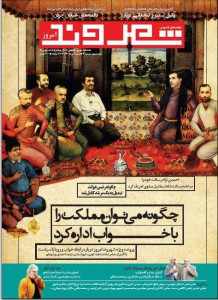
New York, September 9, 2011–The Committee to Protect Journalists condemns the forced closure of two independent Iranian newspapers on Monday and the arrest of an Iranian writer in the city of Tabriz. In July and August, Shahrvand-e Emrooz (Today’s Citizen), a reformist weekly, ran two covers depicting President Mahmoud Ahmadinejad in a satirical light. The…
Catching the Internet’s spies in Iran and elsewhere
In August, Google introduced a new, if rather obscure, security feature to its Chrome web browser, designed to be triggered only under extreme circumstances. If you were talking to Google’s servers using the web’s secure “https” protocol, your browser makes a number of checks to ensure that you are really talking to Google’s servers. Like…
Iran must work toward improving press freedom
Dear Dr. Shaheed: Ahead of your report on human rights in Iran to the U.N. General Assembly in September, I would like to take this opportunity to provide you with an assessment of the country’s state of press freedom as documented by the Committee to Protect Journalists. Authorities were detaining 34 journalists when CPJ conducted its annual worldwide census of imprisoned journalists on December 1, 2010, making Iran, along with China, the world’s worst jailer of the press. In reviewing these cases and their developments, we have identified three distinct and worrying developments to which we would like to draw your attention.