Stark regional differences are seen as jailings grow significantly in the Middle East and North Africa. Dozens of journalists are held without charge, many in secret prisons. A CPJ special report


Stark regional differences are seen as jailings grow significantly in the Middle East and North Africa. Dozens of journalists are held without charge, many in secret prisons. A CPJ special report

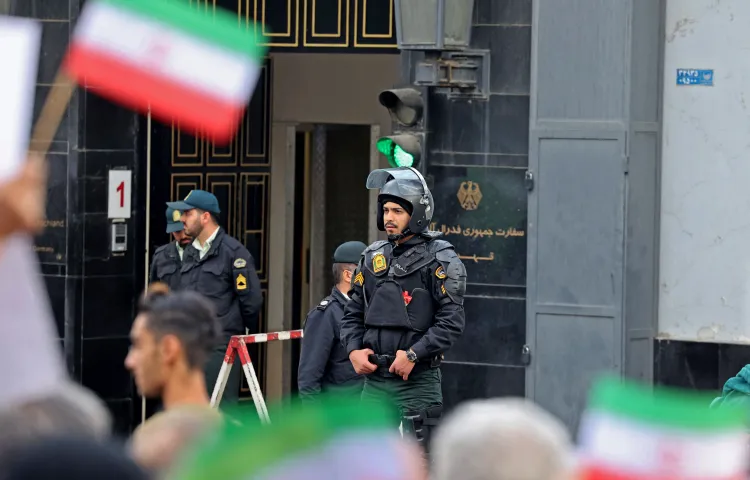
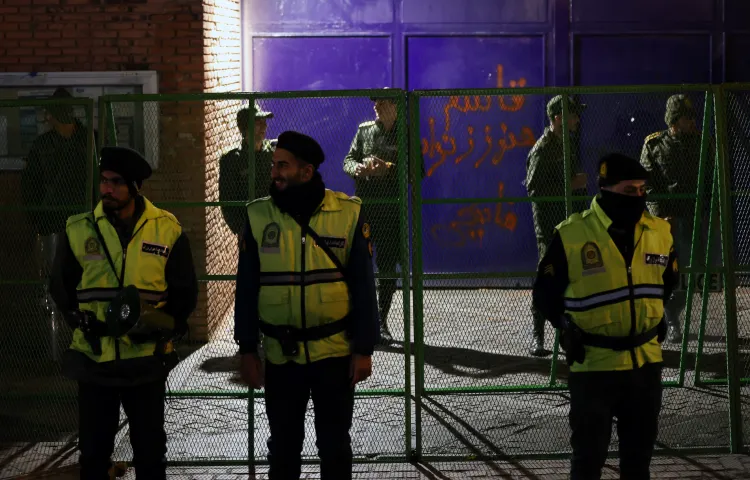
New York, November 22, 2011--Iranian authorities have engaged in a series of attacks against the press in the past two weeks, including raiding a news office, banning an independent newspaper, and arresting at least five journalists.
It's easy to use polarizing descriptions
of online news-gathering. It's the domain of citizen journalists, blogging without
pay and institutional support, or it's a sector filled with the digital works
of "mainstream media" facing financial worries and struggling to offer employees
the protection they once provided. But there is a growing middle ground:
trained reporters and editors who work exclusively online on projects born independent
of traditional media. They share many of the practices of an older generation
of reporters, but their work draws from the decentralized and agile practices of
the digital world.
New York, October 18, 2011--Iranian authorities arrested four journalists who work for reformist newspapers and are expected to charge them with antistate crimes, according to news reports.
New York, September 19, 2011--Iranian authorities have arrested six independent filmmakers on vague accusations that they engaged in a foreign conspiracy in connection with a critical new documentary about Supreme Leader Ayatollah Ali Khamenei, according to news accounts. The Committee to Protect Journalists condemns the arrests and calls for the journalists' immediate release.
As we've reported before, there's strong evidence that forces with widespread access to Iran's internet infrastructure have been engaged in large-scale surveillance of https traffic in July and August, certainly of Google traffic, and perhaps many more websites, including Facebook and Yahoo!
If you used the Internet in Iran during this period you should, at the very least, change your passwords, and log out, then log back into, any services you use.
A fuller explanation of what happened, and what to do about, written in Farsi, is available from Google's Persian Blog. "DigicomV" on YouTube has also posted some Farsi-language videos explaining the attack.
Thanks to Katrin at MobileActive for these links.
In July and August, Shahrvand-e Emrooz (Today's Citizen), a reformist weekly, ran two covers depicting President Mahmoud Ahmadinejad in a satirical light. The paper was banned indefinitely under Article 6 of the Iranian Press Law, which prohibits "insulting legal or real persons who are lawfully respected, even by means of pictures or caricatures," the International Campaign for Human Rights in Iran (ICHRI) reported.
In August, Google introduced a new, if rather obscure, security feature to its Chrome web browser, designed to be triggered only under extreme circumstances.
If you were talking to Google's servers using the web's secure "https" protocol, your browser makes a number of checks to ensure that you are really talking to Google's servers. Like an overly obsessive bouncer, the new code double-checks the identity of any supposed Google site against a Chrome-only list of valid Google identities hardwired into the browser.
New York, August 3, 2011--The Committee to Protect Journalists is dismayed by news reports in Iran indicating that furloughed journalists are being summoned back to prison while new journalists continue to be convicted on manufactured charges. Reports of journalists' deteriorating physical and mental health are equally disturbing.
"That the legal rights of accused and imprisoned journalists in Iran are disregarded with regularity has been established beyond a doubt by scores of individual cases documented by CPJ and others," said Mohamed Abdel Dayem, CPJ Middle East and North Africa program coordinator. "Multiple legal analyses have also outlined how the authorities are indifferent to the letter and the spirit of Iranian law in their vindictive pursuit of journalists who are viewed as political adversaries to be silenced or eliminated."
New York, July 20, 2011--The Committee to Protect Journalists is dismayed to learn that veteran Iranian journalist Mashallah Shamsolvaezin has been summoned to serve a 16-month prison term that was unjustly levied in 2010.
Shamsolvaezin is a journalist, political analyst, deputy chairman of the now-defunct Iranian Journalists Association, and spokesman for the Committee for the Defense of Freedom of the Press. In December 2010, he was sentenced to 16 months in prison on charges of "insulting the president" and "weakening the Islamic Republic regime."
New York, July 8, 2011--The Committee to Protect Journalists is disturbed by the Iranian government's persistent mistreatment of detained journalists as well as news reports that authorities have arrested two additional journalists in recent days.
"We are profoundly disturbed by media reports and testimonies indicating that Iran's prison and judicial authorities continue to engage in abusive and retaliatory tactics against detained journalists," said CPJ Middle East and North Africa Program Coordinator Mohamed Abdel Dayem. "Making matters worse, the authorities continue to detain new journalists at an alarmingly steady pace."
As I read the account of Saeeda Siabi in an Iranian prison it became hard for me to breathe. Her descriptions of being raped in front of her 4-month-old son stopped the air in my chest. "They took me to a torture room and tied me to a bed," she said. "I was wounded and injured, but I forgot about wounds and injuries. I thought I was fainting."
The depiction of the violence endured by Siabi--an Iranian housewife imprisoned for more than four years because of her politically active family--must be read in its entirety to fully appreciate. But it also must be read to understand what has happened to thousands of women and men held, like her, in fetid Iranian jails over decades. Journalists, activists, bloggers--these political prisoners have suffered torture on a nightmarish scale.
Two of the world’s most repressive nations each forced at least 18 journalists to flee their homes in the past year. In exile, these journalists face enormous challenges. A CPJ special report by Elisabeth Witchel.
In 2007, my colleague Karen Phillips suggested we do something to mark World Refugee Day. Initially planning to publish a brief statement, I set about reviewing our data for background, checking in with older journalist cases about their current situation and looking broadly for trends to highlight. As the number of cases began counting into the hundreds, it became clear that what we had was a new indicator of press freedom conditions. Today, we're marking our fifth year of publishing the CPJ survey of journalists in exile, which is based on 10 years of data on 649 cases.
New York, June 15, 2011--Iran's ongoing assault against independent and opposition media has recently gained momentum, the Committee to Protect Journalists said today. In recent weeks, a journalist died in custody for what his family said was a lack of adequate medical care, the government sentenced another journalist to 20 years in prison, arrested one more, and confirmed a 19 and a half year prison term for a blogger known as the "Blogfather."
Few cases of sexual assault against journalists have ever
been documented, a product of powerful cultural and professional stigmas. But
now dozens of journalists are coming forward to say they have been sexually
abused in the course of their work. A
CPJ special report by Lauren Wolfe
Al-Jazeera has interviewed Dorothy Parvaz, the network journalist who was held for 19 days in Syria and Iran. Parvaz describes how the Syrian government told her at first that she was believed to be a U.S. spy, but later it became clear, she said, that she was being held because she worked for the network. Watch the video--in which Parvaz talks about hearing "savage" beatings from her Syrian jail cell around the clock--below.
New York, May 18, 2011--The release of foreign journalists held in Iran and Libya today is a very positive development in a region where the press has been under attack since social upheaval began in Tunisia early this year, the Committee to Protect Journalists said today.
New York, May 17, 2011--Bahrain's crackdown against journalists continues unabated with five new detentions in less than a week, the Committee to Protect Journalists said today. Syria and Iran, one of which is holding Al-Jazeera English journalist Dorothy Parvaz, continue to make intentionally vague or misleading remarks about her whereabouts and physical condition. Meanwhile, Libya announced today that four detained journalists would be released imminently.
New York, May 11, 2011--Al-Jazeera reported today that Syria has deported Dorothy Parvaz, a journalist working for the channel's English-language service, to Iran. The Committee to Protect Journalists is calling for her immediate release.
"Syria's apparent deportation of Dorothy Parvaz to Iran when she is also a citizen of the U.S. and Canada, is an irresponsible choice," said CPJ Middle East and North Africa Program Coordinator Mohamed Abdel Dayem. "Given Iran's abysmal press freedom record, we are concerned about Parvaz's well-being. Iranian authorities must immediately release Parvaz, who has committed no crime."
In our special report, "The 10 Tools of Online Oppressors," CPJ examines the 10 prevailing strategies of online oppression worldwide and the countries that have taken the lead in their use. In this accompanying podcast, CPJ Deputy Director Robert Mahoney notes that these strategies range from sophisticated cyber-attacks to traditional brute-force techniques. Listen to the podcast on the player above, or right click here to download an MP3. (2:47)
Read CPJ's special report, "The 10 Tools of Online Oppressors."
Everyone at some point has needed someone to stand up for them. These people shine in our memories for gestures or actions taken on our behalf, whether as children against the schoolyard bully or as adults in favor of a scholarly proposition or professional advance. But an especially powerful embodiment of an advocate is that of an attorney who uses the law, even where individuals have few rights, to argue for the freedom or survival of those who are oppressed. Nasrin Sotoudeh is such an advocate, and on April 26 her courage, determination, and professionalism as a writer, lawyer, and human rights activist in Iran will be honored with the PEN/Barbara Goldsmith Freedom to Write Award. Sotoudeh, who has served as legal counsel for several journalists imprisoned in Iran, was sentenced in January to 11 years in prison.

New York, February 16, 2011--The Committee to Protect Journalists is concerned about the continued assaults on journalists covering anti-government demonstrations in the Middle East. In recent days, journalists have been obstructed, assaulted, or detained in Libya, Bahrain, Iran, and Yemen. Authorities have also slowed down Internet connection and blocked websites, according to local journalists.
By Mohamed Abdel Dayem
Relying on an extensive network of sources in the military, government, and Islamist groups, Yemeni freelance journalist Abdulelah Shaea had become a frequent and pointed critic of the administration's counterterrorism efforts. By July, President Ali Abdullah Saleh's government had enough, dispatching security agents to seize and roughly interrogate Shaea for several hours about his reporting.

New York, February
14, 2011--As protests spread
from Tunisia and Egypt to other countries in the region, journalists have been
targeted by security forces, in Yemen, Iran, and Algeria, the Committee to
Protect Journalists said today.

New York, February 10, 2011--As Iran marks the 32nd
anniversary of the country's revolution on February 11, the Committee to
Protect Journalists and more than 1,000 press freedom supporters delivered a
clear message to Iranian Ayatollah Sayed Ali Khamenei today: Free your
country's imprisoned journalists.