Go »
  Go »

Iran

2013


Check out the full video of "Censorship and Power in Iran," a panel discussion on imprisoned journalists in Iran that was held on May 8 at the School of Visual Arts in New York. The panel, featuring Iranian journalist Maziar Bahari and CPJ Executive Director Joel Simon and moderated by political satirist Jon Stewart, was followed by a lively Q&A.

The discussion followed a special screening of Bahari's film, called "Forced Confessions," and a short video, called "Iran's Journalists in Chains" about the deterioration of press freedom in the country.

CPJ joined with the PEN American Center and the International Campaign for Human Rights in Iran on Wednesday night to host a film screening and panel discussion on the deterioration of press freedom in Iran. Moderated by political satirist Jon Stewart, the panel featured Iranian journalist Maziar Bahari and CPJ Executive Director Joel Simon. CPJ and our followers live-tweeted the event, which we have curated below using the social networking tool Storify.

Iran continues to jail dozens of journalists, stifling critical news coverage and commentary. Crucial links to the international community have been cut off as the June presidential vote approaches. A CPJ special report by Sherif Mansour 

Iranian blogger Sattar Beheshti died from abuse suffered in Evin Prison. In this video, produced by IranWire in cooperation with CPJ, Beheshti's mother describes the anguish she has endured and asks for support for all the other journalists and political prisoners being held in Iran. In all, 40 journalists were jailed as of April 2013, a testament to the iron grip the government has on news and commentary.


Editorial cartoons play a principal role in every newspaper and magazine in Iran, providing news, analysis, and satire in visual form. Since the presidential elections in 2009, when Iranian authorities launched an intense crackdown against journalists, civil society activists, and lawyers, many political cartoonists began to leave Iran. Those who stayed have adjusted their work to be more ambiguous, to communicate their message while attempting to evade government censorship and arrests.

New York, April 18, 2013--The cases of an Iranian blogger imprisoned for seven months without trial and a prominent freelance journalist whose health has deteriorated in prison illustrate the ongoing abuses being perpetrated by Iranian authorities, the Committee to Protect Journalists said today.

New York, March 7, 2013--Iranian authorities have banned three reformist news outlets and arrested four journalists in the past two days, according to news reports. The Committee to Protect Journalists condemns the Iranian government's continuing attempts to stifle the press in the run-up to the presidential elections in June and calls on authorities to immediately halt their campaign of harassment against the media.

Istanbul-based McClatchy correspondent Roy Gutman has been honored for his reporting from Srebrenica to Baghdad. But he can't get a visa for Iran. He blames the U.S. government, at least in part. 

New York, March 4, 2013--Iranian authorities arrested another journalist this weekend as part of a broad crackdown aimed at intimidating the press before Iran's presidential election in June. Mohammad Javad Rouh, editor for the reformist monthly magazine Mehrnameh, was arrested in his home in Tehran on Sunday, according to news reports.

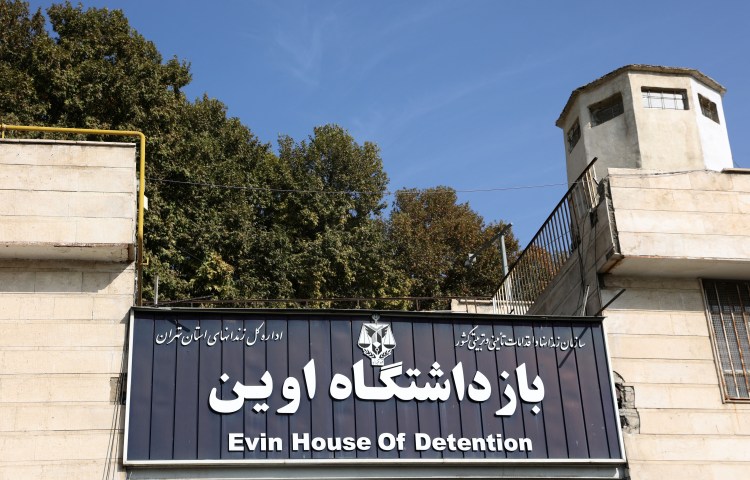
A guard patrols the hallways of Evin Prison. (Reuters/Morteza Nikoubazl)

New York, February, 22, 2013--Yet another journalist has been arrested in Iran as part of the broad crackdown aimed at silencing dissent before Iran's presidential elections in June, according to news reports. The Committee to Protect Journalists calls on authorities to halt their pattern of imprisoning journalists and instead allow members of the press to report freely without fear of reprisal.


CPJ's Robert Mahoney identifies the 10 countries where press freedom suffered the most in 2012. They include Syria, the world's deadliest country for the press; Russia, where repressive laws took effect; Brazil, where journalist murders soared; and Ethiopia, where terror laws are used to silence the press. (3:26)

The 2009 vote seemed open for the press. Then came the brutal crackdown. By D. Parvaz

(Reuters)

Governments exploit national security laws to punish critical journalists. By Monica Campbell

(AFP/Jonathan Nackstrand)

Since the disputed re-election of President Mahmoud Ahmadinejad in 2009, the regime has continued its campaign against the press by imprisoning many dozens of journalists, harassing and intimidating others, and routinely banning reformist publications. Jailed reporters were subject to abusive conditions that included extended solitary confinement, physical abuse, and denial of family visits and medical treatment. Political blogger Sattar Beheshti died in state custody in November, the third journalist to die in Iranian detention since 2003. Fellow inmates at Evin Prison said Beheshti, 35, had been tortured. The authorities continued to censor the Internet, blocking millions of websites, including news and social networking sites, and announcing the creation of a national Internet that would enforce even stricter controls. In the run-up to the 2013 election, the regime stepped up its assault on the international press. After a Tehran jury voted in late September to convict Reuters on anti-state charges for a faulty video headline, the government suspended the agency’s accreditation and banned its journalists from reporting. BBC journalists were also arrested, questioned, and intimidated throughout the year. In March, the broadcaster reported a “sophisticated cyberattack” on its email and Internet services that coincided with efforts to jam its satellite feeds into Iran. In October, Europe’s largest satellite providers ceased transmission of 19 Iranian state-operated satellite television and radio channels in response to sanctions imposed by the European Union.

Worldwide tally reaches highest point since CPJ began surveys in 1990. Governments use charges of terrorism, other anti-state offenses to silence critical voices. Turkey is the world's worst jailer. A CPJ special report

From conflict-ridden Syria to aspiring world leader Brazil, 10 nations on a downslope. By Karen Phillips

(Reuters/Enrique Marcarian)

New York, February, 11, 2013--At least two more journalists have been arrested by Iranian authorities, bringing to 17 the number of journalists caught in the newest crackdown against the Iranian press, according to news reports. The Committee to Protect Journalists calls on authorities to immediately halt their campaign against critical news media in the run-up to the presidential elections in June.

In late January, Iranian authorities waged the largest crackdown on the press since 2009, detaining a wave of journalists and issuing arrest warrants for numerous others. The Ministry of Intelligence accused the journalists of conspiring with foreign media to repeat the alleged "sedition" of 2009, referring to electoral fraud exposed by the media and the protests that followed. In response to the arrests, IranWire, a project led by our colleague Maziar Bahari, produced this video calling for the journalists' release.

Iran has maintained a revolving-door policy for imprisoning journalists, freeing some detainees on furloughs even as new arrests are made. In its December 2012 prison census, CPJ found that Iran was the world's second-worst jailer of journalists, with 45 journalists imprisoned in reprisal for their work. The threat of imprisonment has led scores of Iranian journalists to flee into exile in recent years.

New York, January 30, 2013--The Committee to Protect Journalists is alarmed by the arrest of a another journalist as part of Iran's declared intent to expand a crackdown on the media.

An increase in press freedom violations last year created a surge of need among journalists, driving a record number of assistance cases for CPJ's Journalist Assistance Program in 2012. More than three-quarters of the 195 journalists who received support during the year came from East Africa and the Middle East and North Africa, reflecting the challenges--including threats of violence and imprisonment--of working in these repressive regions. Here are some of the highlights of our work over the last year:

New York, January 28, 2013--At least 14 journalists affiliated with reformist news outlets were arrested in Iran on Saturday and Sunday in the largest crackdown on the press since 2009, according to news reports. The Committee to Protect Journalists calls on Iranian authorities to immediately release all journalists in custody and halt their practice of imprisoning critical journalists.

New York, January 28, 2013--The Committee to Protect Journalists condemns the arrests in Iran of at least 11 journalists in the largest crackdown on the media since 2009. "With this wave of arrests, the authorities appear to be attempting to pre-emptively silence independent news coverage ahead of the presidential election in June," said Sherif Mansour, CPJ's Middle East and North Africa program coordinator. "We call on Iran to stop targeting journalists no matter who they work for, and release all those detained immediately."

« Previous Year: 2012

  Go »
Text Size
A   A   A
Killed in Iran

4 journalists killed since 1992

2 journalists murdered

2 murdered with impunity

Attacks on the Press 2012

45 Imprisoned in December, the second highest figure in the world.

Country data, analysis »

Contact

Middle East
and North Africa

Program Coordinator:
Sherif Mansour

Research Associate:
Jason Stern

smansour@cpj.org
jstern@cpj.org

Tel: +1 (212) 300-9018,
+1 (212) 300-9017
Fax: 212-465-9568

330 7th Avenue, 11th Floor
New York, NY, 10001 USA

Twitter: @CPJMena

فيسبوك : لجنة حماية الصحفيين بالعربية

Blog: Sherif Mansour
Blog: Jason Stern

Subscribe

Iran Atom Feed