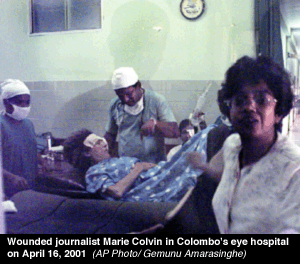
New York, April 17, 2001 —The Committee to Protect Journalists (CPJ) is deeply concerned about the injuries suffered by Marie Colvin, an award-winning American journalist who works for the British newspaper The Sunday Times. Colvin, who was caught yesterday in a skirmish between rebel forces and government troops, received four shrapnel wounds in her head, chest, and arms.
Colvin is presently recovering at a private hospital in Colombo. However, doctors remain concerned about a bruised lung and possibly permanent damage to her left eye.
CPJ is grateful that Sri Lankan authorities took prompt action to ensure that Colvin received proper medical care. However we are extremely troubled by government statements that this incident may lead to further access restrictions for foreign correspondents.
“The Sri Lankan government already prevents reporters from gaining access to the war zone,” said CPJ executive director Ann Cooper. “Experienced journalists like Colvin are well aware of the dangers they face when reporting on violent conflict, and certainly do not need additional bureaucratic restrictions to keep them from doing their job.”
A statement issued today by Sri Lanka’s Department of Information noted that Colvin did not secure official clearance to travel to the rebel-held Wanni region, where she had spent two weeks with guerrilla forces of the Liberation Tigers of Tamil Eelam (LTTE). Journalists are required to apply for official permission to visit conflict areas, but such permission is almost never granted. Colvin is one of only a few foreign correspondents who have managed to reach rebel-held territory in Sri Lanka in recent years.
In addition, the statement noted that Colvin had overstayed her visa and suggested she “had her own secret agenda with the LTTE.” Sri Lanka’s overseas missions were “asked to be cautious when recommending journalists for visas.”
“The administration urgently needs to work with journalists to develop a system allowing local and international media regular access to all parts of the country,” Cooper said. “Expanding press coverage of the war and its costs is crucial to any efforts to resolve this crisis peacefully.”
ENDS