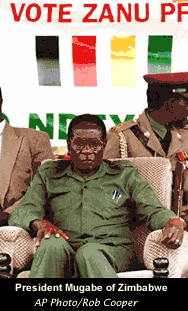
New York, August 16, 2001—The Committee to Protect Journalists today sent a letter to Zimbabwean president Robert Mugabe chronicling a host of press freedom violations. The letter called on Mugabe to take specific steps to “eliminate all obstacles inhibiting the work of the press so that [upcoming] elections can take place in an environment in which information circulates freely and ideas are openly debated.”
The letter was based on the findings of a CPJ delegation that visited Harare from July 11 to 14 to assess press freedom conditions during the run-up to the general elections scheduled for next spring. The delegation, which consisted of board member Clarence Page, deputy director Joel Simon, and Africa program coordinator Yves Sorokobi, met with journalists from the independent press and held informal discussions with members of the state media. They also spoke at length with Zimbabwean human rights activists and foreign correspondents based in the country.
In their discussions with the CPJ delegation, Zimbabwean media professionals expressed grave concerns about their physical safety. Independent journalists are often victims of vicious assaults by so-called war veterans and other supporters of the ruling ZANU-PF. Zimbabwean journalists also told CPJ that police have been reluctant to investigate violent assaults on the press, including two terrorist bomb attacks against The Daily News.
The August 15 arrest of four journalists from Zimbabwe’s leading independent daily shows the vulnerability of independent journalist in Zimbabwe. Geoff Nyarota, editor of The Daily News, was arrested along with his colleagues, John Gambanga, Bill Saidi, and Sam Munyavi, for “publishing false information likely to cause alarm and despondency in the public,” a crime under Section 50 (2) (a) of the colonial-era Law and Order Maintenance Act (LOMA).
The four men were released that same evening after a High Court judge ruled that detaining journalists under Section 50 (2) (a) of LOMA was unconstitutional. On August 16, police again interrogated Nyarota for one hour before charging him and his colleagues with “publishing subversive material” under Section 44 of LOMA.Read the letter
