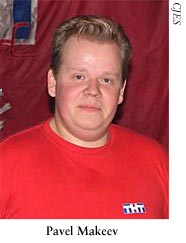
New York, July 14, 2005—The Committee to Protect Journalists today called for a thorough and aggressive investigation into the death of Pavel Makeev, 21, a cameraman for Puls television in the southern Russian town of Azov. Makeev’s body was found alongside a road on the outskirts of the Rostov Region town on May 21, shortly after he arrived to film illegal drag-race competitions. Authorities have classified the death as a traffic accident, but colleagues believe he was killed purposely to thwart his report, according to local press reports and CPJ interviews.
Makeev’s body, covered with multiple bruises and fractures, was found in a roadside ditch at around 1 a.m. The road connecting Azov with the town of Bataysk is the site of drag-race competitions that are organized by local young people and draw large crowds and illegal betting. Residents say these races have been going on for three years, but police have not halted the practice, according to local press reports.
The night Makeev was killed, he went to film a drag race in preparation for a report for Puls, a colleague told CPJ. The colleague, Sergei Bondarenko, said he gave Makeev a ride to the racing site at 11:30 p.m. on May 20. Bondarenko said he left an hour later. “Pavel said he wanted to shoot some more. He assured me that he could get a taxi or ask somebody for a ride to come back home,” Bondarenko told CPJ.
Police discovered a pool of blood on the road about 15 meters (50 feet) away from Makeev’s body, according to local reports and CPJ interviews. No brake marks were found and police found a bloody trail on the road indicating that a body might have been dragged, news reports said. Makeev’s video camera—including any footage he may have taken—and mobile phone were missing. Police said they discovered the car that allegedly hit Makeev, but no arrests have been reported.
The investigation has been transferred to the Rostov Regional Prosecutor’s Office. “Investigators do not consider Makeev’s professional activity to be a possible motive for the crime,” Elena Velikova, press secretary for the prosecutor, told CPJ in a telephone interview. She did not describe other motives that prosecutors are considering.
But at least two journalists told CPJ that they consider his death to be connected to his reporting; they noted that reporters who have tried to cover drag racing are often threatened.
Aleksei Sklyarov, Puls general director, told CPJ that racers would not want to see Makeev report on an illegal event. Grigory Bochkaryov, Rostov expert for the Moscow-based press freedom organization Center for Journalism in Extreme Situations, told CPJ that road police often accept bribes in exchange for allowing the drag races. In a report following Makeev’s death, Puls said the drag races typically attract crowds of spectators, and the station questioned what had happened to witnesses.
Rostov journalists said they are concerned that the case could be shelved in the same manner as the slaying of Natalya Skryl, a 29-year-old Rostov business reporter. She was murdered three years ago after investigating the struggle for control of a local metallurgical plant. No one has been arrested in that case.
“We are saddened by the untimely death of our colleague Pavel Makeev who was simply doing his job,” CPJ Executive Director Ann Cooper said. “We call on the Rostov Regional Prosecutor’s Office to aggressively investigate all evidence into Makeev’s death, pursue all possible murder motives, and bring the responsible criminals to justice.”
On May 3, International Press Freedom Day, CPJ named Russia as one of the world’s most murderous countries for journalists.
