New York, September 14, 2005—The U.S. military has failed to fully investigate the killing of journalists by its forces in Iraq and to implement its own recommendations to improve media safety, an analysis published today by the Committee to Protect Journalists shows.
U.S. troops have killed 13 journalists since the U.S.-led war began in March 2003. At least 40 other journalists have been killed covering the conflict. Several of the 13 deaths suggest indifference by U.S. soldiers to the presence of civilians, including members of the press, according to the CPJ analysis. Another 21 media support staff have been killed in Iraq, two by U.S. forces.
In most cases, the U.S. military has either failed to investigate journalists’ deaths or it has not made its inquiries public. The findings from the few investigations that have been released have not credibly addressed questions of accountability for shooting deaths, and whether U.S. forces are taking necessary measures to differentiate between combatants and civilians in conflict areas.
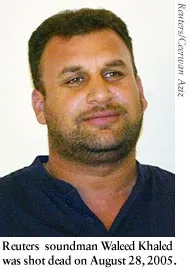
In the latest case, the August 28, 2005 shooting death of Reuters soundman Waleed Khaled, the U.S. military has completed a report but not yet published the findings. On September 1, chief military spokesman in Baghdad Maj. Gen. Rick Lynch said soldiers had followed “established rules of engagement” and acted in an “appropriate” manner when they opened fire.
“By failing to account for all shooting deaths and demonstrate that it is taking steps to avoid future tragedies, the U.S. military shows an alarming disregard for the safety of civilians, including journalists covering this conflict,” CPJ Executive Director Ann Cooper said. “As far as we know the military has conducted full investigations into only a handful of incidents and made public its reports on just two of them. With such a record the Pentagon needs to address its own serious credibility problem by showing some accountability and by providing real answers to outstanding questions about these shocking deaths.”
