Your Excellency:
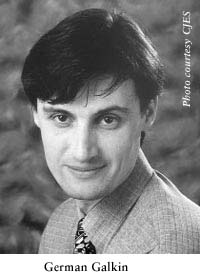
The Committee to Protect Journalists (CPJ), an independent, nonpartisan organization dedicated to defending press freedom worldwide, is extremely concerned that German Galkin, publisher of Rabochaya Gazeta and deputy chief editor of Vecherny Chelyabinsk, both opposition newspapers, was convicted on criminal defamation charges. We are writing ahead of his appeal hearing, scheduled for tomorrow, to urge you to take measures to ensure that Russian journalists are not prosecuted under outdated press laws.
Following a trial that was closed to the public, Galkin was convicted of criminal defamation on August 15 in the southern city of Chelyabinsk, in Russia’s Ural Mountains. The court sentenced Galkin to one year in a labor camp for allegedly libeling and insulting two deputy governors of the Chelyabinsk Region, Andrei Kosilov and Konstantin Bochkaryov.
According to Andrei Koretstky, a political editor at Vecherny Chelyabinsk, Kosilov and Bochkaryov filed the charges in June 2002 because articles published in the February, April, and June editions of Rabochaya Gazeta alleged misspending by the Chelyabinsk regional administration, including the purchase of expensive cars and the creation of a pro-government television channel ahead of gubernatorial elections in 2005. The articles also mentioned a string of assassinations of local politicians and businessmen in the early 1990s, Koretstky told CPJ.
Kosilov and Bochkaryov claimed that Galkin–who is also the local head of the Liberal Russia opposition party–had penned the three articles, even though Galkin was not listed in any of the bylines and denied having written them, according to local press reports. Lawyers representing Galkin reported numerous procedural violations throughout the investigation and the closed trial.
Although defamation remains a criminal offense in Russia, local journalists and press freedom advocates note that the conviction was unprecedented in recent Russian history.
Tomorrow, the defense team will request that the Kalininsky Regional Court in Chelyabinsk overturn Galkin’s conviction, while the plaintiff will request that Galkin serve a longer sentence in the labor camp.
While we recognize the separation of powers in Russia, we urge you to use your position as president to speak out against the application of these anachronistic press laws, which are being used to suppress critical speech. His conviction has already set a terrible precedent for Russia’s already tarnished press freedom record, and we urge you to initiate legislation in the Duma to decriminalize press offenses, in keeping with accepted international standards of free expression.
Thank you for your attention to this urgent matter. We await your reply.
Sincerely,
Ann K. Cooper
Executive Director