2. A Nation in Crisis
More than 30 journalists and media workers have been murdered or have vanished since December 2006. As vast self-censorship takes hold, Mexico’s future as a free and democratic society is at risk.
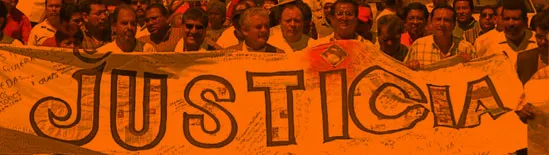
Mexico is at war in many important respects, with institutions corrupted and security compromised, but the front-line journalism that would allow its citizens and leaders to understand and combat its enemies is nearing extinction. The drug traffickers, violent criminals, and corrupt officials who threaten Mexico’s future have killed, terrorized, and co-opted journalists, knowing that controlling the flow of information will further their needs. They have been increasingly successful, the Committee to Protect Journalists has found, and the results have been devastating.
Since President Felipe Calderón Hinojosa launched a government offensive against Mexico’s powerful drug cartels after taking office in December 2006, more than 22,000 people have died in drug-related murders, according to a March 2010 administration report to Congress, an astonishing toll more likely associated with a conflict zone than a peace-time democracy. The influence of organized crime over nearly every aspect of society, including government, police, and prosecutors, has made Mexico the deadliest nation for the press in the Western hemisphere and one of the world’s most dangerous places to exercise the fundamental human right of free expression. Twenty-two journalists have been murdered during the president’s tenure, at least eight in direct reprisal for reporting on crime and corruption, twin plagues that are undermining the country’s stability. Three media support workers were slain for the crime of delivering newspapers. At least seven other journalists are missing since the president took office, all of them almost certainly dead.
SIDEBAR: An Era
of Promises and Fear
Beginning in late 2006, the Calderón administration has deployed 45,000 army troops and 20,000 federal police in crime-ravaged areas across Mexico. The government argues that federal intervention is needed because state and municipal police are heavily corrupted by drug gangs, making it impossible to combat crime on the local level. The crackdown has been accompanied by escalating violence that has reached record levels across society. A March 2010 study by San Diego University’s Trans-Border Institute found a complex set of reasons for the spike: the vicious rivalries caused by the breakup of large criminal organizations, the growing domestic consumption of narcotics, the heightened security on the U.S. border, and the changing dynamics of political corruption after the Institutional Revolutionary Party lost its grip on power. While the vast majority of killings occur among criminal organizations, reporters and newsrooms have increasingly come under fire from drug traffickers in recent years, CPJ research has shown.
In addition to those who have been murdered, dozens of journalists have been attacked, kidnapped, or forced into exile in connection with their coverage of crime and corruption. Reporting basic information about criminal activities—including the names of drug lords, smuggling routes, and prices—places journalists at direct risk. Being careful in what you publish helps somewhat, Luz Sosa, a police reporter in Ciudad Juárez, told CPJ in a 2009 interview. “But even that may not be enough if the reporter starts to ask delicate questions,” she said. “The criminals may kill you not for what you publish, but for what they think you know.”
María Esther Aguilar Cansimbe, a seasoned crime reporter in Michoacán state, knew and wrote a lot. She broke a series of stories on government corruption, police abuses, and the arrest of a La Familia drug cartel leader before she vanished in November 2009. Her husband, David Silva, himself a former police chief, told CPJ that drug traffickers’ influence is so strong in the area that he has no faith in police. “With most of the police here you don’t know who you’re talking to—a detective or a representative of organized crime,” he said. The inquiry into Aguilar’s disappearance has produced no tangible results.
Even journalists who don’t aggressively cover crime or security fall victim to criminal groups. Valentín Valdés Espinosa, a 29-year-old reporter who handled general assignments for the daily Zócalo de Saltillo in Coahuila state, was ripped from his vehicle on a downtown
Pervasive self-censorship throughout vast areas of the country is the ruinous product of this lethal violence. As organized crime, corruption, and lawlessness spread, reporters and news outlets are abandoning not only investigative reporting but basic daily coverage of sensitive issues such as the drug trade and municipal malfeasance.
In the border city of Reynosa, in Tamaulipas state, several journalists were abducted over three weeks in early 2010. But the local press, fearing further reprisals, avoided reporting on the kidnappings; the story was finally broken by Alfredo Corchado, a veteran U.S. correspondent for The Dallas Morning News. At least three Reynosa journalists are still missing, a lasting signal to the local press corps that the drug traffickers call the shots. In a series of interviews with CPJ, more than 20 Reynosa journalists told CPJ that the Gulf cartel controls local government and dictates what can and cannot be covered in the press.
In Ciudad Juárez, also along the U.S. border, the killing of veteran crime reporter Armando Rodríguez Carreón in November 2008 has terrified much of the local press corps into self-censorship. The major newspaper Norte de Ciudad Juárez has adopted a strict policy of not publishing information about anything that could be associated with drug cartels. “We have learned the lesson: To survive, we publish the minimum,” said Editor-in-Chief Alfredo Quijano, who acknowledged that cartel money flowed easily into local political campaigns, that police are bought off or scared off from investigating, and that the cartels had expanded into kidnapping and extortion. “We don’t investigate,” he said. “Even at that, most of what we know stays in the reporter’s notebook.”
Yet self-censorship is not always enough. In Hermosillo, the daily Cambio de Sonora had stopped publishing in-depth reports on organized crime and the narcotics trade but was still subjected to two grenade attacks and a series of threats in 2007. No one was injured, but the paper itself was a casualty. It suspended publication.
A decade ago, drug violence was concentrated along the U.S.-Mexico border, but it has now spread from one end of the country to the other, particularly in the last three years. The fierce battle between drug cartels for smuggling routes, agricultural land, and domestic markets has moved south to the states of Michoacán and Guerrero, along with Tabasco, Veracruz, and Quintana Roo. The state of Chihuahua was the most violent in 2009, followed by Sinaloa, Guerrero, Baja California, Michoacán, and Durango.
Monterrey, in Nuevo León state, was once considered to be among Latin America’s safest cities. But since early 2007, violence has spread as drug gangs battled for control of the city and its nearby drug route into Texas. One of Mexico’s most prominent publishers, Alejandro Junco de la Vega, of Grupo Reforma, finally moved to Austin, Texas, in 2008 after finding Monterrey unsafe. The disappearance of a two-man crew for the national broadcaster TV Azteca in May 2007 contributed to that sense of insecurity.
Systemic impunity allows insecurity to take root. Mexico’s overburdened and dysfunctional criminal justice system has failed to successfully prosecute more than 90 percent of press freedom-related crimes, CPJ research shows, perpetuating a climate of fear and intimidation in which unsolved attacks become the norm. The failure to prosecute the killings of journalists successfully has made Mexico the ninth-worst country in the world on CPJ’s Impunity Index, which calculates the number of unsolved journalist murders as a percentage of the population. Mexico’s low ranking puts it among conflict-ravaged countries such as Iraq and Somalia.
The problem is rooted in widespread corruption among law enforcement, the judiciary, and the political system, especially at the state level. Complicity between police and drug gangs is so common that it routinely undermines justice and creates the widespread perception that the system is controlled by the criminals. In case after case, CPJ has found botched or negligent detective work by state prosecutors and police, many of whom complain they lack training and resources. The investigation into the 2009 murder of Bladimir Antuna García in Durango reflects this breakdown in law enforcement. Juan López Ramírez, a state prosecutor, acknowledged in a March 2010 interview with CPJ that detectives had conducted only cursory interviews with witnesses and the victim’s wife. Virtually no other investigative work was done. Such inattention fuels speculation among local journalists that authorities don’t want to solve the crime. “They are either afraid of who did it or they are in business with them,” said Víctor Garza Ayala, Antuna’s boss and publisher of El Tiempo de Durango.
On several occasions, authorities have resorted to unlawful methods to produce questionable results, including coercion of witnesses and fabrication of evidence. The National Human Rights Commission, an independent government agency, has found systematic violations within the criminal justice system. When authorities in Iguala, in Guerrero state, arrested a suspect in the 2009 killing of reporter Jean Paul Ibarra Ramírez, for example, journalists and human rights defenders immediately cast doubt on the investigation, saying the defendant’s confession might have been coerced.
The federal government has only intermittently recognized violence against the press as a national problem. In 2006, under the presidency of Vicente Fox, the government created a special prosecutor’s office to investigate crimes against the press. Although the office was initially considered a step forward in combating impunity, it has proved ineffective. That the office was given insufficient jurisdiction to undertake its own inquiries has led in part to its failures, but the special prosecutors themselves have seemed uninterested in their mission at times. In 2007, then-special prosecutor Octavio Orellana Wiarco minimized the problem of anti-press violence by telling Durango reporters: “Aside from drug trafficking, in general there are no big troubles to work in journalism.” The Calderón administration has announced plans to give the office greater authority to undertake investigations, but political will is just as necessary.
CPJ and other press groups believe that the federal government must intervene more forcefully to address this national crisis, that it must assume primary responsibility for guaranteeing the right of free expression enshrined in Articles 6 and 7 of the Mexican Constitution. In practice, it is a right that millions of Mexicans, including journalists, can no longer exercise. But the Calderón administration, overwhelmed as the drug wars spiral out of control, has not prioritized freedom of the press on its national agenda. Members of Congress, for their part, have been pressured by powerful governors and state politicians whose interests are best served by maintaining local jurisdiction—and local inaction—in anti-press crimes. As a result, reforms that would give the federal government broad authority to prosecute crimes against free expression have stalled in Congress.
Critics say that federal oversight is no panacea, and they are right. CPJ has documented numerous instances in which the military and federal police have harassed and attacked journalists. In 2007, for example, Mexican troops detained, punched, blindfolded, and aggressively interrogated four reporters in the northern state of Coahuila. The reporters, all of whom had press credentials, were held for three days on vague accusations of paramilitary activity before they were finally released. Federal law enforcement is itself beset by drug-related corruption, further undermining confidence in the national government’s response. But a national crisis that has stripped citizens of the basic constitutional and human right to free expression demands a full-scale national response in which the federal government is accountable.
Journalists themselves must contribute to this effort. Mexican media have not traditionally been unified in defending the rights of their colleagues to work without fear of reprisal. Such unity is crucial, as evidenced in Colombia, where strong press freedom groups and a unified media have helped curb the scourge of deadly, unpunished violence. Mexican media groups and journalists have not yet forged strong alliances, although the severity of the crisis has started to bring them together. News outlets are now giving greater coverage to attacks on the press, and press support groups are undertaking more rigorous research.
Reporters and editors have also been corrupted by the same drug cartels that have infiltrated nearly every sector of society. In dozens of interviews conducted by CPJ over several years, journalists acknowledge that criminals routinely bribe them to act as cartel publicists or to buy their silence. In some instances, journalists themselves pass along bribes to their colleagues. Corruption among members of the media raises sensitive questions about whether certain journalists are killed as a result of their work or because of involvement with drug cartels, complicating the work of press advocates and tainting the reputation of the media as a whole.
Reforms must be undertaken if citizens are to reassert control over their country. In border cities such as Reynosa and Ciudad Juárez, where criminal groups exert great control and the press practices wide self-censorship, an information vacuum has taken hold. In the absence of press reports, citizens are increasingly turning to social media such as Facebook and Twitter to fill the void on vital issues such as street violence. Reynosa officials say social media networks are spreading rumors and false information, but they also recognize that the use of social media reflects a population yearning for information and struggling to understand what is happening in their communities. They know they are at war; they want to understand what is happening and how to combat it. Social media will continue to fill an important role, but political stability will ultimately depend on the restoration of the news media’s ability to report freely and without fear of reprisal.