Preface by Joel Simon
Plomo o plata. Lead or silver. It’s a well-worn phrase in Mexico, one that’s all too familiar to the country’s journalists. It means, simply, we own you. Take our plata (slang for money) and publish what we tell you. Or we kill you.
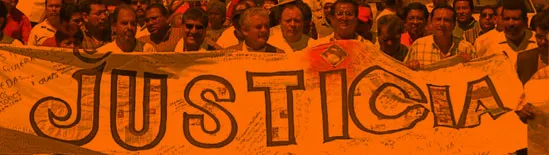
The plomo is highly visible.
Bodies of journalists litter the streets in Mexico, from Durango to Villahermosa. More than 30 journalists have been murdered or have gone missing since December 2006, when President Felipe Calderón Hinojosa came to power. CPJ has confirmed that at least eight of these journalists were killed in direct reprisal for their work.
What has been less visible is the plata. Journalists don’t generally talk about it, understandably. In this report, we reveal the culture of bribery and extortion that is producing devastating self-censorship in Mexico. Journalists in Reynosa confided in CPJ and told us the whole story—the threats, the violence, and the corruption.
Why do criminal organizations care so much about what’s printed in the newspapers or broadcast on radio and TV? It’s not a simple matter of suppressing some damaging stories. Their motives are much more complicated, and much more sinister.
When I was a reporter in Mexico in the 1980s and ’90s, journalists used to tell me that they didn’t worry about printing the names and faces of the country’s most powerful cartel leaders. In fact, the journalists claimed, the capos loved the attention because reports on their ruthlessness stirred fear among their enemies.
Reporting on the web of corruption that supported the drug trade was another matter. The cartels made investments in buying the cooperation of corrupt police, mayors, governors, soldiers, and customs agents, all of whom became integral to their operations. If you exposed this network and got some official fired, you were disrupting their business. That was dangerous, although some brave reporters still took the risk.
In 2004, I traveled to Tijuana to carry out a CPJ investigation into the murder of my friend and colleague Francisco Ortiz Franco, an editor at the muckraking newsweekly Zeta. In the course of my reporting, I came to understand the new ways in which rival cartels were using the media to further their illicit interests.
First, they suppressed stories about their own violence while paying journalists to play up the savagery of their rivals. More important, they used the media to damage competing operations by planting stories about corrupt officials. The impact of these stories was profound; a corrupt police chief in whom one cartel had invested huge sums might be forced to resign. And not all the journalists who played the game were corrupt. They didn’t know that their sources, often in law enforcement, were working as public relations agents for the cartels.
In the ensuing years, competing cartels throughout the country developed aggressive media tactics. They use corrupt journalists as a key component in their all-out battle for control of the “plaza,” as the narcos call the drug market.
The traffickers rely on media outlets they control to discredit their rivals, expose corrupt officials working for competing cartels, defend themselves against government allegations, and influence public opinion. They use the media in a manner not that different from that of a traditional political party—except they are willing to use deadly means to attain their public relations goals. It is unsurprising then that as the drug war has intensified, violence against the press has escalated. U.S. correspondents, once ignored, are threatened regularly now.
Competing criminal organizations are controlling the information agenda in many cities across Mexico. Some news organizations have tried to opt out, refusing to cover anything related to the drug trade, even if that means ignoring shootouts in the street. But the traffickers don’t always take no for an answer; journalists report being forced to publish stories attacking rival cartels.
President Calderón and the Mexican federal government need to do more—much more—to defend the media and create an environment in which journalists can do their jobs with some degree of safety. Calderón needs to take decisive action not only because the federal government has a constitutional responsibility to guarantee free expression. Safeguarding press freedom is in his own strategic interest. He cannot win the drug war if he cedes control of public information to the narcos.
Journalists should be reporting on the carnage wrought by the competing cartels. They should be reporting aggressively and fairly on the underlying corruption that supports the drug traffickers. They should be reporting on government efforts to battle the drug trade, highlighting both the failures and successes.
In many cities, they are doing none of these things. The reality is that the government is being outflanked in the information war, just as it is on the streets. As this report makes clear, the battle for the free flow of information in Mexico has reached a crucial phase. Unless the Mexican government takes bold action, the narcos will continue to define what is news and what is not. That is no way to win the drug war.