Getting Away With Murder
CPJ’s 2015 Global Impunity Index spotlights countries where journalists are slain and the killers go free Published October 8, 2015 Elisabeth Witchel/CPJ Impunity Campaign Consultant The ambush of a convoy in South Sudan and the hacking deaths of bloggers in Bangladesh this year propelled the two nations onto CPJ’s Global Impunity Index, which spotlights countries…
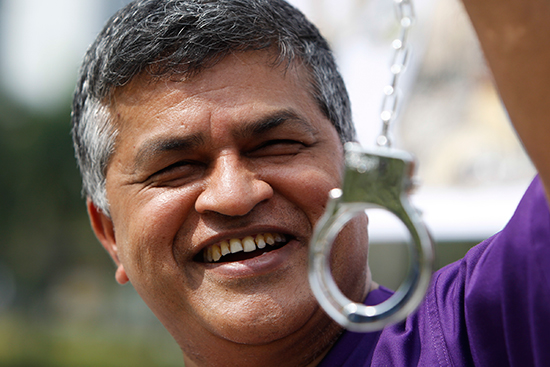
Drawing the line: Cartoonists under threat
On January 7, two gunmen burst into the offices of French satirical magazine Charlie Hebdo, killing eight journalists and bringing into focus the risks cartoonists face. But with the ability of their work to transcend borders and languages, and to simplify complex political situations, the threats faced by cartoonists around the world—who are being imprisoned,…
The Road to Justice
Breaking the Cycle of Impunity in the Killing of Journalists The lack of justice in hundreds of murders of journalists around the world is one of the greatest threats to press freedom today. While international attention to the issue has grown over the past decade, there has been little progress in bringing down rates of…
The Road to Justice
About This Report Elisabeth Witchel, the founder of CPJ’s Global Campaign Against Impunity, is the lead author of this report. Witchel launched the campaign in 2007 and has compiled five editions of the organization’s annual Global Impunity Index as well as several other major reports. She has worked in human rights and journalism for more…
The Road to Justice
1. What Does Impunity Mean? In 1981, the year CPJ was founded, Argentina was enmeshed in the so-called Dirty War, in which dozens of journalists were disappeared. Most were never seen again. To this day, no one has systematically documented the media murders that took place, and no one knows precisely how many journalists perished.…
The Road to Justice
2. Measuring Progress Against Stubborn Reality In November 2013, the United Nations General Assembly put the issue of impunity squarely on the global agenda. The Resolution on Safety of Journalists and the Issue of Impunity, adopted by consensus, describes the absence of justice for victims as “one of the main challenges to strengthening the protection…
The Road to Justice
3. Where Impunity Thrives A climate of impunity reached a tragic culmination on November 23, 2009, when gunmen ambushed a caravan escorting political candidate Esmael “Toto” Mangudadatu as he prepared to file papers to become a candidate for provincial governor in the Philippines. The attackers slaughtered 58 people, among them 30 journalists and two media…
The Road to Justice
4. Steps That Work and Those That Don’t On May 3, 2011, CPJ representatives traveled to Pakistan to raise concerns about the increasing attacks against journalists there and the country’s high rate of impunity. It was a moment of drama: The previous day, American forces had killed Osama bin Laden in nearby Abbottabad. But Pakistani…
The Road to Justice
5. Building Pressure, Enforcing Compliance The United Nations has escalated its focus on journalist killings, declaring that unpunished attacks against journalists are a major threat not only to press freedom, but also to all major areas of the U.N.’s work. In recent years, it has adopted two resolutions addressing journalists’ safety and impunity and launched…
The Road to Justice
Conclusion Today the fight against impunity has reached an important juncture. There is awareness on domestic and global levels of the extreme peril posed to journalists and the public’s right to information when violence against the press is met with official inaction. The cries for justice by freedom of expression advocates have been amplified by…