
Uruguayan broadcast bill could be regional model
“Governments pass, but laws stay,” said Uruguayan President José Mujica. During a meeting with CPJ, and representatives from Human Rights Watch and Reporters Without Borders at the president’s executive office in Montevideo, the political capital, the former member of the leftist guerrilla group Tupamaros reflected on the upcoming congressional debate over new broadcast legislation. “It…
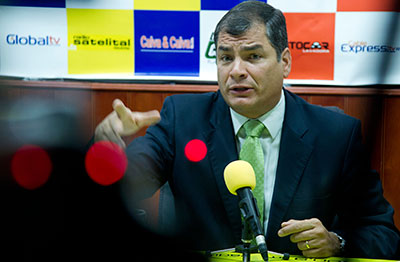
In Correa’s Ecuador, a bulletin on breakfast is routine
On September 11, 2012, the Ecuadoran government interrupted a morning newscast on the Teleamazonas TV station for an official bulletin. What could be so urgent? A coup d’etat? An earthquake? A cholera outbreak? It turned out the government sought to clarify what President Rafael Correa had for breakfast.
Ecuador should scrap new media bill, draft new one
Dear Mr. Cordero: The Committee to Protect Journalists is deeply concerned about a new Ecuadoran communications bill currently under debate in the National Assembly that would roll back press freedom by promoting self-censorship and restrictions on criticism of public officials.

Is Chávez promoting free expression? Check the facts
Venezuelan Information Minister Andrés Izarra declared on the state television channel VTV last week that “never has so much been done to guarantee, promote, and drive freedom of expression than in the government of President Hugo Chávez.” Izarra needs to hire a fact-checker.
Ecuador interrupts news show to air official rebuttals
New York, February 2, 2011–Ecuadoran authorities interrupted a news program critical of the Ecuadoran government on Monday to air an official rebuttal, a practice that has become standard in the administration of President Rafael Correa, according to research by the Committee to Protect Journalists. CPJ calls on Ecuadoran authorities to stop this practice, which has…

‘Suddenly,’ Chávez is on the radio (yet again)
Venezuelan President Hugo Chávez Frías has used cadenas—nationwide radio and television addresses that preempt programming on all stations—to challenge the private media’s news coverage and amplify the government’s voice. In his radio and TV call-in program, “Aló, Presidente” (Hello, President), Chávez often lambastes critics in the media and the political opposition.
Venezuela bars RCTV, 5 other stations from cable, satellite
New York, January 25, 2010—Venezuelan regulators have ordered cable and satellite operators to stop carrying one of the country’s best known broadcasters, RCTV International, along with five other stations, alleging that the broadcasters violated a requirement to air President Hugo Chávez’s speeches. The Committee to Protect Journalists urged Venezuelan authorities today to allow all of…
Venezuela moves to silence hundreds of broadcasters
Dear Mr. Cabello: The Committee to Protect Journalists is deeply concerned by your recent announcement that regulators may revoke the concessions of 240 radio stations for failing to update their registration papers. We believe that this decision is yet another attempt by Venezuelan authorities to expand pro-government media, control the flow of information, and suppress dissent.
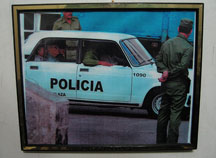
Black Spring of 2003: A former Cuban prisoner speaks
March 18, 19, and 20 will mark the sixth anniversary of the detention of 75 peaceful journalists and librarians, as well as human rights activists, convicted weeks later to up to 28 years in jail during summary trials. Fifty-four of these innocent people, who demanded a democratic society and respect for human rights, remain imprisoned…
Attacks on the Press 2007: Venezuela
VENEZUELA The Venezuelan government’s unprecedented decision not to renew the broadcast concession of the country’s oldest private television station, RCTV, represented a major setback for free expression and democracy. The decision, aimed at silencing Venezuela’s most critical media outlet, was part of President Hugo Chávez Frías’ aggressive strategy to challenge the influence of the private…