Istanbul, May 24, 2013--Turkish authorities should reverse on appeal the jail term handed down this week to a Turkish Armenian author and blogger who was convicted of insulting the Prophet Muhammad, the Committee to Protect Journalists said today.

Istanbul, May 24, 2013--Turkish authorities should reverse on appeal the jail term handed down this week to a Turkish Armenian author and blogger who was convicted of insulting the Prophet Muhammad, the Committee to Protect Journalists said today.
A decision last week in the murder case of Hrant Dink will lead to a retrial, but Dink's supporters are still not satisfied. The ruling on May 15 by Turkey's Supreme Court of Appeals in Ankara acknowledged that there was a criminal conspiracy to murder the ethnic Armenian journalist, but stopped short of opening the way to a deeper investigation into potential involvement by Turkey's powerful institutions.

One day, every journalism school in the United States and beyond will offer a full three-credit, 15-week course in digital safety, along with more advanced classes. But that day has not yet come. Only a year ago, Alysia Santo reported in the Columbia Journalism Review that no American journalism school offered formal digital safety training. A number of groups, including CPJ, have tried to fill the void with digital security guides. This week, the Medill School of Journalism at Northwestern University added to the resource stockpile with the publication of a guide that I've written, Digital Security Basics for Journalists.
By Bob Dietz
At least 42 journalists have been killed—23 of them murdered—in direct relation to their work in Pakistan in the past decade, CPJ research shows. Not one murder since 2003 has been solved, not a single conviction won. Despite repeated demands from Pakistani and international journalist organizations, not one of these crimes has even been put to a credible trial.
On January 13, 2011, Wali Khan Babar, a 28-year-old correspondent for Geo TV, was driving home after covering another day of gang violence in Karachi. Babar was an unusual face on the airwaves: Popular and handsome, he was a Pashtun from Zhob in Baluchistan near the border with Afghanistan. For Geo, it was a rare boon to have a Pashtun in Karachi, and so the station planned to send him abroad for training to become an anchor.
A couple of years ago, Hamid Mir, Najam Sethi, Umar Cheema, and other prominent figures in the news media began going public with the threats they were receiving from intelligence agencies. It was a risky calculation, but the silence, they reasoned, encouraged intimidation and allowed impunity to persist.
The murder of Saleem Shahzad in May 2011 galvanized journalists across Pakistan in a way that few other events have. For a short time their power as a “union” was felt. They secured a commission of inquiry. They named ISI officers who had threatened Shahzad and many other journalists. They detailed those encounters in a public record available on the Internet. The resulting report offers a series of promising recommendations, saying in part:
The Committee to Protect Journalists offers the following recommendations to Pakistani authorities, the Pakistani news media, and the international community.
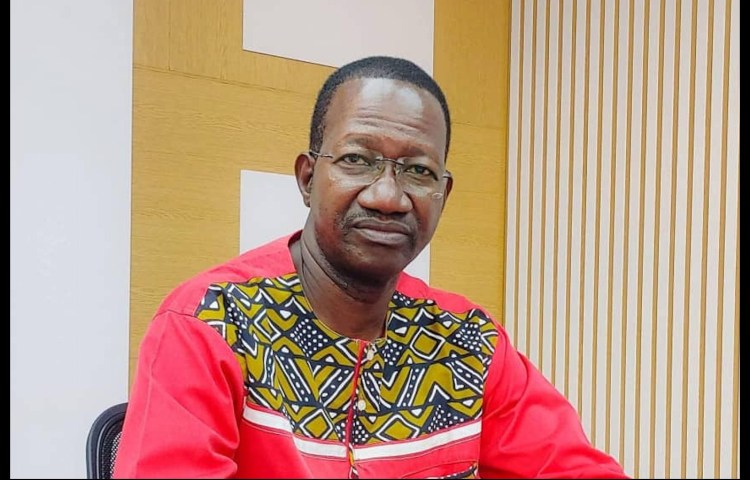
Police arbitrarily arrested Michael Koma, the managing editor of South Sudan's daily Juba Monitor, on May 2 and detained him for four days following the publication of an article critical of the deputy security minister. A veteran journalist, Koma has experienced firsthand the poor state of press freedom within Africa's newest country. CPJ spoke with him briefly this week.
May 22, 2013
His Excellency President Salva Kiir Mayardit
Office of the President, State House
Juba, South Sudan
Via email
Dear President Salva Kiir Mayardit,
We are writing to express our deep concern about the deteriorating state of press freedom in your country. In the past six months, CPJ has documented several cases of attacks, intimidation, and detention of journalists by security agents in South Sudan and we are concerned that this harassment has led to self-censorship and even exile among the local press corps. We urge you to use the power of your office to ensure that journalists are allowed to work freely without harassment and censure from state security officials.
In the past six months, CPJ has documented at least 12 cases of attacks, harassment, and detention of journalists in South Sudan. In all but two of the cases, security officials were the perpetrators. Security agents, including police, have routinely harassed, intimidated, and occasionally detained journalists.
The latest episode occurred on May 2, when Deputy Interior Minister Salva Mathok Gengdit ordered the unlawful detention of the chief and managing editors of the private daily Juba Monitor for publishing a statement that implicated him in the March murder of a traffic policeman, according to news reports. Gengdit denied the allegations, according to news reports. In early April, security agents arbitrarily detained and threatened a Miraya FM journalist in Malakal, and in January, security officials arrested seven journalists in an apparent attempt to stifle reporting on a violent crackdown on protesters in the city of Wau.
Local journalists have told CPJ that this official intimidation has caused them to censor themselves and, in some cases, even flee the country. In December 2012 and January 2013, two outspoken columnists, Zehariah Manyok and John Penn de Ngong, went into exile after receiving anonymous threats, according to news reports and CPJ research.
Mr. President, official threats and attacks against the press violate Article 24 of South Sudan's transitional constitution, which stipulates that "all levels of government shall guarantee the freedom of the press."
While it is encouraging that the Media Authority Bill, which was designed to provide the press with an independent regulator, was signed into law this week, the state must also address security concerns of journalists in South Sudan. In your New Year's address, you expressed concern about the cases of harassment, abuse, and arbitrary detention of members of the public who are critical of the government. In your statement, you called such actions "unacceptable" and disrespectful to those who fought for South Sudan's independence.
We urge you to ensure that security agents who continue to intimidate and censor the South Sudanese press face consequences up to and including criminal prosecution. Such a firm response to these violations will restore confidence among the local media and ensure that the freedoms for which your government fought will be upheld.
Sincerely,
Joel Simon
Executive Director
CC List:
H.E. Salva Kiir Mayardit, President of the Republic of South Sudan
H.E. Riek Machar, Vice-President of the Republic of South Sudan
Barnaba Marial, Minister of Information of South Sudan
General Alison Manani Magaya, Minister of Interior of South Sudan
Atem Yak Atem, Deputy Minister of Information of South Sudan
Hanne-Marie Kaarstad, Norway Ambassador to South Sudan
Susan D. Page, U.S. Ambassador to South Sudan
Ian Hughes, U.K. Ambassador to South Sudan
Kees Van Baar, Netherlands Ambassador to South Sudan
Ariane Quentier, United Nations Mission in South Sudan Spokesperson
Joseph Karangwa, Head of Office, International Monetary Fund
Monica Moore, USAID Deputy General Development Officer
Catherine Ashton, High Representative of the European Union
Elizabeth Carriere, Head of DFID, South Sudan
Oliver Modi, Chairman of the Union of Journalists in South Sudan
Biel Boutrous, Chairperson of South Sudan Human Rights Society
Edmond Yakani, Chairperson of the Community Empowerment for Progress Organisation
David de Dau, Executive Director, Agency for Independent Media