Social Media

79 results arranged by date

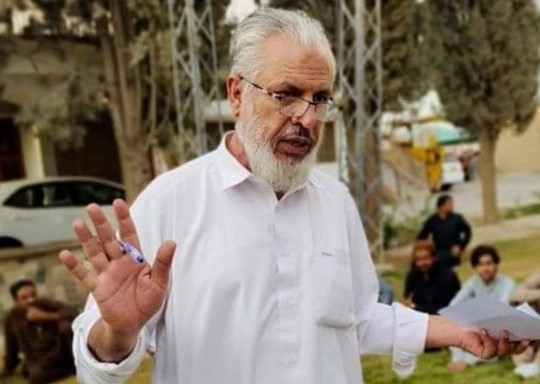
Gen. David Sejusa (Facebook)

While Uganda's politicians and social media are abuzz over a sensational letter reportedly written by a top security official about a high-level assassination plot, police have dutifully harassed the mainstream press in a bid to suppress the chatter.

In a welcome move Wednesday, Prime Minister Sheikh Jaber al-Mubarak al-Sabah offered to shelve Kuwait's controversial draft media law, according to news reports. The announcement came in what the official Kuwait News Agency (KUNA) called a "candid, frank, and expanded meeting with chief editors of Kuwaiti press." 

Supporters of Kuwaiti opposition politician Musallam al-Barrak pray in the yard of his house in Andulos, after he was sentenced to jail for insulting the emir, April 15. (Reuters/Stephanie McGehee)

On April 8, the Kuwaiti cabinet approved a draft media law that would severely undermine press freedom in the country. But it is not too late to prevent a bad bill from becoming a bad law.

China decrees use of foreign news must be approved

You have to wonder how this will be enforced, but China's State Administration of Press Publication, Radio, Film and Television has issued a "Notice on Strengthening Control of Media Personnel's Online Activities" (关于加强新闻采编人员网络活动管理的通知). Chinese media organizations have been told to stop posting foreign media news without government permission:  "Without authorization, no kind of media outlets shall arbitrarily use media release from overseas media agencies and media websites," is the way Caijing magazine translated it.

Palestinian President Mahmoud Abbas pardoned Al-Quds TV journalist Mamdouh Hamamreh on March 28, 2013, the same day that a West Bank appeals court upheld his one-year sentence for insulting the presidency, according to news reports.

Information Permanent Secretary Bitange Ndemo has criticized the press in the past. (The Nation)

Kenya has passed peacefully through its election period, but questions still hang over the legitimacy of presidential candidate Uhuru Kenyatta's victory--as well as over the future of the country's media coverage. During polling, challenges arose for both local and international media, and they have not subsided. For the foreign press, it is now unclear how to get accreditation to report in the country. Local journalists are worried about the rise of self-censorship, and freedom of expression advocates are concerned by plans for vague regulations on hate speech.

New York, March 18, 2013--A member of Russia's parliament has used his public Twitter account to threaten two journalists with the independent daily Moskovsky Komsomolets, according to news reports.

1. Beyond censors' reach, free expression thrives, to a point

By Sophie Beach

On March 24, 2012, investigative journalist Yang Haipeng posted on his Sina Weibo microblog a story he had heard that alleged a link between Neil Heywood, an English businessman who had been found dead in a Chongqing hotel, and Bo Xilai, the powerful Chongqing Communist Party chief. His post is widely recognized as the first significant public mention of a connection between the two men and it spread like wildfire online before being deleted the next day. A month later, Yang’s Sina Weibo account, which had 247,000 followers, was shut down.

The rise of extremist groups who target journalists is a potent risk. By Mohamed Keita

(AFP/Pius Utomi Ekpei)

Thailand, Malaysia, and Vietnam had vibrant blogospheres--until the crackdowns. By Shawn W. Crispin

(AP/Apichart Weerawong)

79 results

1 2 3 4 5 6 7 8 Next Page »