CPJ’s Impunity Index spotlights countries
where journalists are slain and killers go free
New York, March 23, 2009 — The already murderous conditions for the press in Sri Lanka and Pakistan deteriorated further in the past year, the Committee to Protect Journalists has found in its newly updated Impunity Index, a list of countries where journalists are killed regularly and governments fail to solve the crimes. Colombia, historically one of the world’s deadliest nations for the press, improved as the rate of murders declined and prosecutors won important recent convictions.
The Index | Methodology | Statistical Table | Español | Русский | Português
“We’re distressed to see justice worsen in places such as Sri Lanka and Pakistan. Our findings indicate that the failure to solve journalist murders perpetuates further violence against the press,” said Joel Simon, CPJ executive director. “Countries can get off this list of shame only by committing themselves to seeking justice.”
CPJ’s Impunity Index, compiled for the second year, calculates the number of unsolved journalist murders as a percentage of a country’s population. CPJ examined every nation in the world for the years 1999 through 2008. Cases are considered unsolved when no convictions have been obtained. Only those nations with five or more unsolved cases are included on this Index, a threshold reached by 14 countries this year.
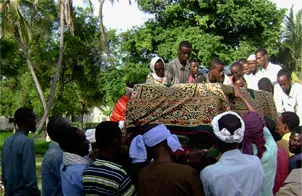
Iraq, Sierra Leone, and Somalia—countries racked by armed conflict—top the Impunity Index. But most of the list encompasses peacetime democracies with functioning law enforcement, nations such as Russia, the Philippines, and India.
Brazil is the sole newcomer to the 2009 index. Although Brazilian authorities have succeeded in prosecuting some journalist murders, those efforts have not offset the nation’s high rate of deadly violence against the press.
CPJ began compiling the index in 2008 to raise awareness about a disturbing pattern of impunity in countries across the world. The organization has undertaken a Global Campaign Against Impunity to seek justice in journalist murders, the world’s gravest threat to free expression, and has focused particularly on unsolved killings in Russia and the Philippines.
This year’s report is being released in Manila to mark the fourth anniversary of the murder of Marlene Garcia-Esperat, a Philippine columnist who reported on corruption in the government’s agriculture department. Garcia-Esperat was gunned down in her home in front of her family in a case that has become emblematic of the struggle against impunity. Two government officials are accused of ordering her murder.
“Philippine journalists are clamoring for justice in at least two dozen unsolved cases, and they need government protection from the murderous thugs who are killing their colleagues year after year,” said Elisabeth Witchel, CPJ’s impunity campaign coordinator. “We call on the Philippine government to take the hard steps needed to gain convictions: assigning sufficient prosecutors and investigators to these cases, moving trials to safe and impartial venues, protecting witnesses, and providing high-level political backing for all of these efforts.”
Among the other findings in CPJ’s Impunity Index:
- All of the countries included in the 2008 Index remained on the list this year. Only slight changes were seen in the rankings and ratings of most countries.
- Unsolved murders were reported in both Russia and the Philippines in 2008. Both countries have had stubbornly high rates of impunity in journalist slayings over the past decade.
- South Asian journalists face particularly severe risks. The region’s nations make up nearly half of CPJ’s index. Six are included on the 2009 list: Sri Lanka, Afghanistan, Nepal, Bangladesh, Pakistan, and India.
- Even in wartime, journalists are more likely to be targeted and murdered than killed in combat. In Iraq, for example, murders account for nearly two-thirds of all media fatalities.
- Although conditions in Iraq improved in 2008, authorities there have yet to solve a single murder case involving a journalist.
- Worldwide, the vast majority of victims are local reporters covering sensitive topics such as crime, corruption, and national security in their home countries.
The Index
Here are the 14 countries where journalists are murdered on a recurring basis and governments are unable or unwilling to prosecute the killers. The index covers the years 1999 through 2008.
1. IRAQ
Iraq tops the index for the second consecutive year. At least 88 journalists have been murdered since the war began in 2003, and not a single conviction has been obtained in these cases. Insurgents and militias are behind the vast majority of killings, while Iraqis working for local media have been the predominant targets. The victims include Haider al-Hussein, a reporter for the Baghdad daily Al-Sharq who was abducted on his way to work in May 2008. His body was found with signs of torture three days later. Although the frequency of journalist murders is slowing—nine in 2008, down from 27 in 2007—Iraq remains the most dangerous place to be a journalist.
Impunity Index Rating: 2.983 unsolved journalist murders per 1 million inhabitants.
Last year: Ranked 1st with a rating of 2.821.
2. SIERRA LEONE
Most of the nine unsolved murders took place in January 1999, when Revolutionary United Front rebels pushed into Freetown during Sierra Leone’s civil war. “Operation No Living Thing,” as the assault was called, targeted journalists and thousands of other citizens deemed anti-rebel. The victims included newspaper editor Paul Mansaray, who died with his wife, two young children, and a nephew when rebels shot him and set his house ablaze. There have been no convictions associated with these cases.
Impunity Index Rating: 1.552 unsolved journalist murders per 1 million inhabitants.
Last year: Ranked 2nd with a rating of 1.636.
3. SOMALIA
Nearly two decades of civil unrest, clan warfare and insurgency have created deep-seated conditions of impunity in Somalia, where six journalist murders have gone unsolved in the last decade. The victims included Nasteh Dahir Farah, a reporter and vice chairman of the National Union of Somali Journalists, who was shot while walking home from an Internet cafe in Kismayo in June 2008.
Impunity Index Rating: 0.690 unsolved journalist murders per 1 million inhabitants.
Last year: Ranked 3rd with a rating of 0.610.

4. SRI LANKA
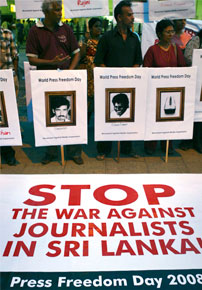
As the government pursues a military victory over the rebel Liberation Tigers of Tamil Eelam, a surge in violence against journalists, including the fatal stabbing of television correspondent Paranirupasingham Devakumar, pushed the South Asian island nation up from five to four on the index. Government pledges to investigate and punish violence against the press proved hollow as journalists continued to be targeted by both Tamil groups and the military. At least nine journalist murders have gone unsolved.
Impunity Index Rating: 0.452 unsolved journalist murders per 1 million inhabitants.
Last year: Ranked 5th with a rating of 0.408.
5. COLOMBIA
With no work-related killings since 2006, Colombia has seen a steady drop in the journalist murder rate. The government credits increased security, although CPJ research shows that pervasive self-censorship has made the press less of a target. In a significant breakthrough, prosecutors recently obtained the convictions of a former mayor of Barrancabermeja and two other public officials charged with ordering the 2002 murder of radio commentator José Emeterio Rivas. Still, 16 of 20 journalist murders in the last decade have gone unsolved.
Impunity Index Rating: 0.347 unsolved journalist murders per 1 million inhabitants.
Last year: Ranked 4th with a rating of 0.439.
6. PHILIPPINES
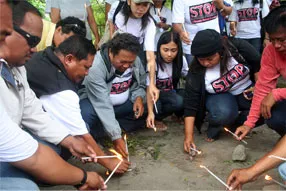
At least 24 journalist murders have gone unsolved in the last decade. This pervasive climate of impunity has led to repeated attacks on the press, with renewed levels of violence recorded in 2008. In just one week in August 2008, radio journalists Martin Roxas and Dennis Cuesta were fatally shot. CPJ research has shown local courts to be ineffective in trying journalist murders. Witnesses have been threatened, attacked, and killed while cases were being tried in local courts. Local judges have been reluctant to proceed with cases involving influential public figures.
Impunity Index Rating: 0.273 unsolved journalist murders per 1 million inhabitants.
Last year: Ranked 6th with a rating of 0.289.
7. AFGHANISTAN
Rampant drug trafficking and armed militias combine with a weak central government and local political corruption to create a wide berth for the killers of journalists. Seven murders have gone unsolved. In a departure from worldwide trends, most of the victims were international journalists covering the ongoing armed conflict. Three Afghan journalists were also killed. They included Abdul Samad Rohani, a correspondent for the BBC and the Pajhwok Afghan News service who was slain after reporting on the local drug trade in the dangerous area bordering Pakistan.
Impunity Index Rating: 0.248 unsolved journalist murders per 1 million inhabitants.
Last year: Ranked 7th with a rating of 0.279.
8. NEPAL
Political groups go unpunished in frequent attacks against the media. At least five journalist murders are unsolved, four of which are believed to have been perpetrated by Maoist rebels during Nepal’s decade-long civil conflict. Now the majority in a coalition government, the Maoists have yet to make good on assurances that the killers would not receive political protection. The victims include radio reporter Dekendra Raj Thapa, who was abducted and killed by Maoist rebels in 2004.
Impunity Index Rating: 0.178 unsolved journalist murders per 1 million inhabitants.
Last year: Ranked 8th with a rating of 0.185.

9. RUSSIA
Since 1999, 16 journalists have been murdered in retaliation for reporting on official corruption, unrest in the North Caucasus republics, and organized crime nationwide. All but one case has gone unsolved. As he took office in 2008, President Dmitry Medvedev promised that attacks against journalists would be investigated and prosecuted. Nevertheless, authorities have failed to obtain convictions in even high-profile killings such as the 2004 murder of Forbes editor Paul Klebnikov and the 2006 slaying of investigative reporter Anna Politkovskaya.
Impunity Index Rating: 0.106 unsolved journalist murders per 1 million inhabitants.
Last year: Ranked 9th with a rating of 0.098.
10. PAKISTAN
In a deteriorating security situation, journalists have come under threat from a wide range of militant religious and criminal organizations, some with links to Pakistani intelligence. Three unsolved murders were reported in 2008, bringing the decade total to 10 and moving Pakistan up two places on the index. The victims include Abdul Razzak Johra, who was dragged from his home and shot in retaliation for his reporting on drug trafficking.
Impunity Index Rating: 0.062 unsolved journalist murders per 1 million inhabitants.
Last year: Ranked 12th with a rating of 0.051.
11. MEXICO
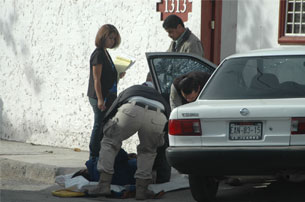
Untouchable drug cartels have made reporting on crime in Mexico the most dangerous beat in the Americas. In 2008, gunmen shot Alejandro Zenón Fonseca Estrada, a radio host who had waged an anticrime campaign, on a main street in Villahermosa, the state capital of Tabasco. In all, six murders have gone unsolved in the last decade. The country’s ranking, poor as it is, might actually be much worse: At least seven Mexican journalists have gone missing since 2005. Those reporters and editors are suspected to have died, although their cases are not yet included in this index.
Impunity Index Rating: 0.057 unsolved journalist murders per 1 million inhabitants.
Last year: Ranked 10th with a rating of 0.068.
12. BANGLADESH
Authorities have failed to solve at least seven journalist murders that occurred between 2000 and 2005. The victims typically covered crime, corruption, and political unrest. The unsolved cases include the brutal 2004 murder of Kamal Hossain, a crime reporter whose decapitated body was found hours after he was abducted from his home. Local media advocates say Bangladeshi authorities’ practice of dragging out investigations and repeatedly postponing trials erodes the drive for justice.
Impunity Index Rating: 0.044 unsolved journalist murders per 1 million inhabitants.
Last year: Ranked 11th with a rating of 0.056.
13. BRAZIL
With five unsolved murders in the last decade, Brazil is a newcomer to the index this year. Journalists covering crime, corruption, and local politics have faced brutal consequences. Brazil, unlike most countries on this index, has had some success in prosecuting the killers of journalists, obtaining convictions in three slayings in the last decade. Five men, including four police officers, are now being tried in the 2007 slaying of Luiz Carlos Barbon Filho, a provincial journalist known for his investigative reporting on police corruption.
Impunity Index Rating: 0.026 unsolved journalist murders per 1 million inhabitants.
Last year: Unranked.
14. INDIA
Despite the country’s strong democratic tradition and robust press, seven journalist murders have gone unsolved in the last 10 years. CPJ research indicates journalists covering crime, corruption, and politics have been targets. They include Vikas Ranjan, a correspondent for the newspaper Hindustan who was shot by motorcycle-riding assailants in 2008. Ranjan had received recent threats after reporting on counterfeit merchandise and stolen goods trafficking.
Impunity Index Rating: 0.006 unsolved journalist murders per 1 million inhabitants.
Last year: Ranked 13th with a rating of 0.005.
For the detailed statistical breakdown for each country, click here.
Methodology
CPJ’s Impunity Index calculates the number of unsolved journalist murders as a percentage of each country’s population. CPJ examined every nation worldwide for the period January 1, 1999, through December 31, 2008. Only those nations with five or more unsolved cases are included on this index.
Cases are considered unsolved when no convictions have been obtained.
CPJ defines murder as a deliberate attack against a specific journalist in relation to the victim’s work. Murders make up more than 70 percent of work-related deaths among journalists, according to CPJ research. This index does not include cases of journalists killed in combat or while carrying out dangerous assignments such as coverage of street protests.
Where available, population data from the World Bank’s 2008 World Development Indicators were used in this index. For Iraq and Afghanistan, CPJ relied on the U.N. Population Fund’s State of World Population 2008.
CPJ consulted Mary Gray, professor of mathematics and statistics at American University in Washington, in developing its methodology. Gray has served on the boards and committees of groups such as Amnesty International. In 2001, President George W. Bush awarded Gray the Presidential Award for Excellence in Science, Mathematics, and Engineering Mentoring.
CPJ’s Impunity Index looks specifically at unsolved journalist murders. On an ongoing basis, CPJ maintains a comprehensive database of all journalists killed in the line of duty and narrative capsules that detail the circumstances of each case.
CPJ welcomes comments about this index.
Statistical Table
Unsolved journalist murders per 1 million inhabitants for 1999-2008. Only nations with five or more unsolved cases are included. Cases are considered unsolved when no convictions have been obtained.
| Nation | Unsolved Cases |
Population (in millions) |
Calculation | Rating |
| Iraq | 88 | 29.5* | 88 / 29.5 = | 2.983 |
| Sierra Leone | 9 | 5.8 | 9 / 5.8 = | 1.552 |
| Somalia | 6 | 8.7 | 6 / 8.7 = | 0.690 |
| Sri Lanka | 9 | 19.9 | 9 / 19.9 = | 0.452 |
| Colombia | 16 | 46.1 | 16 / 46.1 = | 0.347 |
| Philippines | 24 | 87.9 | 24 / 87.9 = | 0.273 |
| Afghanistan | 7 | 28.2* | 7 / 28.2 = | 0.248 |
| Nepal | 5 | 28.1 | 5 / 28.1 = | 0.178 |
| Russia | 15 | 141.6 | 15 / 141.6 = | 0.106 |
| Pakistan | 10 | 162.4 | 10 / 162.4 = | 0.062 |
| Mexico | 6 | 105.3 | 6 / 105.3 = | 0.057 |
| Bangladesh | 7 | 158.6 | 7 / 158.6 = | 0.044 |
| Brazil | 5 | 191.6 | 5 / 191.6 = | 0.026 |
| India | 7 | 1,123.3 | 7 / 1123.3 = | 0.006 |
Population data sources:
Unless otherwise indicated, 2008 World Development Indicators, World Bank.
* State of World Population 2008, U.N. Population Fund.
Click here for last year’s report, “Getting Away With Murder 2008.”